





Mastering Your Fuel Budget
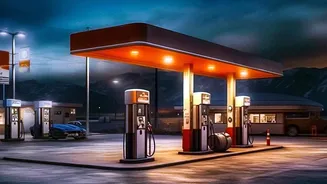
Fuel is the single largest running expense on any road trip, and managing it smartly goes beyond just filling the tank. With petrol and diesel prices varying between states, a little homework pays off. Before your trip, use an app like TollGuru or Roadtrip
to get a reliable estimate of your total fuel cost. These tools consider your specific car model, its mileage, and your route to give you a surprisingly accurate budget. To maximize every litre, drive smart. Maintaining a steady speed, ideally between 70 and 90 km/h on highways, is more fuel-efficient than frequent acceleration and braking. On expressways, using cruise control can help maintain a consistent speed and reduce engine strain. Also, consider the aerodynamics of your car. At highway speeds (above 60 km/h), using the air conditioner is often more fuel-efficient than opening the windows, which creates significant wind drag and makes the engine work harder.
Navigating Tolls Seamlessly with FASTag
India's national highways are now almost entirely cashless, making an active and funded FASTag non-negotiable. Driving without one can result in paying double the toll fee. To avoid hassles, ensure your FASTag is linked to a wallet or bank account with sufficient balance before you leave. For frequent travelers, the National Highways Authority of India (NHAI) offers a FASTag Annual Pass, which has been revised to ₹3,075 for the 2026-27 financial year. This pass covers a vehicle for one year or 200 toll crossings, whichever comes first, and can be a convenient option for non-commercial cars. If your tag fails to scan, new rules allow for payment via UPI at 1.25 times the normal rate, a better alternative to the double-cash penalty. Several apps can help you calculate total toll costs for your intended route, preventing surprises and helping you budget accurately.
Preparing for Weather and Road Backups
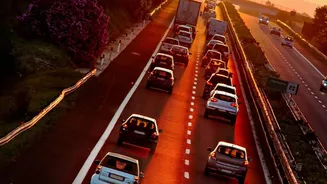
India’s weather can be unpredictable, especially during the monsoon season. Wet roads, reduced visibility, and potential waterlogging demand extra caution and preparation. Before you travel, check the forecast using a reliable source like the India Meteorological Department (IMD), which now offers a highway-specific route forecast tool. This can help you anticipate conditions along your entire journey, not just at your destination. For a monsoon road trip, your car must be ready. Ensure your tyres have good tread, your brakes are in top condition, and your wipers are new or effective. Pack a weather-specific emergency kit. This should include waterproof bags for electronics, quick-drying clothes, an umbrella, and footwear with good grip. It is also wise to have a backup plan. Be flexible with your itinerary, as heavy rain can cause delays or diversions. Slow travel is the best approach for monsoon journeys; start early and build buffer time into your schedule.
Essential Checks and Other Must-Haves
Beyond the big three, a few other preparations are crucial for a smooth trip. First, get your vehicle thoroughly checked: oil, coolant, brake fluid, and tyre pressure, including the spare. Pack a basic first-aid kit with antiseptic wipes, bandages, and any personal medications. While GPS navigation is essential, mobile networks can be patchy in remote areas, so download offline maps for your entire route as a backup. Carry a power bank to keep your devices charged. Finally, stock up on non-perishable snacks and plenty of water. This not only saves money but also ensures you have provisions if you are delayed or travelling through stretches with few amenities. These small steps ensure you are prepared for minor inconvenconveniences, leaving you free to enjoy the adventure.