







The Legend of the Living Goddess
The heart of the Ambubachi Mela lies within the ancient Kamakhya Temple, one of the most revered of the 51 Shakti Peeths. According to mythology, these sites mark where parts of the goddess Sati’s body fell to earth. The Kamakhya Temple is unique because
it is believed to house her yoni, or womb and vulva. Unlike other temples with idols, the sanctum sanctorum, or garbhagriha, contains a rock fissure shaped like a yoni, fed by a natural spring that keeps it moist. This physical representation of divine feminine power, or Shakti, is worshipped as the living goddess herself, the ultimate source of creation and fertility.
A Festival Celebrating Menstruation
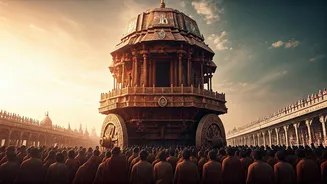
What makes the Ambubachi Mela truly distinctive is its core belief: for four days each year, usually in June, the goddess is believed to undergo her annual menstruation. During this period, the temple’s main doors are closed to all. No prayers, farming, or auspicious activities are performed. The earth is considered impure, mirroring the goddess’s fertile state. This period of quiet reverence is a stark contrast to the sea of humanity gathered outside. Far from being a taboo, the goddess’s menstruation is celebrated as a symbol of the earth's ability to regenerate and create life. It is a powerful, public affirmation of a natural female biological process, revered as sacred and life-giving.
The Gathering of Tantrics and Sadhus
The Ambubachi Mela is often called the “Mahakumbh of the East” for a reason. It is the most important annual congregation for tantrics, sadhus, and aghoris from across India and beyond. For them, Kamakhya is the epicentre of Tantrism. During the festival, they descend upon the temple grounds, performing complex rituals, displaying yogic feats, and offering blessings. For these ascetics, the goddess’s menstrual period is a time of immense spiritual power. They meditate and perform sadhanas to harness this energy for spiritual advancement. Their presence, with matted hair, ash-smeared bodies, and intense gazes, adds a layer of mystical intensity to the festival, offering a rare glimpse into the esoteric world of Tantra.
Rituals of Faith and Devotion
While the sadhus engage in their esoteric practices, lakhs of household devotees wait patiently. They sing bhajans, listen to spiritual discourses, and survive on simple food in makeshift camps. Their faith is palpable. The atmosphere is not one of solemnity but of festive anticipation. When the temple reopens on the fourth day, it is a moment of pure catharsis. Devotees rush to receive the darshan of the goddess, now considered pure and fertile. The most sought-after prasad is the ‘rakta bastra’—small pieces of red cloth believed to have been soaked in the goddess’s menstrual fluid. This sacred cloth is considered highly auspicious, a potent symbol of fertility and protection, which devotees carry home to place in their own prayer rooms.