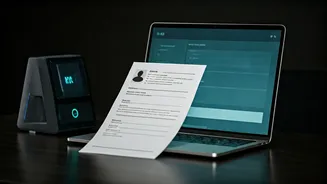









Ignoring the Applicant Tracking System (ATS)
Before a human recruiter even sees your application, it likely has to pass through an Applicant Tracking System (ATS). This software scans your resume for keywords and phrases that match the job description. If your resume uses complex formatting, tables,
graphics, or non-standard fonts, the ATS may fail to read it correctly, discarding your application before it has a chance. To avoid this, use a clean, single-column layout with standard fonts like Arial or Calibri. Most importantly, tailor your resume by incorporating specific keywords and phrases directly from the job posting to ensure you pass this initial automated screening.
Using a One-Size-Fits-All Resume
One of the most frequent mistakes is sending the same generic resume for every application. Recruiters can easily spot a non-tailored resume, and it often signals a lack of genuine interest in the specific role or company. In a competitive market, a generic application is unlikely to stand out. Instead, take the time to customise your resume for each position. Highlight the skills and experiences that are most relevant to the job requirements, mirroring the language used in the post. This shows you've done your research and are a serious candidate.
Focusing on Duties, Not Achievements
Many resumes simply list job duties and responsibilities, such as "Managed a team" or "Responsible for sales." This tells a recruiter what you were supposed to do, but not what you actually accomplished. To make your resume more powerful, focus on quantifiable achievements. Instead of listing a duty, describe your impact with numbers and metrics. For example, change "Managed a customer support team" to "Led a 12-member support team to achieve a 94% customer satisfaction score, reducing average resolution time by 28% over two quarters." Using metrics provides concrete evidence of your value.
Including Vague and Passive Language
Phrases like "results-driven," "team player," and "hard-working" have become so overused that they are virtually meaningless to recruiters. These buzzwords are often seen as fluff and fail to communicate your actual abilities. Similarly, using passive language like "was responsible for" or "assisted with" weakens your contributions. The fix is to use strong, active verbs and be specific. Instead of saying you're a "good communicator," describe an achievement that proves it, such as, "Presented quarterly results to C-suite executives." Show, don't just tell.
Having a Cluttered or Unprofessional Format
Recruiters often spend less than 10 seconds on their initial scan of a resume. If your resume is a dense wall of text with inconsistent spacing, strange fonts, or a chaotic layout, it will likely be discarded immediately. A messy resume can suggest carelessness or a lack of professionalism. Opt for a clean, professional design with plenty of white space, clear headings, and a standard font. For most professionals, the resume should be kept to one or two pages. The goal is to make it as easy as possible for a busy recruiter to quickly identify your key qualifications.
Overlooking Typos and Grammatical Errors
It may seem obvious, but a surprising number of resumes contain typos and grammatical mistakes. Even a single error can be enough for a recruiter to reject an application, as it signals a lack of attention to detail—a critical skill in almost any professional role. These mistakes are entirely avoidable. Before submitting your resume, proofread it carefully multiple times. Reading it out loud can help you catch awkward phrasing, and having a friend or family member review it can provide a fresh set of eyes to catch any errors you may have missed.