

The Rise of Culture-Led Travel
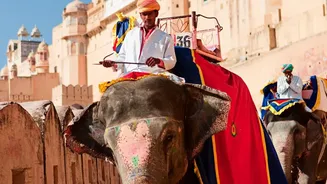
Forget just seeing the sights. A growing number of Indian travellers are planning their entire trips around cultural experiences. According to the recently released India Culture Travel Index from Skyscanner, a remarkable 67% of Indians now plan their holidays
around heritage, festivals, and food. This marks a significant shift away from traditional sightseeing towards more immersive and authentic journeys. The report highlights that heritage is the single biggest motivator, with 47% of travellers saying they would plan a trip specifically to visit historical sites. This trend isn't just about visiting well-trodden landmarks; it's about connecting with local traditions, communities, and once-in-a-year experiences that turn a good trip into an unforgettable one.
The Event Effect on Your Wallet
The most immediate impact of a major event on a destination is financial, a phenomenon some economists call "funflation". Cities hosting major sporting events, concerts, or festivals often see a dramatic surge in demand for flights and accommodation. For instance, during the Paris Olympics, average hotel rates reportedly exceeded €700, a steep climb from the usual €200–€300. This isn't limited to global spectacles. Airlines have noted that major concert tours can increase flight demand to host cities by as much as 25%. This price spike affects everything from your hotel room and flight ticket to car rentals and even restaurant availability, forcing travellers to either budget significantly more or plan their trip for a different time.
It’s Not Just About Price, It’s About the Vibe
Beyond the costs, large-scale events fundamentally change the atmosphere of a place. For those attending the event, this is the main attraction—a chance to experience a destination at its most vibrant and celebratory. However, for a traveller seeking a quiet, relaxing holiday, arriving in a city packed with festival-goers can be a shock. Crowds will be larger, public transport will be busier, and gaining access to other attractions might be more difficult. The entire experience shifts. A trip planned for quiet museum visits and relaxed cafe-hopping can quickly become one of navigating massive crowds and waiting in long queues. This isn't necessarily a negative, but it underscores the importance of knowing what kind of experience you're signing up for.
Smarter Planning Is the New Standard
The data shows that travellers are adapting to this new reality. According to Skyscanner's report, festival and event timing has become a top booking consideration, with many planning their trips months in advance to secure availability. About 40% of culture-focused travellers start planning three to six months ahead of their trip. For those who want the buzz without the peak prices, travelling in the 'shoulder season'—the period just before or after a major event—can be a strategic move. This allows you to soak in some of the excitement while enjoying fewer crowds and more reasonable prices. For those who are specifically travelling for an event, booking flights and hotels as early as possible is crucial, as availability can plummet a year in advance for major global festivals.
The Trend Is Global and Growing
This desire for experience-driven travel is a worldwide phenomenon. Reports show that cultural travel is a rapidly growing market, with 46% of Indian travellers having already travelled internationally for a cultural event and another 43% aspiring to do so. The trend also highlights a move towards exploring smaller, Tier-2 and Tier-3 towns that offer unique cultural experiences beyond the major cities. Whether it’s a food festival, a religious gathering, a major sporting final, or a blockbuster art exhibition, these events are no longer just a footnote in a travel guide. They are increasingly becoming the headline, dictating where people go, when they go, and how much they spend.