


Early Encounters and French Dominance
For decades, the France-Spain rivalry was largely a one-sided affair in major tournaments. Despite Spain holding an overall lead in head-to-head matchups, mostly from friendlies, France consistently held the upper hand when it mattered most. This was never
more apparent than in knockout football. A key early chapter was the 1984 European Championship final, where a French side led by the legendary Michel Platini defeated Spain 2-0 in Paris to claim their first-ever major trophy. This victory set a precedent. For years, France acted as Spain's bogey team. At the 2006 World Cup in Germany—their only World Cup meeting before 2026—a veteran French team led by Zinedine Zidane came from behind to beat a heavily favored Spanish side 3-1 in the round of 16, a result that underlined France's big-game mentality.
The Tiki-Taka Revolution
The balance of power shifted dramatically with the rise of Spain's 'golden generation'. From 2008 to 2012, La Roja dominated world football, winning two European Championships and the 2010 World Cup. Their 'tiki-taka' philosophy, a style built on relentless passing and possession, proved almost unbeatable. The core of the team, featuring midfield masters like Xavi, Andrés Iniesta, and Xabi Alonso, finally broke the French curse at Euro 2012. In the quarter-finals, Spain methodically dispatched France with a 2-0 victory, with both goals coming from Alonso. It was a landmark win that symbolised a complete reversal of fortunes. Spain not only conquered their neighbours but went on to lift the trophy, cementing their status as one of the greatest national teams in history.
France's Pragmatic Resurgence
As Spain's golden era waned, France was busy building a new dynasty. Under manager Didier Deschamps, a member of the 1998 World Cup-winning squad, Les Bleus developed a new identity. Less focused on possession and more on defensive solidity, physical power, and devastating counter-attacks, this new-look France was built for tournament football. The immense talent of a new generation, including Kylian Mbappé, Antoine Griezmann, and Paul Pogba, powered them to glory at the 2018 World Cup. Their style was a direct contrast to tiki-taka; they were comfortable without the ball, knowing their speed and clinical finishing could decide any game in moments. A taste of this new dynamic came in the 2021 UEFA Nations League final, where France came from behind to beat Spain 2-1 with stunning goals from Karim Benzema and Mbappé, proving their brand of pragmatic, star-led football could overcome Spain's possession game.
A Modern Clash of Titans
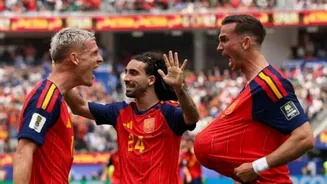
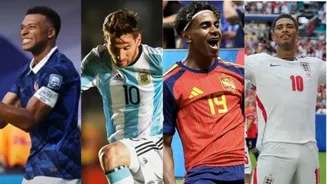
Now, as they meet in the 2026 World Cup semifinal, the rivalry is a fascinating clash of evolved identities. Spain, the reigning European champions, have rebuilt under Luis de la Fuente, blending their possession-based DNA with the explosive talent of young wingers like Lamine Yamal and Nico Williams. They have been defensively impenetrable in this tournament, conceding just one goal on their way to the semis. France, meanwhile, arrive as an offensive juggernaut, a team of breathtaking attacking talent led by captain Kylian Mbappé, who has become his country's all-time leading scorer. Recent encounters have been tight and dramatic, including Spain's victories in the Euro 2024 semifinal and a wild 5-4 win in the 2025 Nations League. The stage is set for a battle between Spain's control and France's explosive power, a rivalry no longer of a dominant force and an underdog, but of two of world football's absolute titans.