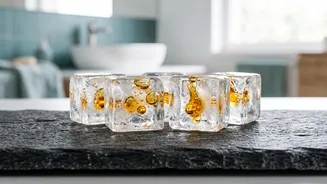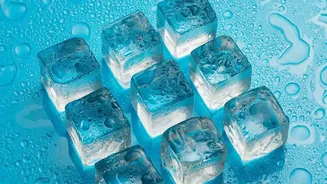


The 'retinol ice cube' is the latest viral skincare hack taking over social media feeds. But if you look closely at the recipes, a key ingredient is missing: retinol. Here’s a look at why this trendy DIY treatment is so misleading.
Decoding a Viral Sensation
Scroll through any social
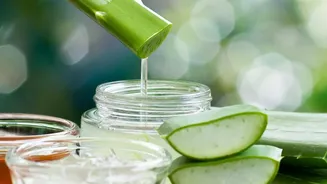
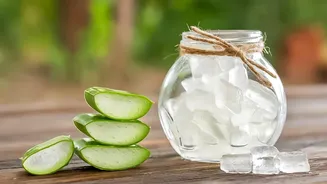
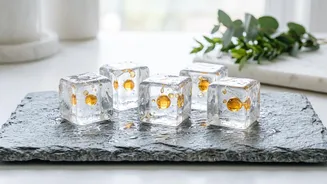
media platform and you're bound to encounter the 'retinol ice cube' trend. Videos showcase people rubbing colourful, homemade ice cubes on their faces, promising glowing, spotless, and youthful skin. The recipes often involve a blend of natural ingredients like cucumber juice, potato juice, and aloe vera gel. But the star ingredient mentioned in the name—retinol—is conspicuously absent. Instead, the recipes call for breaking open a Vitamin E capsule and adding the oil to the mixture before freezing. This has left many users confused: if they are called retinol ice cubes, why don't they contain any retinol?
The Problem with Freezing Retinol
The simple reason you won't find actual retinol in these DIY recipes is that retinol is a notoriously unstable molecule. A derivative of Vitamin A, retinol is considered the gold standard in skincare for its ability to boost cell turnover and stimulate collagen. However, its effectiveness is highly dependent on its formulation. It degrades quickly when exposed to light, air, and extreme temperatures. Cosmetic formulators go to great lengths to stabilise retinol, often using water-free bases, protective encapsulation technologies, and opaque, airless packaging. Subjecting a standard retinol serum to freezing temperatures could destabilise the formula, rendering the active ingredient useless and potentially even more irritating to the skin. Studies show that while refrigeration can slow degradation, freezing can irreversibly destroy its potency.
Enter Vitamin E: The Real MVP
So, why is Vitamin E oil the chosen substitute? Because it provides its own set of skin benefits that align with the goals of this DIY trend. Vitamin E is a powerful antioxidant that helps protect the skin from environmental damage. It's also an excellent moisturiser, known for its ability to hydrate the skin, soothe irritation, and support the skin's natural barrier. Some evidence suggests it may help reduce hyperpigmentation and the appearance of fine lines by keeping the skin plump and moisturised. While it doesn't accelerate cell turnover like retinol, its antioxidant and moisturising properties make it a beneficial ingredient for achieving a temporary glow and soothing the skin, making it the true workhorse in these frozen cubes.
Don't Discount the Ice
The other half of this trend is the ice itself. The practice of applying cold to the face, known as cryotherapy, has several temporary benefits. The cold temperature constricts blood vessels, which can help reduce puffiness and inflammation, especially around the eyes. This vasoconstriction can also make pores appear temporarily smaller and give the skin a brighter, more toned look. While dermatologists agree that a cold compress can be beneficial for things like painful acne cysts, the effects of skin icing are short-lived. There is no scientific evidence that it leads to long-term changes in oil production or increases product penetration significantly.
The Risks of DIY Cryotherapy
While it may seem harmless, this DIY trend is not without risks. Applying ice directly to the skin can cause redness, irritation, and even ice burns or frostbite if held in one place for too long. It can be particularly aggravating for those with sensitive skin or conditions like rosacea, potentially leading to flareups and broken capillaries. Furthermore, using household ice trays can introduce bacteria to your face. Pure oils, like Vitamin E, can also clog pores and cause breakouts for those with oily or acneprone skin. For these reasons, experts advise caution, recommending you always wrap ice in a clean cloth and limit application to a few seconds at a time.