


Seeing the Invisible
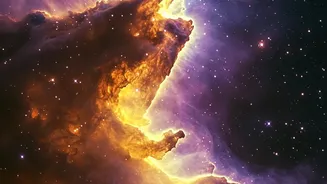
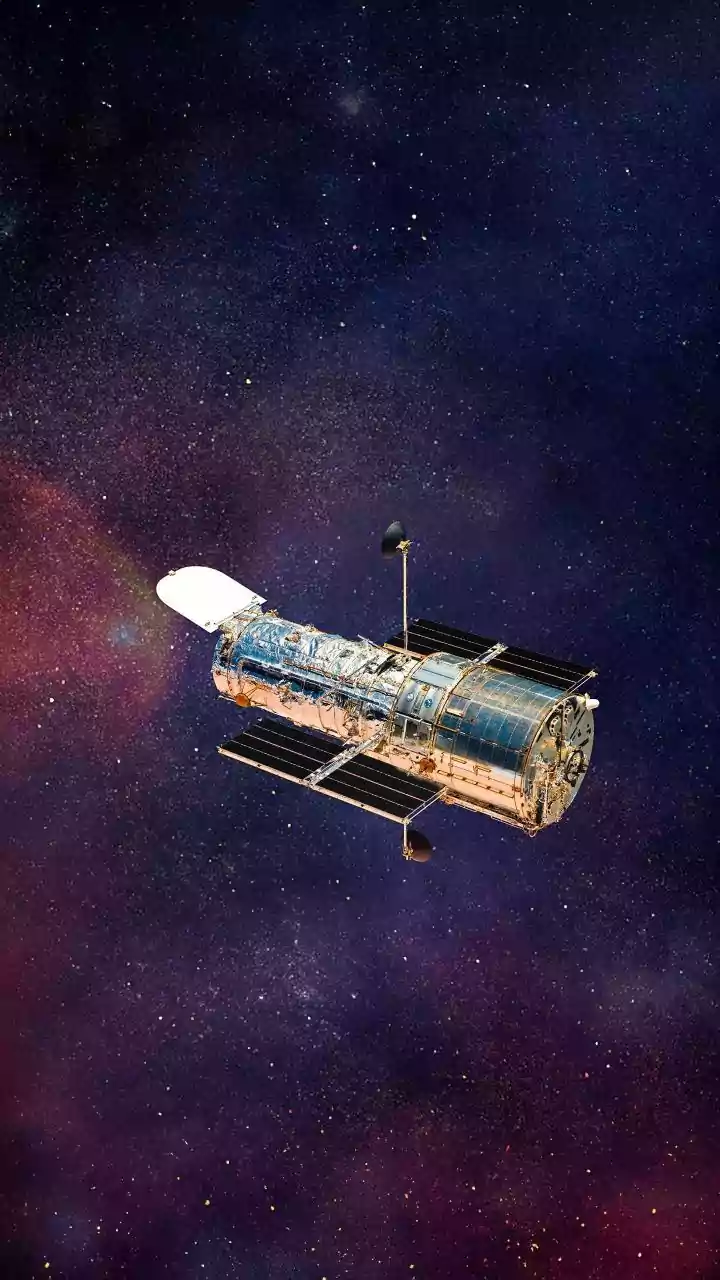
Stellar nurseries, the vast clouds of gas and dust where stars are born, are notoriously shy. These molecular clouds are so dense that they block visible light, hiding the nascent stars within from the view of telescopes like Hubble. This is where the James
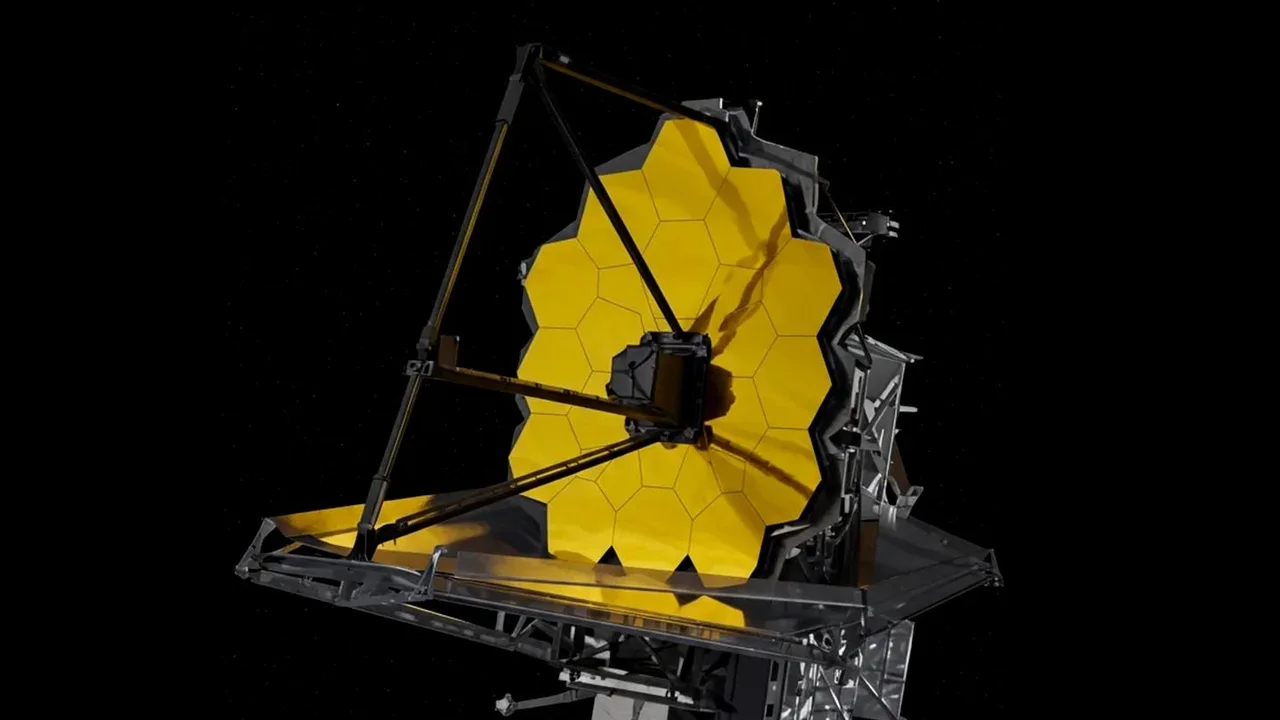
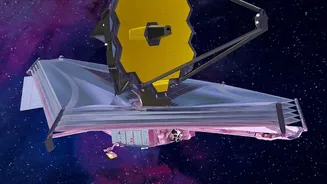
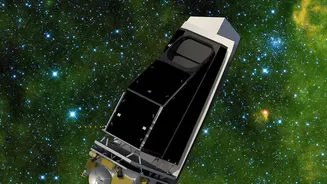
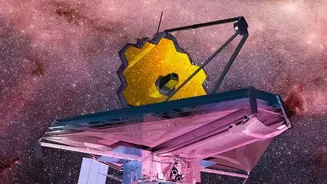
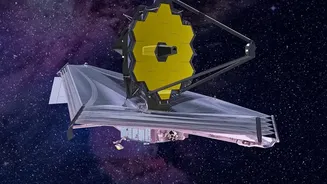
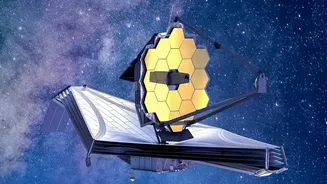
Webb Space Telescope changes the game. Webb is designed to see the universe in infrared light, a longer wavelength that can pass through these obscuring dust clouds. This allows astronomers to witness the very first flickers of a star's life, a process that was previously shrouded in mystery. The telescope’s incredible sensitivity reveals not just the baby stars, known as protostars, but the complex environments they are shaping around them.
Cosmic Jets and Hourglass Shapes
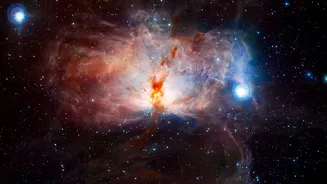
Some of Webb's most stunning recent images showcase the dramatic activity of protostars. These infant stars are not gentle giants; they are messy eaters. As a protostar pulls in surrounding gas and dust, it also blasts out powerful jets of material from its poles. These outflows, moving at incredible speeds, slam into the surrounding cloud, creating shockwaves and spectacular glowing structures. Often, this process carves out a distinctive hourglass shape in the nebula, with the protostar hidden at the narrowest point. For example, recent observations of the FS Tau star system revealed intricate details within these outflows, showing that the protostars gather mass in energetic, sporadic bursts rather than a smooth, continuous flow. Webb’s images show these features in unprecedented detail, turning theoretical models into observable reality.
Rewriting the Story of Star Formation
These new views are more than just pretty pictures; they are critical data points that are reshaping our understanding of how stars—and by extension, planets and galaxies—come to be. By studying low-mass stars like those in FS Tau, which is about 450 light-years away, astronomers can observe stellar evolution without the overwhelming interference from larger, more violent stars. Furthermore, Webb has detected unexpected high-energy ultraviolet radiation around some protostars, a phenomenon that current models of star formation cannot easily explain, as these young stars shouldn't be capable of producing such energy. In another discovery, the telescope found evidence of tiny, free-floating Jupiter-sized worlds forming within a stellar nursery, pushing the known limits of the star formation process. These findings challenge long-held assumptions and open up new avenues of research.
From Cosmic Dust to Us
The study of star birth is fundamentally a search for our own cosmic origins. The elements that make up our planet, our bodies, and the air we breathe were all forged inside stars. Webb has already identified crucial ingredients for life, including water and complex organic molecules, in the icy dust grains of these star-forming clouds. One recent observation of a protostar named EC 53 even found evidence of crystalline silicates being forged in the hot inner disk and then flung outwards—a process that could explain how similar crystals ended up in comets in our own solar system. By watching new stars and planetary systems take shape, we learn more about the conditions that may have led to the formation of Earth and the possibility of life elsewhere in the universe. Each image from Webb is another piece of the puzzle, connecting the vastness of space to our own existence.