


What Is a Planetary 'Alignment'?
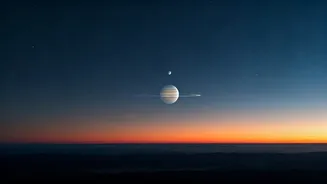
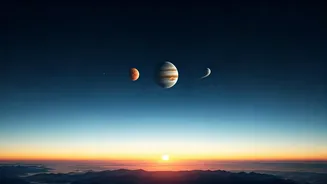
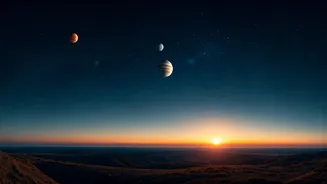
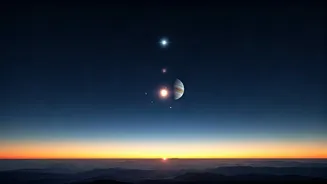
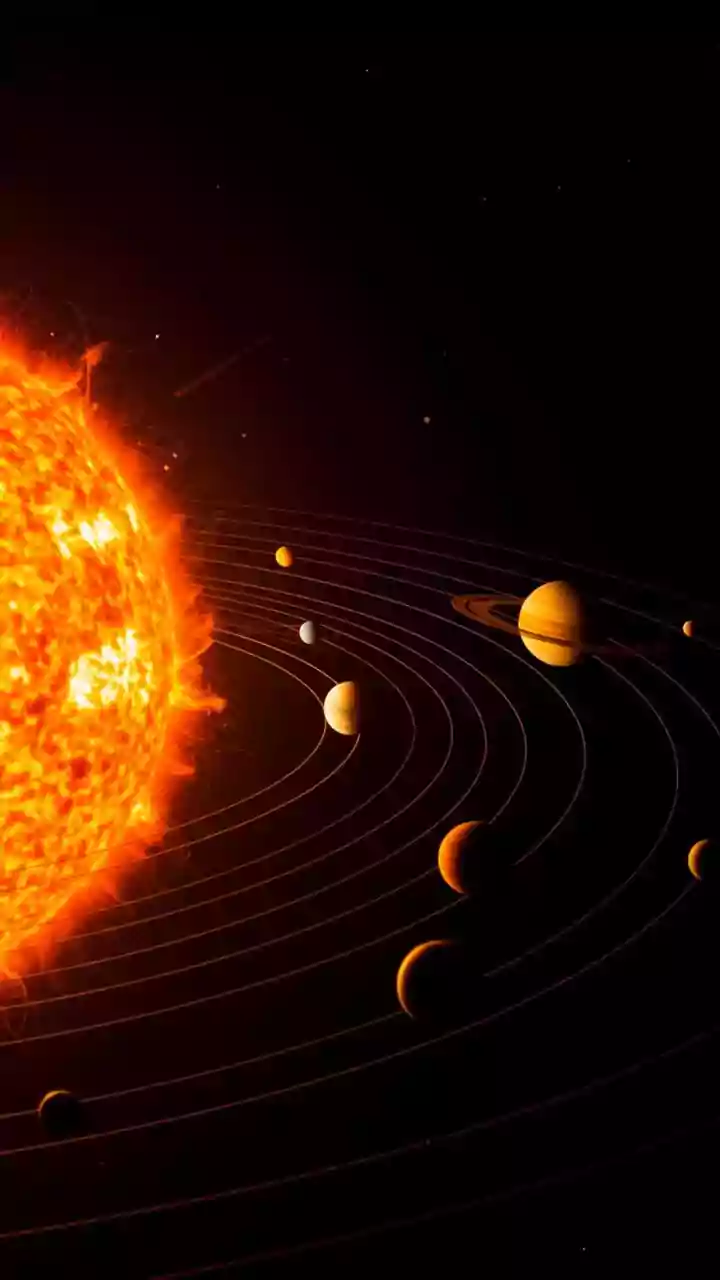
First, let's clear up what we mean by 'alignment'. The planets aren't actually forming a perfect straight line in space. That would be an incredibly rare event! Instead, this is a conjunction, which is all about perspective. From our viewpoint here on Earth,
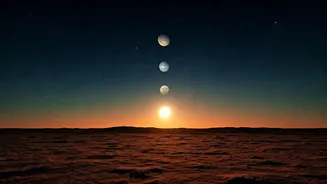
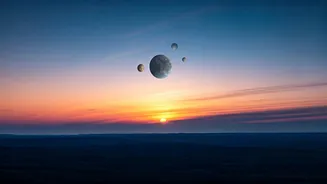
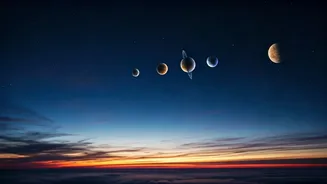
Mercury, Venus, and Jupiter will appear very close to each other in a small patch of the sky. Think of it like seeing two distant streetlights appear to be side-by-side, even though you know one is much farther down the road than the other. These conjunctions happen periodically as the planets orbit the Sun at different speeds and on different planes, creating beautiful and ever-changing patterns for us to enjoy.
Meet the Celestial Trio
The three planets putting on this show are a fantastic mix. Venus will be the undeniable star. Often called the 'Evening Star', it’s the brightest object in the night sky after the Moon, so you can't miss its brilliant, steady glare. Jupiter, the largest planet in our solar system, will appear as a very bright, unwavering star-like point of light, typically second in brightness only to Venus. The real prize, however, is Mercury. As the closest planet to the Sun, it’s often lost in the solar glare and can be tricky to spot. Seeing it alongside two bright guideposts like Venus and Jupiter makes this a perfect opportunity to catch a glimpse of the elusive planet.
When and Where to Look
Timing and direction are everything for this event. The show begins shortly after sunset. You’ll need to look towards the western horizon—the same direction where the Sun just went down. The key is to start looking about 30 to 45 minutes after sunset, during the period of twilight. This is the sweet spot. If you look too early, the sky will be too bright. If you wait too long, the planets, being low on the horizon, will have already set. The entire viewing window might only last for about an hour, so don’t delay. Mercury, in particular, dips below the horizon very quickly, so the earlier you can spot the trio, the better.
Simple Tips for the Best View
You don't need any fancy equipment for this. The best tool is a clear, unobstructed view of the western horizon. If you live in a city, try to find a park, a rooftop, or a spot with fewer tall buildings blocking your line of sight. Getting away from the direct glare of streetlights will also make a huge difference. Give your eyes about 10-15 minutes to adjust to the darkness; this will help you see the fainter planets more clearly. While you can see all three planets with your naked eye, a simple pair of binoculars will enhance the view, making the planets appear as sharp, distinct discs of light rather than just points.
Why These Moments Matter
In our busy, screen-filled lives, taking a moment to look up can be a powerful experience. Planetary conjunctions are gentle reminders of the grand, cosmic dance happening all around us. These events have captivated humans for millennia, inspiring myths, art, and science. They connect us not just to the universe, but to a shared human experience of wonder. It’s a chance to pause, breathe, and appreciate a spectacle that costs nothing and asks only for a few moments of your attention. It’s a free show, put on by the solar system, and you have a front-row seat.