



The Ultimate Survivors
Humans are natural explorers, and wherever we go, our microbes follow. On average, millions of bacteria inhabit every small patch of our skin. Some of these organisms are incredibly resilient. Known as extremophiles, they can withstand conditions that
would be instantly fatal to most other life forms. A new study has focused on several of these hardy travellers, including bacteria like Deinococcus radiodurans, known for its radiation resistance, and fungi like Aspergillus niger, a common black mould found in damp places, including inside the International Space Station. These organisms were chosen because they are frequently found in environments associated with spaceflight. The study didn't just consider famous extremophiles; it looked at microbes that are our constant companions, to see if they could withstand the harsh lunar environment.
A Haven on the Moon?
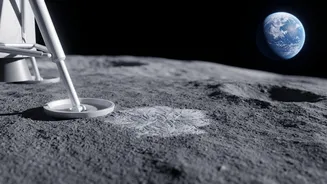
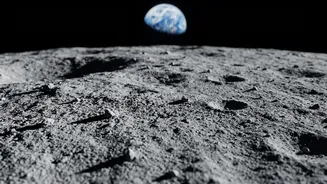
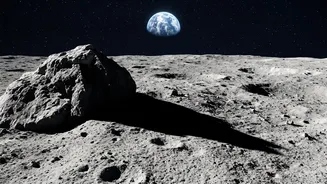
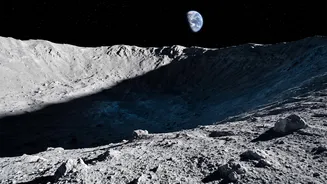
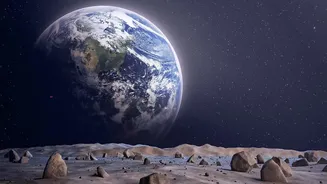
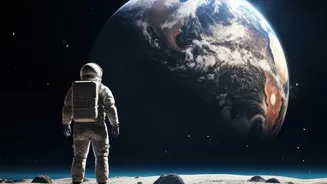
While most of the Moon's surface is bombarded with lethal ultraviolet (UV) radiation and experiences wild temperature swings, the lunar poles offer a unique environment. Because of the Moon's slight axial tilt, the sun never rises high in the polar sky. This creates permanently shadowed regions inside deep craters and behind ridges that never see direct sunlight. These areas are incredibly cold and are shielded from the most intense solar radiation. A study published in Science Advances used data from NASA's Lunar Reconnaissance Orbiter to model conditions in three potential Artemis landing sites near the south pole. The researchers found that these shaded areas could act as potential niches where microbes might survive. The shelter required might not even need to be a vast crater; scientists suggest a simple bootprint or rover track could create a small, habitable shadow.
Survival, Not Thriving
The key finding from the research is that survival is possible, but it is not the same as thriving. The microbes would likely enter a dormant, suspended-animation state known as cryptobiosis, where they cannot grow or reproduce. The simulations showed that in the most protected, permanently shadowed areas, some microbes could potentially remain viable for weeks or even months. One of the standout survivors was the fungus Aspergillus niger, which, thanks to its high resistance to UV radiation, could potentially persist even in areas that receive some scattered sunlight. Its toughness surprised researchers, as it proved more resilient in some ways than bacteria famous for their ability to withstand radiation. However, without water, nutrients, and a stable environment, these microbes would not colonize the Moon. They would simply be waiting in a dormant state, preserved in the lunar deep freeze.
Complications for Science
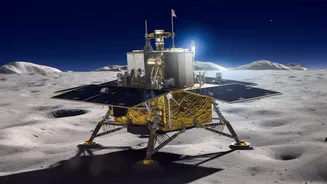
The discovery that our microbial hitchhikers might survive on the Moon has significant implications for planetary protection. For decades, scientists have worked to prevent the contamination of other celestial bodies with life from Earth. This is crucial for ensuring that when we search for signs of alien life or study the pristine geology of another world, we are not simply finding our own reflection. If microbes from an astronaut's suit or a lander can survive in lunar craters, it could complicate the search for the Moon's original chemical signatures. Scientists planning future missions, like NASA's Artemis program which aims to land humans near the south pole, will now need to be extra cautious. Establishing a clear baseline of the Moon's native environment before we introduce more terrestrial contaminants is now more critical than ever.
A Natural Laboratory
While microbial contamination presents a challenge, some scientists also see an opportunity. The Moon could serve as a unique natural laboratory for testing the absolute limits of life. Studying how these earthly organisms fare over time in the ultra-extreme lunar environment could provide invaluable data that is difficult to replicate in labs on Earth. This could help astrobiologists refine their understanding of what makes a world potentially habitable, guiding the search for life not just on the Moon, but on Mars and the icy moons of the outer solar system. The accidental crash of the Israeli Beresheet lander in 2019, which carried a payload of tardigrades, already sparked a debate about lunar contamination. This new research confirms that the question of life on the Moon is no longer just about whether any exists there naturally, but also about what we might accidentally bring with us.