





The Sun’s Unseen Temper
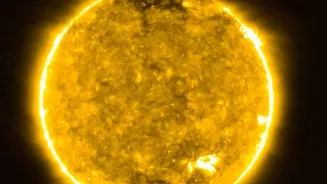
Space weather refers to the changing conditions in space, driven primarily by our own star. The sun isn't just a steady ball of light; its surface is a churning mass of hot plasma and tangled magnetic fields. Sometimes, this magnetic energy builds up
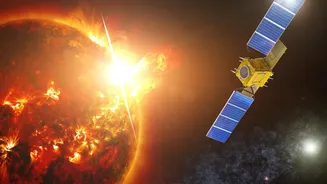
and snaps, releasing tremendous explosions. The two main types of events we worry about are solar flares and coronal mass ejections (CMEs). A solar flare is an intense burst of radiation that reaches Earth in about eight minutes. A CME is a much larger eruption, flinging billions of tons of solar plasma into space. If aimed at Earth, a CME can take anywhere from 18 hours to a few days to arrive, triggering what's known as a geomagnetic storm.
Satellites in the Firing Line
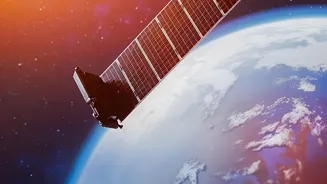
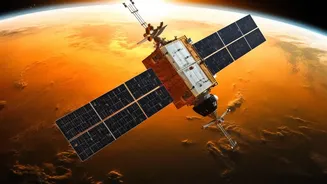
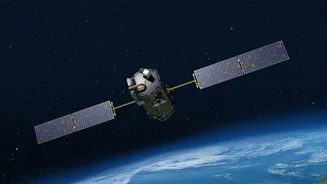
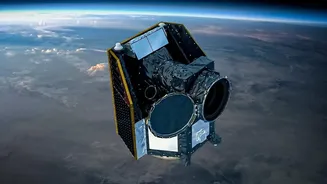
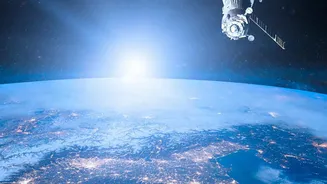
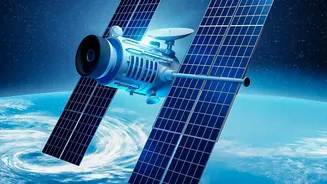
Satellites orbiting outside Earth's protective atmosphere are highly vulnerable to this solar onslaught. High-energy particles from a solar storm can damage sensitive electronics, degrade solar panels, and cause system malfunctions or even complete failure. These particles can also create 'phantom commands', where stray electrical signals trick a satellite into performing an unintended action, like firing a thruster and pointing away from Earth. Furthermore, geomagnetic storms heat and expand Earth's upper atmosphere. This increases atmospheric drag on satellites in low-Earth orbit (LEO), slowing them down and potentially causing them to fall out of orbit prematurely. This exact scenario caused the loss of dozens of Starlink satellites in 2022, demonstrating that even moderate storms can have major consequences.
Earth’s Eyes on the Sun
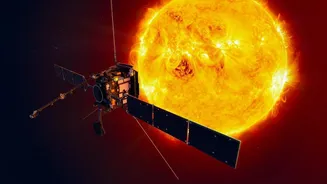
To counter these threats, a global network of ground stations and space-based observatories acts as our planetary defense system. Agencies like NOAA in the US, ESA in Europe, and ISRO in India operate a sophisticated array of instruments that constantly monitor the sun. Ground-based telescopes use magnetograms to map the sun’s shifting magnetic fields, looking for the tell-tale signs of energy build-up that often precede a flare or CME. Meanwhile, spacecraft like the Solar Dynamics Observatory (SDO) and the Deep Space Climate Observatory (DSCOVR) provide real-time data from space. DSCOVR is positioned at a special point 1.5 million kilometres from Earth, allowing it to detect solar wind and CMEs about an hour before they hit our planet, providing a crucial early warning. ISRO's Indian Network for Space Weather Impact Monitoring (InSWIM) also plays a vital role, using a network of receivers and sensors to study how space weather specifically impacts the ionosphere over India.
From Forecast to Action
When space weather forecasters detect a threat, they issue alerts to satellite operators. These warnings allow operators to take protective measures. The most common action is to place a satellite into 'safe mode'. This involves shutting down non-essential and high-voltage systems to minimize the risk of electrical damage from charged particles. The satellite essentially hunkers down, keeping only core functions like thermal control and communication active until the storm passes. For satellites in low orbits, operators might use onboard thrusters to boost their altitude, counteracting the increased atmospheric drag from a geomagnetic storm. Spacecraft are also built with physical shielding and radiation-hardened electronics to withstand the harsh environment of space, but these operational maneuvers are a critical final line of defense.