






An Icy Moon with a Big Secret
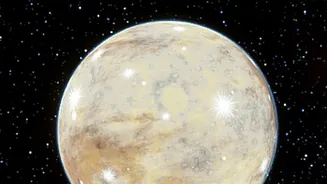
Europa has captivated scientists for decades. It is one of the smoothest objects in the solar system, lacking the heavy cratering seen on many other moons. This suggests its surface is relatively young and geologically active, constantly being resurfaced.
Evidence gathered by missions like Galileo and the Hubble Space Telescope points to the source of this activity: a global ocean of liquid, salty water hidden beneath an ice shell estimated to be 15 to 25 kilometers thick. The gravitational tug-of-war with Jupiter generates tidal heating, which is believed to keep this internal ocean from freezing solid and could potentially create energy-rich environments like hydrothermal vents on the seafloor.
The Quest for Life's Ingredients
The primary goal of exploring Europa is not to find life itself, but to determine if the moon has the three key ingredients necessary for life as we know it: liquid water, essential chemical elements, and a source of energy. We know the water is likely there. The chemical building blocks—such as carbon, hydrogen, nitrogen, oxygen, and sulfur—may be present on Europa's surface or cycled up from the rocky seafloor. Energy could come from the tidal flexing caused by Jupiter's gravity, driving chemical reactions on the seafloor that could sustain organisms without sunlight. NASA's Europa Clipper mission is designed specifically to investigate these three pillars of habitability.
Meet the Europa Clipper
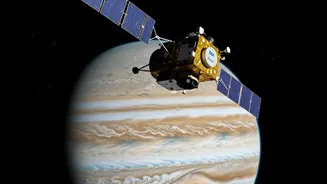
Drilling through miles of ice is a monumental challenge for future missions. So, NASA’s Europa Clipper will take a different approach. Launched in October 2024 and scheduled to arrive in the Jupiter system in 2030, the spacecraft will perform dozens of close flybys of Europa rather than orbiting the moon directly, which helps protect it from Jupiter's intense radiation. During these passes, some as low as 25 kilometers from the surface, a suite of nine powerful instruments will map the surface, analyze its composition, and probe the world below the ice. This heavily shielded probe is the most advanced mission ever sent to study an ocean world.
A Toolkit for an Alien Ocean
Clipper's instruments are designed to work together to create a complete picture of Europa. An ice-penetrating radar will measure the thickness of the ice shell and search for subsurface lakes. Spectrometers will analyze the surface to identify salts, organic molecules, and other compounds that might give clues about the ocean's chemistry. A magnetometer will confirm the ocean's existence and estimate its depth and salinity by measuring the magnetic field generated within the conductive saltwater. Perhaps most excitingly, instruments will also try to sample any plumes of water vapor that may be erupting from the surface, offering a potential direct taste of the ocean's contents without having to drill.
What a Discovery Would Mean
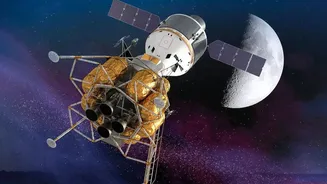
While Europa Clipper is not equipped to detect life directly, its findings will be revolutionary. By confirming the presence of a habitable environment, it would pave the way for future missions, such as a lander, which could search for biosignatures—the telltale signs of past or present life. Discovering life on Europa, even simple microbes, would fundamentally change our understanding of our place in the universe. It would prove that life is not unique to Earth and can arise in dark, distant oceans, radically expanding the number of places we might look for it, both in our solar system and beyond.