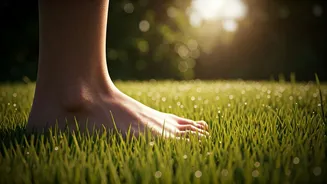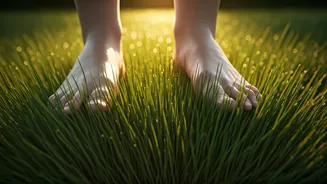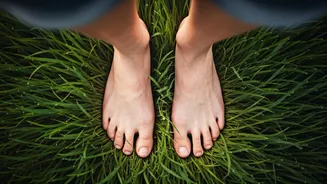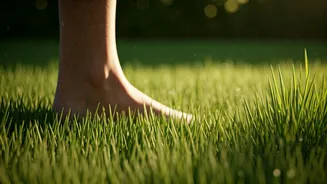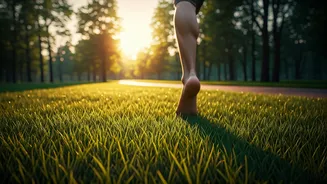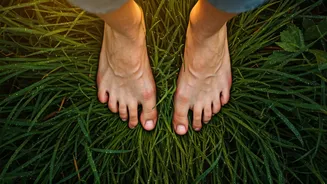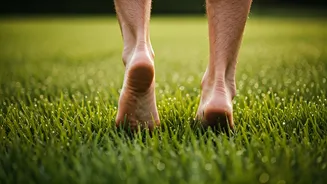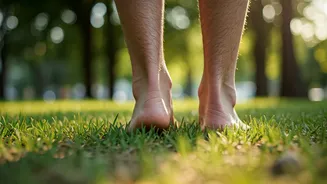







The Science Beneath Your Feet
The claim that walking barefoot boosts ankle stability isn't just an old wives' tale; it's rooted in biomechanics and neuroscience. Our feet are packed with thousands of nerve endings designed to send information to the brain about the surface we're on.
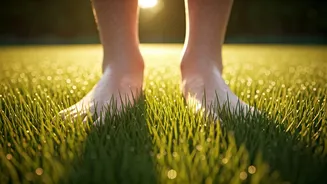
This system is called proprioception—your body's awareness of its position in space. When you wear cushioned shoes, you dull this feedback loop. The thick soles act as a buffer, preventing your feet from sensing the subtle variations in the ground. As a result, the small, intrinsic muscles in your feet and around your ankles don't have to work as hard to make micro-adjustments. Walking barefoot, especially on an uneven surface like a lawn, forces these systems to wake up. Your toes learn to grip, your arch flexes, and the muscles and ligaments supporting your ankle are constantly engaged to maintain balance. It's like a workout for a part of your body that's been asleep inside your shoes.
More Than Just Stable Ankles
While improved ankle stability is a primary benefit—making you less prone to sprains and falls—the advantages of barefoot walking don't stop there. Engaging the full mechanics of your feet can lead to better overall posture. When your feet are functioning correctly, it aligns the entire kinetic chain, from your ankles up through your knees, hips, and spine. Many people report a stronger sense of balance and a more natural gait after incorporating regular barefoot sessions. Furthermore, this practice strengthens the intrinsic foot muscles that support your arches. For individuals with flat feet or those who experience foot fatigue, building this natural support can be more effective in the long run than relying solely on orthotic inserts. Some studies even suggest benefits for circulation and reduced inflammation, though this research is still developing. At its core, it's about returning your feet to their natural, intended function.
Before You Kick Off Your Shoes
Public park lawns are not pristine, sanitised environments. Before you embrace your inner naturalist, a dose of caution is essential. The most obvious risks are sharp objects hidden in the grass: broken glass, sharp stones, thorns, or metal scraps. A small cut on the foot can easily become infected. Beyond visible dangers, consider the invisible ones. Lawns may be treated with pesticides and fertilisers that you don't want to absorb through your skin. Animal waste is another concern, as it can carry bacteria and parasites. People with diabetes or any condition that causes neuropathy (loss of sensation in the feet) should be especially careful, as they might not feel an injury when it occurs. Always perform a visual scan of the area you plan to walk on. Choose a clean, well-maintained patch of grass, preferably one you are familiar with. If you have any open cuts or sores on your feet, it's best to wait until they are fully healed.
A Beginner's Guide to Grounding
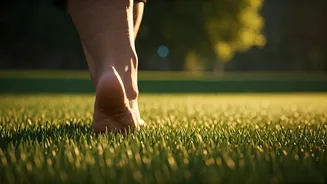
Ready to give it a try? Don't just head out for a 5-kilometre barefoot trek. Your feet have been coddled by shoes for years and need time to adapt. Start small. Begin with just 5 to 10 minutes of walking on a soft, safe surface like a clean lawn. Pay attention to how your body feels. You might notice some initial tenderness in the soles of your feet or soreness in your calves and arches. This is normal, as you're using muscles in a new way. As your feet get stronger, you can gradually increase the duration and try different natural surfaces, like sand or smooth dirt paths. Focus on your form: land gently on your midfoot or forefoot rather than crashing down on your heel. Keep your steps light and your senses engaged. The goal isn't to cover distance but to reconnect with the ground and retrain your body's natural movement patterns. Always carry your shoes with you in case you need to put them on quickly.