



Seeing the Universe in a New Light
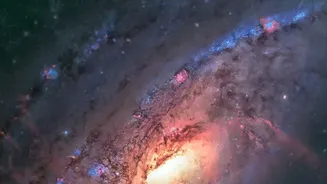
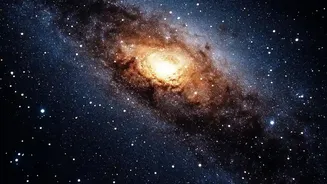
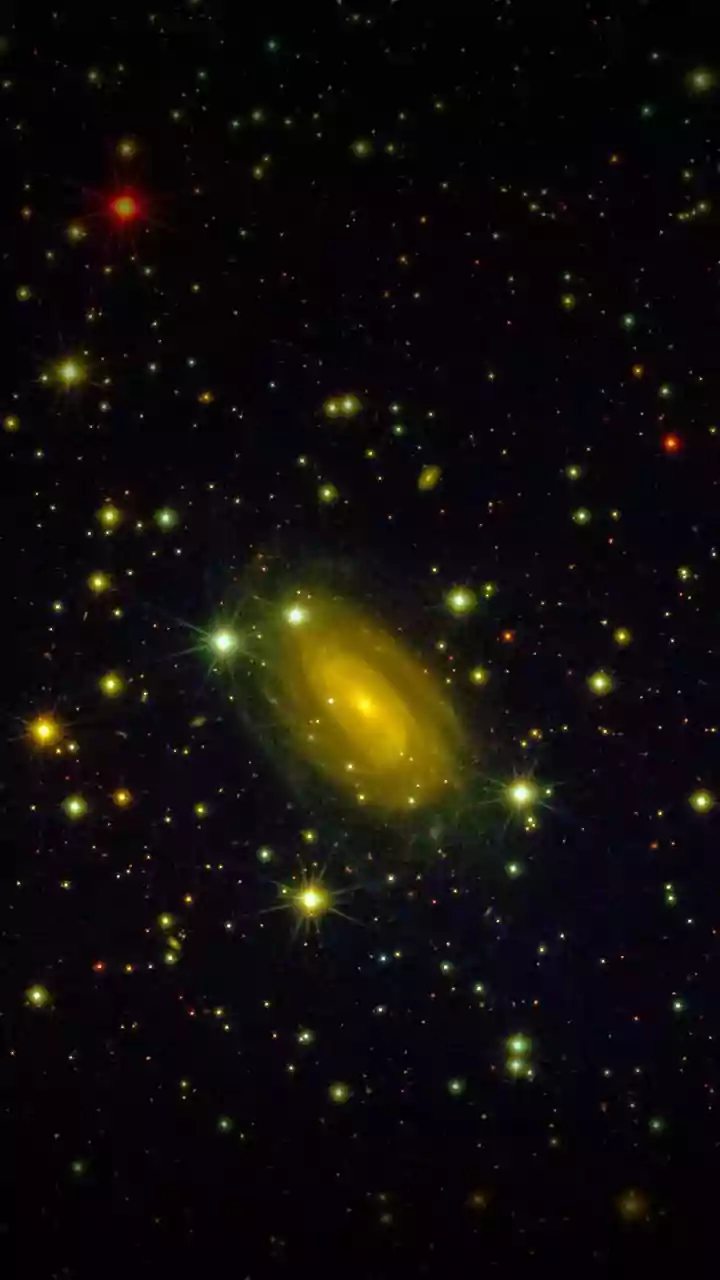
When we look at a typical picture of a galaxy, we’re usually seeing what a telescope sensitive to visible light can capture—the same kind of light our eyes perceive. This gives us a beautiful snapshot of billions of stars, glowing dust lanes, and the grand
spiral structures we’ve come to associate with galaxies. But this is far from the whole story. The universe is teeming with processes that are invisible to us, events so hot and energetic that they don't glow in visible light. Instead, they blaze in other wavelengths, particularly X-rays. By turning X-ray telescopes like NASA's Chandra X-ray Observatory towards the sky, astronomers can finally see this hidden, violent side of the cosmos, revealing a universe that is far more dynamic than what meets the eye.
The Hunt for Cosmic Goliaths
Among the most massive structures in the universe are galaxy clusters—colossal assemblies of hundreds or even thousands of galaxies bound together by gravity. These cosmic giants are not just collections of galaxies; they are also filled with a vast sea of incredibly hot gas, known as the intracluster medium. This gas is heated to millions of degrees as the cluster forms and collapses under its own immense gravity. Seeing this hot gas is crucial, as it acts as a definitive sign that a group of galaxies is a true, gravitationally bound cluster and not just a temporary alignment in the sky. Astronomers are in a race to find the earliest, most distant of these clusters to understand how the very first large-scale structures in the universe were born and grew.
A Surprisingly Mature Discovery
Recently, astronomers made a groundbreaking discovery that challenges our understanding of the early universe. Using the deepest X-ray observations ever taken, they found a protocluster named JADES-ID1. Located so far away that we are seeing it as it was just one billion years after the Big Bang, JADES-ID1 was expected to be a loose, still-forming collection of young galaxies. However, data from the Chandra observatory revealed something astonishing: the unmistakable signature of a hot intracluster medium. This X-ray glow is the smoking gun, proving that JADES-ID1 is not a chaotic group of galaxies still coming together, but already a mature, gravitationally bound system. It is the earliest protocluster ever found to contain this hot gas, a stage of development previously not seen until the universe was at least three billion years old.
Rewriting the Story of Cosmic Dawn
The existence of such a well-formed cluster so early in cosmic history has profound implications. Most cosmological models predicted that structures like JADES-ID1 should have been at much earlier, less-developed stages of formation at that time. Finding a mature, bound group with hot, X-ray-emitting gas suggests that the process of cosmic structure growth may have been far more efficient or started much earlier than previously believed. This single discovery could force scientists to rethink their models of how galaxies assemble and how the largest structures in our universe took shape in the cosmic dawn. It's a powerful example of how adding one piece of data—in this case, from X-rays—can fundamentally change the entire picture.
The Power of Multi-Wavelength Astronomy
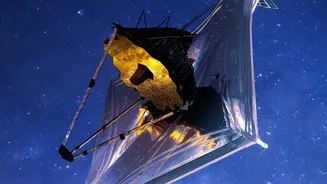
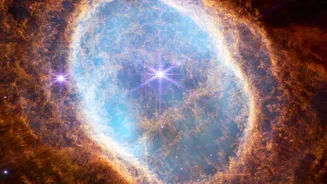
The discovery of JADES-ID1 was only possible through a collaborative effort between different powerful telescopes. While telescopes like the James Webb Space Telescope were crucial in identifying the individual distant galaxies, they couldn't see the hot gas holding them together. Only Chandra's X-ray vision could detect that high-energy component and reveal the cluster's true nature. This multi-wavelength approach is the future of astronomy. By combining data from across the electromagnetic spectrum—from radio waves to visible light to X-rays—astronomers are piecing together a more complete and complex tapestry of the universe, uncovering secrets that would remain hidden if we only looked with a single set of eyes.