


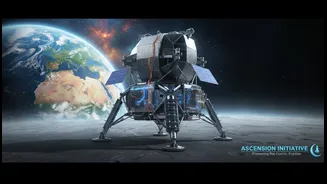


A Frontier of Permanent Shadow
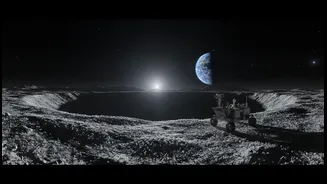
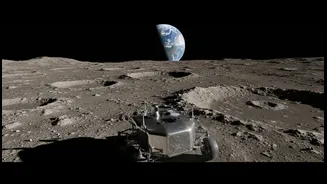
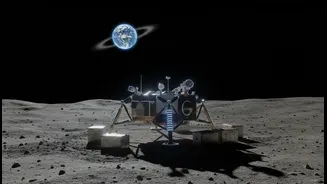
The Moon’s south pole is unlike any place humans have visited before. Unlike the equatorial regions explored during the Apollo era, the south pole is a land of extreme contrasts. Because of the Moon's slight axial tilt, the Sun barely rises above the horizon.
This creates mountain peaks that are bathed in near-perpetual sunlight, ideal for solar-powered equipment. But it also casts deep, dark shadows into craters that haven't seen the Sun in billions of years. These permanently shadowed regions (PSRs) are some of the coldest places in our solar system, with temperatures plunging to around minus 250 degrees Celsius. It is this extreme cold that makes them perfect cosmic freezers, capable of preserving materials for eons. While these conditions make landing and operating spacecraft incredibly challenging, they also create an environment ripe for historic discoveries.
The Search for Lunar Water
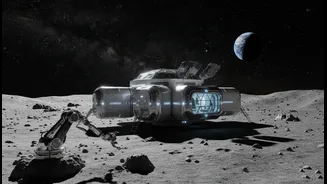
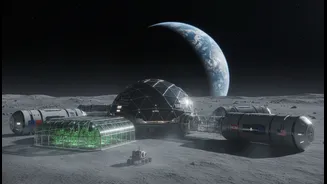
The single most important reason the south pole is so alluring is the confirmed presence of water ice. For decades, the Moon was thought to be bone-dry. But data from missions including India's own Chandrayaan-1 in 2009 began to change that picture, detecting water molecules on the surface. The south pole's PSRs, however, are believed to hold vast reservoirs of this frozen water. This isn't just about finding a celestial water source; it's about unlocking the future of space exploration. Water can be filtered for drinking and used to grow plants. More importantly, it can be split into hydrogen and oxygen. This provides breathable air for astronauts and, critically, the two key ingredients for rocket fuel. The ability to refuel on the Moon would transform it from a desolate rock into a strategic outpost—a refuelling station for more ambitious missions to Mars and beyond.
Chandrayaan-2's Enduring Legacy
This is where the often-overlooked success of Chandrayaan-2 comes into play. While the world watched the heartbreaking loss of the Vikram lander in 2019, the mission's orbiter continued its work flawlessly. Equipped with a suite of advanced instruments, its Dual-Frequency Synthetic Aperture Radar (DFSAR) has been peerlessly scanning the lunar surface. Recent findings from this instrument have provided some of the strongest evidence yet for the presence of subsurface ice. By analysing how radar signals bounce back, scientists at ISRO and the Physical Research Laboratory have identified signatures consistent with buried ice deposits in several craters. One crater, in particular, showed compelling signs, suggesting an impact may have even excavated some of this hidden ice. This data is invaluable, helping to map out where these resources are most concentrated.
Paving the Way for a Historic Landing
The data from the Chandrayaan-2 orbiter did more than just confirm scientific theories; it provided a critical roadmap for its successor. The high-resolution imagery and topographical data it gathered were instrumental in planning the successful soft landing of Chandrayaan-3 in August 2023. The orbiter helped ISRO identify a safer, more stable landing site, mitigating the risks that plagued the first attempt. In a beautiful display of teamwork across missions, the Chandrayaan-2 orbiter even served as a communication relay for the Chandrayaan-3 lander, welcoming it to the Moon. This synergy demonstrates a core strength of India's space program: resilience and the ability to turn partial failures into foundational successes.
The New Geopolitical Hotspot
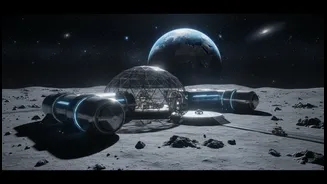
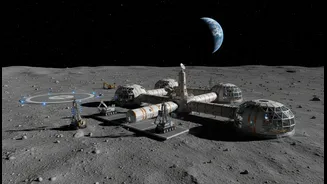
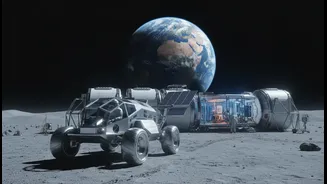
India's success has not gone unnoticed. The lunar south pole is now at the centre of a new space race involving the world's major powers. NASA's Artemis program aims to land astronauts in the region and eventually establish a permanent moon base. China also has ambitious plans with its Chang'e missions to explore the south pole for water ice. By being the first nation to successfully land a craft in this challenging terrain, India has secured a crucial seat at the table. The data provided by Chandrayaan-2 and the ground-truth proven by Chandrayaan-3 are not just national achievements; they are vital contributions to humanity's collective push to become a multi-planetary species.