





The Challenge of Urban Stargazing
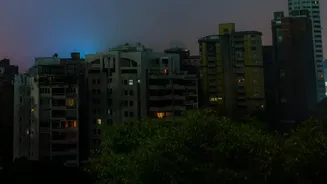
The primary obstacle for any city-based astronomer is light pollution. This phenomenon, caused by excessive artificial light from streetlights, buildings, and cars, creates a bright haze or 'skyglow' that blankets the night sky. This glow drastically
reduces the visibility of celestial objects, particularly faint stars, nebulae, and distant galaxies. The sky's brightness is often measured on the Bortle scale, which runs from Class 1 (an excellent dark-sky site) to Class 9 (an inner-city sky). In a major city, you might only be able to see a few dozen of the brightest stars and planets, while thousands are visible from a truly dark location.
Your Phone: A Pocket Planetarium
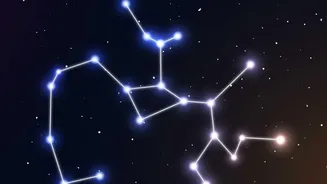
This is where astronomy apps transform your stargazing experience. These powerful applications use your phone’s built-in GPS and compass to generate a real-time map of the sky directly above you. By simply pointing your device towards the sky, the app’s augmented reality (AR) feature overlays constellation patterns, star names, and planet locations onto your screen. This allows you to identify what you're looking at, even if the object is too faint to be seen clearly with the naked eye. They act as a guide, showing you exactly where to look for specific constellations and helping you make sense of the few bright points you can see.
Key Features That Conquer the Glow
Modern astronomy apps are designed with the urban user in mind. Many include features specifically to mitigate the effects of light pollution. The most useful is a magnitude adjuster or light pollution simulator. This allows you to tell the app how light-polluted your location is (often using the Bortle scale), and it will adjust the star map to show only the objects that should be visible to you under those conditions. This prevents the frustration of searching for a star cluster that stands no chance against the city skyglow. Another crucial feature is a red-light mode, which tints your screen red to preserve your night vision while you observe.
Top App for Beginners: SkyView Lite
For those just starting, SkyView Lite is an excellent choice due to its simplicity and intuitive design. You don't need to be an astronomer to use it; just point your phone at the sky, and the app will identify stars, constellations, and even passing satellites like the International Space Station. Its AR feature is seamless, overlaying constellation art to help you visualize the shapes. While the free version has a smaller database than paid apps, it is more than sufficient for learning the major constellations and locating bright planets. It also works offline, making it perfect for camping trips where you might have a darker sky but no data signal.
Best All-Rounder: Star Walk 2
Star Walk 2 is a visually stunning app that balances user-friendliness with a rich database of celestial objects. It’s praised as a great option for beginners looking to learn more about the night sky. A key feature is its 'Visible Tonight' section, which tells you the best objects to observe from your specific location on any given night, taking factors like light pollution into account. The app’s time travel function allows you to see the sky on different dates and times, which is perfect for planning when a certain constellation will be in the best position for viewing.
For the Enthusiast: Stellarium Mobile
Stellarium is a well-known name in the astronomy community, and its mobile app brings the power of its desktop software to your phone. It is lauded for its realism and comprehensive database. Stellarium’s light pollution simulator is particularly robust, allowing you to set a Bortle scale value from 1 to 9 to get a very realistic depiction of what you can expect to see. This makes it an invaluable tool for serious hobbyists who want to know precisely which fainter objects might still be within reach of their binoculars or small telescope from a suburban backyard.
Tips for Better Urban Viewing
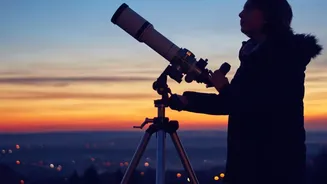
Beyond using an app, a few simple tricks can improve your experience. First, let your eyes adapt to the darkness for at least 20-30 minutes; this will help you spot fainter stars. Second, try to find a viewing spot that blocks direct glare from streetlights, such as a park or a building's shadow. Even moving to a higher floor in an apartment building can sometimes offer a clearer view. Finally, pay attention to atmospheric conditions. Hazy or humid nights will scatter more light and worsen the skyglow, so plan your stargazing for clear, crisp evenings.