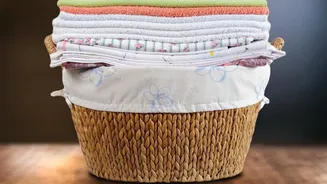







It’s a familiar frustration: you pull a favourite sweater from storage, only to be met with a stale, musty smell. This common problem isn’t a sign of uncleanliness, but rather a hidden issue with moisture and, most importantly, a lack of airflow.
The Science of Stale Smells
That
distinct 'closet funk' is more than just an old smell; it's the result of biological activity. When moisture is present in a dark, enclosed space with limited air circulation, it creates the perfect breeding ground for mould, mildew, and odour-causing bacteria. These microorganisms feed on organic matter found on clothes, such as lingering body oils, sweat, or skin cells, even on garments that appear clean. As they grow, they release volatile organic compounds (VOCs), which produce the tell-tale musty odour. The core ingredients for this problem are simple: trapped moisture and stagnant air.
Airflow: Your Wardrobe’s Best Defence
Proper airflow is the single most effective tool against mustiness because it directly tackles the root cause: trapped moisture. When air circulates freely, it wicks away dampness from fabric fibres before it can settle and encourage mildew growth. Think of it as preventative maintenance for your clothes. Stagnant air allows humidity to build up, creating pockets of moisture between tightly packed garments or where clothes touch a cold exterior wall. By improving ventilation, you disrupt this process, keeping the environment inside your closet dry and inhospitable to the microorganisms that create foul smells.
Before You Store: The Cardinal Rules
Effective storage begins long before anything is packed away. The most crucial step is to ensure every single item is completely clean and, just as importantly, bone dry. Storing clothes that are even slightly damp is the number one cause of musty odours. Body oils and dirt act as a food source for mildew, so washing or dry-cleaning items before long-term storage is non-negotiable. After washing, give clothes ample time to air out; an extra day can make all the difference. Letting fabrics cool completely after drying is also wise, as packing warm clothes can trap steam inside storage containers.
Creating Space to Breathe
Overstretching a closet is a common mistake that suffocates your clothes. When garments are crammed together on a rail or squashed onto shelves, air cannot move between them. A good rule of thumb is to leave enough space so you can easily remove an item without tugging it free. Using slim hangers can help create more space. For folded items, avoid building tall, compressed piles. Shelf dividers can help maintain separation and airflow. Also, try to leave a small gap between your clothes and the back wall of the closet, especially if it's an exterior wall where condensation can form.
Choosing Containers and Boosting Circulation
The right container can make a significant difference. For natural fibres like wool or cotton, breathable containers such as canvas boxes or cotton garment bags are ideal. Avoid storing items longterm in the plastic bags from the dry cleaner, as they trap moisture and chemicals. While airtight plastic bins can protect against pests, they also lock in any residual moisture, so be certain clothes are perfectly dry. For an extra boost, you can employ simple tools. A small, portable dehumidifier placed in or near the closet is highly effective. Natural moisture absorbers like baking soda or activated charcoal can also be placed on a shelf to capture humidity and odours. Finally, one of the easiest habits to adopt is to simply leave your closet doors ajar for a few hours each day to let the air exchange.