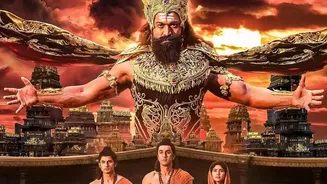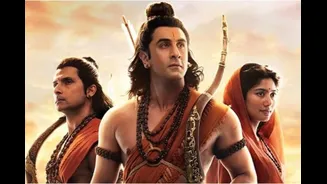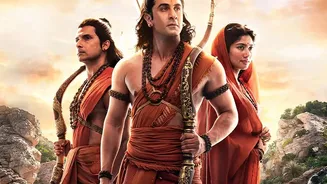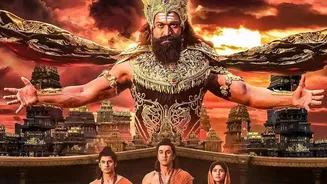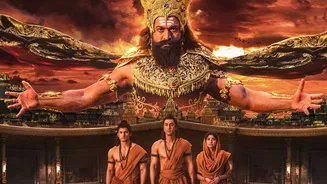




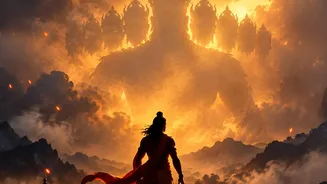

Nitesh Tiwari's 'Ramayana: Part One' is not just a film; it's a cultural tsunami. Three weeks in, the mythological epic continues its historic run, shattering records at home and rewriting the rules for Indian cinema on the global stage.
A Juggernaut in the Domestic Market
In India, the
film's performance has been nothing short of spectacular. As of its twentieth day in theatres, the magnum opus starring Ranbir Kapoor as Lord Ram, Sai Pallavi as Sita, and Yash as Ravana is steadily approaching the coveted ₹1,000 crore net collection mark. According to industry trackers, the total domestic net has climbed to ₹972.95 crore, with a gross collection of ₹1,162.15 crore. The film's Hindi version is leading the charge, contributing over ₹725 crore to the net total after 19 days. However, its success isn't confined to a single language. The film has seen impressive collections from its dubbed versions in Malayalam, Kannada, Tamil, and Telugu, demonstrating a true pan-India appeal that few films achieve. The audience response has been overwhelmingly positive, with viewers praising the visual effects, grand scale, and the powerful performances of the lead cast.
Breaking New Ground Overseas
The film's domestic triumph is matched by its groundbreaking performance in international markets. With overseas earnings reaching ₹573 crore ($68 million), 'Ramayana' is doing phenomenally well abroad. In North America, it has already set a new benchmark, earning approximately $28.41 million and becoming the highest-grossing Indian film in the market. This success has prompted theatre chains in areas with large Indian-American communities to retain IMAX screens for the film to meet sustained demand. The story is similar in other key territories. In Nepal, the film has become the highest-grossing Indian film ever, with collections crossing NPR 26.90 crore (approximately ₹16.81 crore). This widespread success underscores a growing global appetite for large-scale Indian stories rooted in the nation's rich cultural and mythological heritage.
The Nitesh Tiwari Touch
Much of the credit for the film's incredible success is being attributed to director Nitesh Tiwari. With 'Ramayana', Tiwari has become the only Indian director to have two films gross over ₹1,500 crore worldwide, the first being his 2016 blockbuster 'Dangal'. Known for his ability to handle grand narratives with emotional depth, Tiwari's direction has been lauded for balancing spectacle with substantive storytelling. Early audience reactions praised his detailed character arcs for Ram, Sita, and Ravana, which added layers to the epic tale. By assembling a powerhouse cast and a world-class technical team, including Oscar-winning composers A.R. Rahman and Hans Zimmer, Tiwari has delivered a cinematic experience that feels both authentic to its roots and globally competitive.
More Than a Movie: A Cultural Event
The 'Ramayana' phenomenon goes beyond mere box office numbers; it has become a shared cultural experience. The story's deep roots in Indian culture ensure an inherent connection with the audience, who view the epic not just as fiction but as living history. This modern retelling, enhanced with cutting-edge VFX, has resonated across generations. Social media has been flooded with videos from cinemas showing audiences cheering and chanting at the entry of key characters like Hanuman, played by Sunny Deol. The film's premiere in Los Angeles was met with comparisons to 'The Lord of the Rings', highlighting its epic scope and potential for crossover appeal. While some critics pointed to a musical score that didn't always land and a reliance on spectacle, the overwhelming public verdict is that the film is a monumental achievement.
A New Blueprint for Indian Epics
With a worldwide gross of ₹1,735.15 crore after 20 days, 'Ramayana: Part One' is already among the top five highest-grossing Indian films of all time. Its monumental success serves as a powerful validation for the recent trend of producing large-scale mythological films in Indian cinema. It demonstrates that with the right vision, budget, and respect for the source material, these ancient stories can dominate the modern box office. The film's success lays a strong foundation for its sequel, now planned for a Diwali 2028 release, and provides a blueprint for other filmmakers looking to tap into India's vast trove of epic narratives for a global audience.