




The New Lunar Gold Rush
Forget the equatorial plains visited by Apollo astronauts; the new lunar frontier is the south pole. This cold, dark, and treacherous region has become the focus of a modern space race involving NASA's Artemis program, China, Russia, India, and a growing
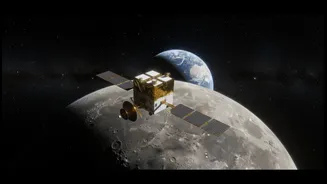
number of private firms. The prize they are all chasing is water. For decades, the Moon was thought to be bone-dry. But a series of missions since the late 1990s, including NASA's Lunar Reconnaissance Orbiter (LRO), confirmed the presence of hydrogen and water ice, concentrated in Permanently Shadowed Regions (PSRs) at the poles. These are craters and depressions that haven't seen direct sunlight in billions of years, creating 'cold traps' where temperatures plummet low enough to preserve frozen volatiles.
Why Ice Is Everything
Lunar ice isn't just about finding a drink for future astronauts. Its value is immense and strategic. Water (H2O) can be split into its component parts: oxygen and hydrogen. Oxygen provides breathable air for lunar habitats. Hydrogen and oxygen are also the primary components of powerful rocket propellant. The ability to 'mine' water and manufacture air and fuel on the Moon—a concept known as in-situ resource utilization (ISRU)—would be a game-changer. It could drastically reduce the cost of space exploration, freeing missions from having to launch everything they need from Earth. A lunar base could become a self-sustaining outpost and a refueling station for missions deeper into the solar system, like Mars. Scientifically, this ancient ice is a pristine record of the solar system's history, potentially holding clues to the origin of Earth's oceans and even life itself.
The Unseen Threat of Contamination
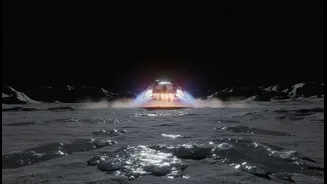
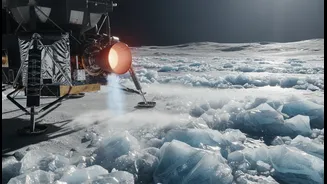
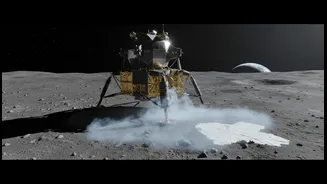
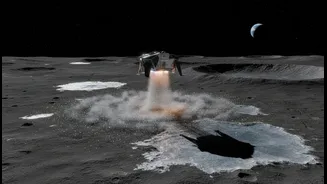
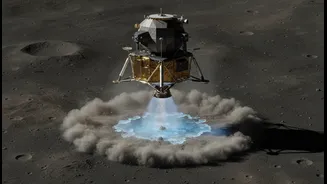
Herein lies the paradox. To access and study this ice, we must land spacecraft nearby. Every lander, from a small robotic probe to a large human vehicle, uses rocket engines for a controlled descent. These engines blast the surface, kicking up dust and spewing exhaust. Recent studies and computer simulations show this exhaust doesn't just settle locally. On the airless Moon, exhaust gases—which are primarily water vapor but also include other chemicals like methane—expand rapidly and can travel across the entire lunar surface in mere hours or days. Molecules can 'hop' across the landscape until they find a cold enough place to freeze, and the coldest places are the very PSRs scientists want to study. This means a lander touching down hundreds of miles away could contaminate a scientifically vital ice deposit before anyone even gets there to sample it.
A Race Against Ourselves
The scientific community is now facing a race against its own ambitions. The primary component of rocket exhaust is often water, the very substance researchers are trying to find in its native state. Distinguishing between billions-of-years-old cometary ice and water from a lander that arrived last Tuesday becomes a monumental challenge. This issue has given new urgency to missions designed to get ahead of the contamination, like NASA's now-threatened VIPER rover. The Volatiles Investigating Polar Exploration Rover was designed to be a golf-cart-sized robot that would map the location and concentration of ice, effectively creating a resource map before the poles become crowded. Scientists are urging that monitoring the spread of exhaust gases become a routine part of all future lunar missions. The concern is that without careful planning and 'planetary protection' strategies, we could inadvertently erase a priceless scientific record while pursuing economic resources.