


The Final Dress Rehearsals
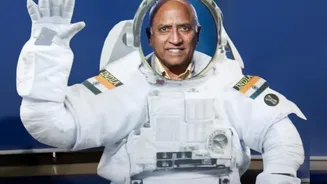
Before Indian astronauts, or 'Vyomnauts', strap into their capsule, the Indian Space Research Organisation (ISRO) must ensure every system is flawless. This is where the test flights come in. ISRO has planned a series of uncrewed missions to validate
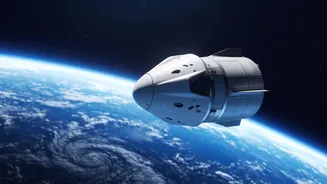
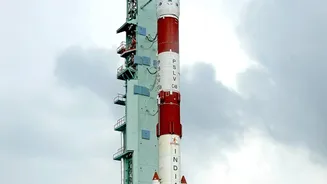
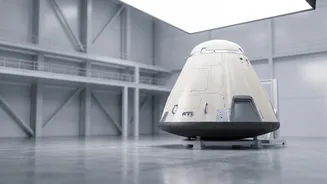
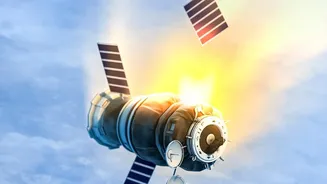
every single component of the flight in real-world conditions. The first of these, the Gaganyaan-1 (G1) mission, is slated for late 2026. This flight, along with subsequent uncrewed tests, will act as a full dress rehearsal. The goal is to demonstrate that the powerful, human-rated LVM3 rocket, the orbital module carrying the crew, and the life support systems all perform exactly as designed from launch to splashdown.
Safety Above All Else
When human lives are at stake, there is no margin for error. This philosophy is the driving force behind the exhaustive testing. A satellite failure is a financial and scientific loss; a human spaceflight failure is a national tragedy. The most critical system being tested is the Crew Escape System (CES). This is designed to act like an ejection seat, pulling the crew capsule and its occupants away to safety within milliseconds if the launch vehicle malfunctions on the pad or during ascent. ISRO has already conducted successful trials of this system, including an in-flight abort test where the CES was deliberately fired mid-flight to prove it could rescue the crew module under emergency conditions. Further tests will continue to validate the parachute systems that slow the capsule for a safe ocean splashdown.
Meet Vyommitra: The Humanoid Stand-In
The first uncrewed Gaganyaan missions will not be entirely empty. Onboard will be Vyommitra, a sophisticated humanoid robot developed by ISRO. Vyommitra, whose name means 'space friend' in Sanskrit, will simulate the presence of a human astronaut. The robot can monitor key cabin parameters like temperature and pressure, operate switch panels, and communicate with ground control. Data gathered from Vyommitra’s sensors will be invaluable, providing real-time information on the conditions inside the capsule and how the Environmental Control and Life Support System (ECLSS) performs in the harsh environment of space. This ensures the cabin is perfectly safe before any human flies.
Paving the Path to Orbit
The Gaganyaan programme aims to launch a crew of three into a 400-kilometre low-Earth orbit for a mission lasting three days. Each successful test flight is a crucial milestone on the path to this goal. Following a series of delays, partly due to the pandemic and the sheer complexity of human-rating a spacecraft, the schedule is now moving forward systematically. ISRO plans for at least two to three uncrewed test flights before clearing the first crewed launch, now anticipated in 2027. These precursor missions will verify everything from the performance of the upgraded CE20 cryogenic engine to the precision of the re-entry and recovery operations in the Indian seas.
What It Means for India
Successfully completing these tests and launching the first crewed Gaganyaan mission will make India only the fourth nation in the world—after the United States, Russia, and China—to have an independent human spaceflight capability. This is a monumental achievement that extends far beyond the launchpad. The programme is a significant driver of technological development, boosting Indian industry, as a large portion of the hardware is sourced locally. It also creates new employment opportunities and inspires a new generation to pursue careers in science and technology. Ultimately, these upcoming tests are not just about validating hardware; they represent India's methodical and determined steps toward becoming a major player in the future of space exploration.