





Get Ready: Prepping Your Hair for Success
Before you start weaving, a little prep work goes a long way. First, thoroughly brush or comb your hair to remove any knots or tangles. A smooth canvas is crucial for a clean braid. While you can braid freshly washed hair, many find that second-day hair has
a bit more grip and texture, making it easier to handle and less likely to unravel. If your hair is very fine or silky, a light spritz of a texturizing spray can add some hold. For beginners, it's often easiest to start with a side fishtail, gathering all your hair over one shoulder. This allows you to see your work in a mirror and gets your arms used to the motions. You'll need one hair tie to secure the end of the braid and, optionally, a temporary one to hold your hair in a low ponytail to start, which can make the initial steps much easier.
The Technique: A Step-by-Step Guide
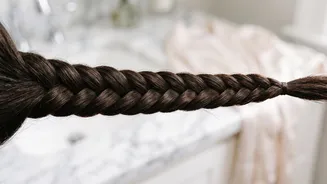
Once prepped, it's time to braid. The fishtail uses just two sections of hair, unlike the classic three-strand braid.1. Divide Your Hair: Split your hair into two large, equal sections. Hold one in each hand.2. Start Crossing Over: Take a small, thin strand of hair from the outer edge of the left section. Cross it over the top of the left section and add it to the inside of the right section. The key is to always pull from the outside and add to the inside.3. Repeat on the Other Side: Now, do the same on the opposite side. Take a small, thin strand from the outer edge of the right section, cross it over the top, and join it with the inside of the left section.4. Continue the Pattern: Keep repeating this process, alternating sides. Take a strand from the outside left and cross it to the right; then take a strand from the outside right and cross it to the left. Try to keep the strands you're crossing over a consistent size. Smaller strands create a more intricate, detailed herringbone pattern, while larger strands result in a chunkier, quicker braid.5. Secure the Braid: Continue weaving until you reach the end of your hair, then secure it with a hair tie. If you used a hair tie at the top to start, you can now carefully cut it off.
Perfecting Your Braid: Tips and Common Fixes
Don't worry if your first few attempts aren't perfect; practice is key. One of the most common challenges is maintaining even tension. Try to keep your hands close to the braid and apply a gentle, consistent pull with each crossover to prevent lumps. If you have layered hair, some pieces might poke out. A few strategically placed bobby pins can easily tuck them back in. Another beginner tip is to start with your hair in a low ponytail; this holds the base steady as you learn the weaving motion. If you find your braid looking messy or uneven, it's likely because the strands you're crossing over are different sizes. Focus on taking consistent sections each time. If you lose your place, just remember the simple rule: a small piece from the outside of one section always crosses over to join the other section.
Finishing Touches and Fun Variations
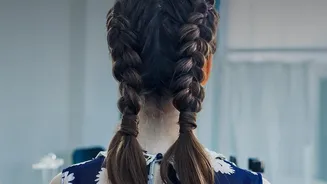
A finished fishtail is beautiful on its own, but a few final touches can elevate the look. For a fuller, more romantic style, gently pull on the edges of the braid with your fingertips. This technique, sometimes called 'pancaking', adds volume and creates an effortlessly chic, slightly messy look. Be sure to start from the bottom and work your way up, pulling gently so you don't undo the braid entirely. Once you've mastered the classic side fishtail, the possibilities are endless. Try a sleek fishtail ponytail for a polished look, or double fishtail braids for a more playful, sporty vibe. A half-up fishtail is a perfect blend of casual and elegant, while a French fishtail, which involves adding new hair from the scalp as you go, creates a stunning effect for more formal occasions. You can even weave in a thin ribbon or incorporate the braid into an updo.