







What Exactly Is an eVTOL?
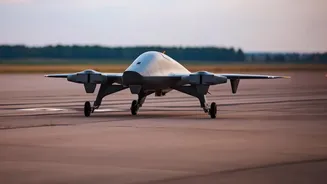
At the heart of the air taxi revolution is the eVTOL, which stands for electric Vertical Take-Off and Landing aircraft. Unlike a plane, it doesn’t need a runway, and unlike a helicopter, it aims to be significantly quieter and cleaner. These aircraft use
electric power to lift off and land vertically, making them ideal for navigating dense urban environments where space is at a premium. They are being designed to carry anywhere from two to six passengers on short-haul routes, such as from a city centre to an airport, in a fraction of the time it would take by road.
The Core Technology Powering the Flight
The key innovation behind eVTOLs is Distributed Electric Propulsion (DEP). Instead of a few large engines, these aircraft use multiple smaller electric motors and propellers distributed across the airframe. This provides not only lift but also redundancy; if one motor fails, the others can compensate to ensure a safe landing. Power comes from advanced battery packs, a field seeing rapid innovation driven by the electric vehicle market. Initially, these aircraft will be flown by pilots, but many are designed with the capability for autonomous, pilotless operation in the future, once regulations and technology mature.
India's Push for Urban Air Mobility
The Indian government and private sector are actively pursuing this new form of transit, known as Advanced Air Mobility (AAM). The goal is to see the first electric air taxis flying in India by 2028, with trials and testing expected to ramp up significantly in 2027. The initial focus is on heavily congested cities like Bengaluru, Mumbai, and Delhi. Leading the charge are homegrown startups like The ePlane Company, an IIT Madras-incubated firm that recently unveiled a full-scale prototype of its e200X aircraft. Global players like Archer Aviation have also partnered with Indian companies, such as InterGlobe Enterprises, to bring their services to the country.
The Regulatory Flight Path
For air taxis to become a reality, a robust regulatory framework is essential. India's Directorate General of Civil Aviation (DGCA) is spearheading this effort, developing new rules for everything from aircraft certification and pilot licensing to the operation of 'vertiports'—the landing and takeoff pads for eVTOLs. In late 2024, the DGCA issued crucial guidelines for vertiport design and the airworthiness of eVTOL aircraft, signalling a clear path forward for the industry. The government is also working on a dedicated Unmanned Aircraft Traffic Management (UTM) system to safely manage these new aircraft in the same airspace as drones and conventional planes.
Significant Hurdles Remain on the Horizon
Despite the optimism, the journey is complex. Key challenges include developing batteries that are powerful and light enough for efficient flight, building a network of expensive vertiports, and managing air traffic in crowded skies. Public acceptance and affordability are also major concerns. For air taxis to be more than a luxury service for the wealthy, operational costs must be brought down, which proponents argue can be achieved through localization of manufacturing and high-volume operations. Safety remains the most critical hurdle, with regulators demanding standards equivalent to those of commercial airliners to ensure public trust.