


A Planet in Flux
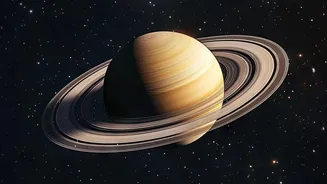
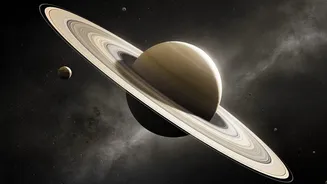
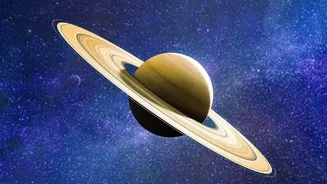
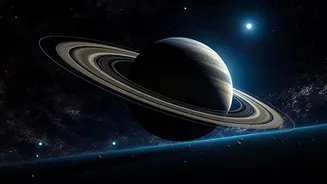
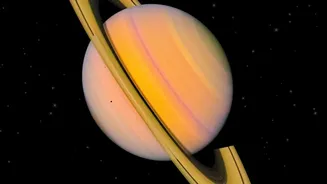
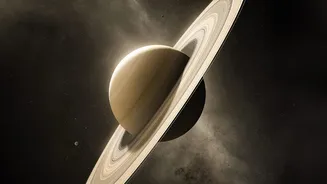
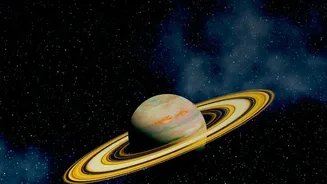
The latest observations, part of the Outer Planet Atmospheres Legacy (OPAL) program, showcase a world in the midst of profound seasonal change. With a year that lasts over 29 Earth years, Saturn’s seasons are immense, each spanning more than seven of our
years. The new infrared views capture the planet as it continues its slow march toward its 2025 equinox, a point where its rings will appear edge-on to us. These images are critical for tracking how the sunlight, or lack thereof, affects the planet's weather. As the southern hemisphere transitions towards its spring and eventual summer in the 2030s, scientists expect to get even better views of its evolving climate.
Seeing in a New Light
Observing in infrared light allows scientists to peel back the layers of Saturn's atmosphere like an onion. While visible light shows the subtle colours of the upper cloud bands, infrared can detect heat. This allows astronomers to see deeper into the planet’s atmosphere, past the high-altitude haze, revealing the structure of clouds and chemicals below. These new images highlight temperature differences between the hemispheres and expose storm systems that might otherwise be hidden. This multi-layered view is essential for understanding Saturn as a complex, three-dimensional system, not just a static ball of gas.
Tracking Titanic Storms
Saturn is a world of extreme weather, with winds that can whip around the planet at incredible speeds and storms larger than Earth itself. The OPAL program, which has been monitoring the outer planets for over a decade, provides an invaluable long-term record of these atmospheric phenomena. For example, Hubble's consistent watch has allowed scientists to track the fading remnants of the 'Great Springtime Storm' that erupted between 2011 and 2012. By comparing annual observations, researchers can see how these massive disturbances evolve and dissipate over time, helping them refine models of how planetary atmospheres work under extreme conditions.
The Enduring Eye in the Sky
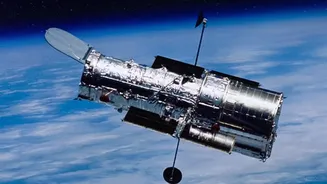
Even with the advanced capabilities of newer observatories like the James Webb Space Telescope (JWST), Hubble's long-running mission remains vital. Its consistent, decades-long observations provide a baseline that no other instrument can match. While Webb can peer deeper in infrared, Hubble provides the crucial long-term context in visible and ultraviolet light. When used together, the two telescopes offer the most comprehensive view of planets like Saturn ever achieved. These latest infrared images are a testament to Hubble's resilience and its continued role at the forefront of astronomical discovery, constantly adding new pieces to the puzzle of our solar system.