





Why Gravity is a Problem for Crystals
On Earth, gravity is an unavoidable force that subtly disrupts many precise processes. For drug development, this is especially true when growing protein crystals. These crystals are essential for understanding the structure of diseases and designing
targeted medications. Gravity causes convection currents and sedimentation, which interfere with the crystal formation process. This can lead to smaller, less uniform, and more flawed crystals. Imagine trying to build a perfectly symmetrical structure while the floor is constantly, subtly vibrating; that’s the challenge of protein crystallization on Earth. These imperfections make it harder for scientists to determine a protein's exact structure, slowing down the development of new and more effective drugs.
The Microgravity Advantage
In the microgravity environment of low Earth orbit, these terrestrial problems disappear. Without the constant pull of gravity, molecules can arrange themselves into crystal lattices more slowly and methodically. This leads to the growth of larger, more uniform, and higher-quality crystals. The absence of sedimentation and convection allows for a more controlled process, resulting in a level of perfection that is often impossible to achieve on the ground. For pharmaceutical companies, a better crystal means better data. These superior, space-grown crystals allow for higher-resolution analysis, revealing the intricate details of protein structures that are crucial for designing targeted drugs with fewer side effects.
The Commercial Pioneers of Orbital Manufacturing
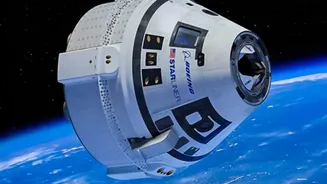
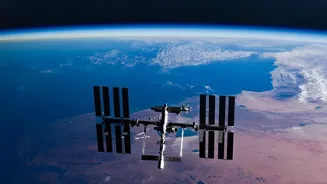
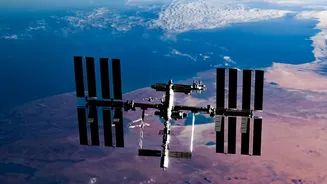
This scientific advantage has created a new commercial frontier. Companies like Varda Space Industries are at the forefront, designing and launching unmanned orbital factories specifically for this purpose. Varda builds spacecraft that carry the necessary materials into orbit, perform the crystallization process in microgravity, and then return the finished products to Earth in a specialized reentry capsule. Other key players, like Redwire, are developing automated platforms for use on the International Space Station (ISS) to facilitate this research. This is not just theoretical; major pharmaceutical firms including Merck have already used the ISS to improve blockbuster drugs like the cancer therapy Keytruda, demonstrating that microgravity can lead to more stable and effective drug formulations. This success has paved the way for a new industry focused on in-space production.
From Orbit to Pharmacy: The Logistics
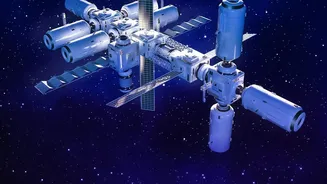
The process is a marvel of modern logistics. It starts on Earth, where companies prepare the raw biological materials. These are then launched into space, often as part of a payload on rockets from providers like SpaceX. Once in orbit, the crystallization process is initiated and runs automatically inside a dedicated capsule or platform. After a period of weeks or months, the capsule detaches, reenters Earth's atmosphere at hypersonic speeds, and lands in a designated recovery zone. The valuable crystals are then retrieved and transported to pharmaceutical labs for analysis and use. While the cost of space launch remains a significant factor, the high value of the resulting intellectual property and improved drug efficacy is driving the business case forward. Companies are proving that these orbital factories can function independently of the ISS, paving the way for scalable production.
The Future of Medicine, Made in Space
The implications of this technology are vast. In the short term, it can accelerate drug discovery and improve existing treatments. For example, growing crystals in space can help create more concentrated and stable versions of biologic drugs like monoclonal antibodies, potentially allowing treatments currently requiring lengthy hospital infusions to be administered via a simple injection. Looking further, the ability to manufacture novel materials in space extends beyond just crystals. The unique environment could lead to the production of purer semiconductor materials or flawless optical fibers. As access to space becomes more routine and less expensive, we are witnessing the dawn of a new industrial revolution, where the factories of the future are not on the ground, but in orbit.