





The Mission After the Mission
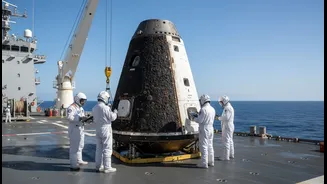
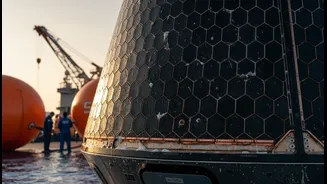
Long before the Artemis II crew returned to Earth, a complex post-flight operation was already planned. Once the Orion capsule splashed down in the Pacific Ocean, it was carefully recovered by the U.S. Navy. This wasn't just about retrieving the astronauts;
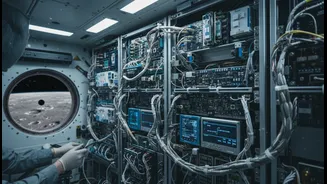
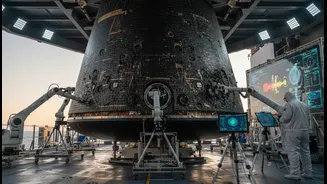
it was about preserving the spacecraft as a crucial piece of evidence. The capsule was transported to NASA's Kennedy Space Center, where the real detective work began. This process, known as de-servicing and analysis, involves a meticulous, systematic teardown of the vehicle to inspect its components and compare their physical state to the vast amounts of data collected during the nearly 10-day journey.
A Treasure Trove of In-Flight Data
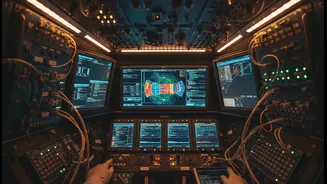
During its journey around the Moon, the Orion spacecraft was a flying laboratory, packed with thousands of sensors. These instruments recorded everything from temperature fluctuations on the heat shield to radiation levels inside the cabin and the performance of the life support systems. The primary goal of Artemis II was to be a flight test, validating that all systems were ready to support a crew in deep space. This included monitoring astronaut health, testing emergency procedures, and even measuring the strain put on the spacecraft's structure during exercise. The result is an unprecedented dataset that offers a second-by-second account of how the vehicle and its human occupants responded to the harsh environment beyond Earth's protective magnetic field.
From Digital Readings to Physical Reality
Data alone, however, doesn't tell the whole story. The core of the post-flight investigation lies in correlating digital telemetry with physical evidence. This is where the spacecraft's teardown becomes essential. Engineers carefully remove and inspect key components, most notably the heat shield. After the uncrewed Artemis I mission, inspections revealed unexpected erosion and charring patterns on the heat shield material, known as Avcoat. While the shield successfully protected the capsule, the wear was different than predicted. For Artemis II, engineers were keen to see how modifications performed. By physically examining the shield, taking samples for lab analysis, and even using X-ray scans, they can understand what a specific sensor reading actually looks like in the real world.
Connecting the Dots for Safer Spaceflight
This process of connecting flight data with physical inspection is what builds confidence for future, more ambitious missions. For example, if a sensor registered a brief temperature spike during reentry, engineers can now look at that exact spot on the heat shield to see the material's response. This helps refine the computer models used to predict vehicle performance. These validated models are crucial for designing the Artemis III mission, which aims to land astronauts on the lunar surface, and for planning long-duration stays on the Moon. It’s a painstaking process of confirmation. Initial assessments from Artemis II showed that the char loss on the heat shield was significantly reduced compared to Artemis I, which was a major validation of the pre-flight adjustments.
Building the Bridge to Mars
Every lesson learned from Orion's post-flight analysis directly informs the designs and procedures for NASA's long-term goal: sending humans to Mars. A mission to Mars will be exponentially longer and more demanding than a trip around the Moon. The spacecraft will need to be more resilient, and engineers will need to have absolute confidence in their systems without the possibility of a quick return to Earth. The data from Artemis II on radiation exposure, life support system reliability, and component durability provides the foundational knowledge required for that next giant leap. By meticulously inspecting every bolt, wire, and tile, and matching it to the flight data, NASA isn't just closing the book on Artemis II; it's writing the opening chapter for the future of human exploration in the solar system.