




The Monsoon Mood
There's a universal comfort that accompanies the Indian monsoon. As the skies turn grey and the temperature drops, we retreat indoors, seeking warmth and contentment. This is when the craving strikes—not for something cold or light, but for a dish that feels
like a hug from the inside. We long for food that is rich, aromatic, and deeply satisfying. It's a psychological response; warm foods can evoke feelings of nostalgia and safety, activating reward centres in the brain. [18] While a cup of hot chai and a plate of pakoras are staples, the soul often demands a sweet conclusion to the rainy-day feast.
An Unsung Hero: Moong Dal Halwa
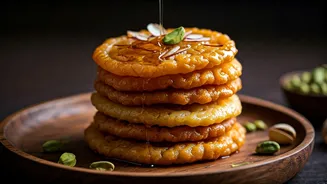
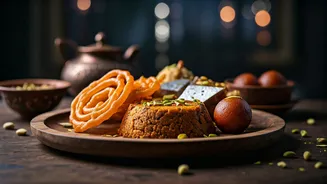
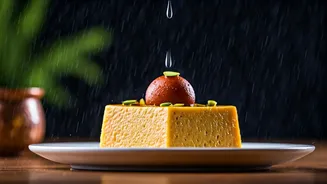
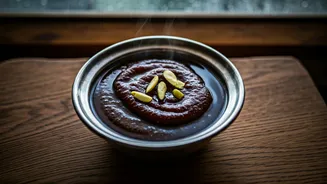
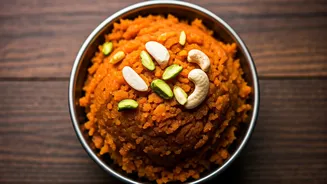
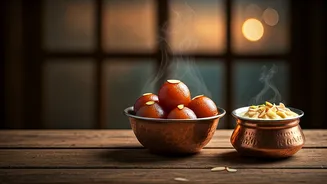
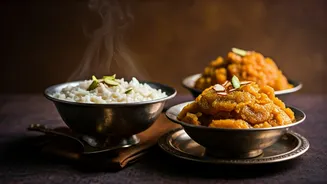
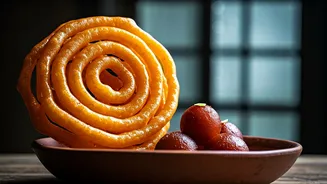
While options like Gulab Jamun and Gajar ka Halwa are popular choices, the true champion for a rainy evening is the rich, decadent Moong Dal Halwa. [2, 12] Originating from the royal kitchens of Rajasthan, this dessert is traditionally prepared during winter but its warming properties make it perfect for a damp, chilly monsoon day. [9, 17] It’s a slow-cooked delicacy made from yellow lentils (moong dal), generous amounts of ghee, milk, and sugar, and garnished with nuts. [9, 17] The result is a dessert with a unique grainy texture, a deep, nutty aroma, and a melt-in-the-mouth quality that is utterly sublime. [15]
A Spoonful of History
The story of halwa itself is a journey across cultures. The word 'halwa' comes from the Arabic 'hulw', meaning sweet. [5] It is believed to have travelled to India from the Middle East via Persia, arriving sometime during the Delhi Sultanate. [5, 6] While the original was a simple paste of dates and milk, India adopted it and made it its own, creating countless regional variations. [5, 4] Moong Dal Halwa became a Rajasthani specialty, a perfect, energy-dense treat for colder weather. [4, 17] Over time, it became an integral part of celebrations, weddings, and festivals, solidifying its status as a food of comfort and abundance. [17]
Why It’s the Perfect Rainy-Day Treat
The genius of Moong Dal Halwa on a rainy evening lies in its sensory richness. The slow-cooking process, which involves constantly stirring the lentil paste in ghee until it turns golden brown and aromatic, fills the house with a comforting scent. [16] The generous use of ghee not only provides a signature flavour but also warming properties, according to traditional beliefs. [14] The warmth of the dessert itself is soothing, and the combination of sugar and fats provides a quick emotional lift. [18] It’s not just a dessert; it’s an experience that engages all the senses, making the act of staying indoors feel luxurious and special.
Making the Magic at Home
Preparing Moong Dal Halwa is a labour of love, but it’s a therapeutic process perfect for a day spent indoors. The key is patience. The first step involves soaking the moong dal for a few hours, then grinding it into a coarse paste. [16] The real art lies in the 'bhunai'—the slow roasting of this paste in a heavy-bottomed pan with ghee. [16] This step cannot be rushed; it’s what develops the halwa’s characteristic nutty flavour and golden colour. Once the dal is aromatic and the ghee starts to separate, milk and sugar are added. [15] Continuous stirring is essential until the halwa thickens and leaves the sides of the pan. Garnished with cardamom and chopped almonds or pistachios, it’s ready to be served hot. [14]