


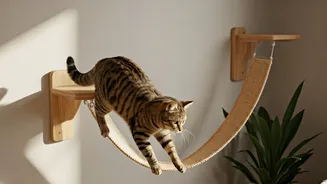
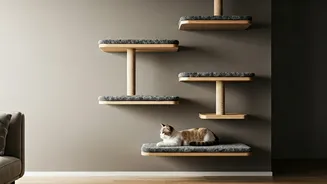


The Instinct to Be Above It All
Before you can solve your cat’s boredom, you need to understand their nature. Domestic cats are descendants of wild predators who were also prey. This dual identity is hardwired into their brains. Climbing isn't just a fun activity; it’s an instinctual
necessity. A high vantage point provides a secure spot to survey their territory for potential threats (the vacuum cleaner) and opportunities (an unattended snack). In the wild, height means safety and advantage. In your apartment, a lack of vertical space can leave a cat feeling exposed, anxious, and fundamentally under-stimulated. They aren't trying to get on your nerves by climbing the curtains; they're trying to fulfil a deep-seated need that a flat floor plan simply can't satisfy.
Recognising Apartment Cat Boredom
A bored cat is often mistaken for a 'lazy' or 'difficult' cat. The signs of under-stimulation can be subtle or destructive. Does your cat engage in excessive self-grooming, sometimes to the point of creating bald patches? Do they pick fights with other pets, or display aggression towards you? Are they overeating, or conversely, showing a lack of interest in food and play? Other classic signs include destructive scratching of furniture, excessive meowing for attention, and long periods of inactivity that seem more like lethargy than restful sleep. These aren't just quirks; they are symptoms of an environment that isn't meeting their mental and physical needs. For an apartment cat, where every day looks the same, this boredom can escalate into chronic stress.
The 'Cat Superhighway' Solution
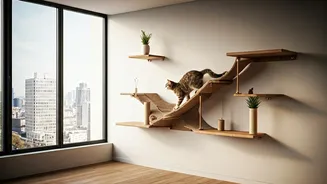
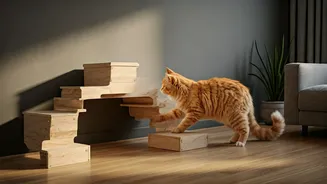
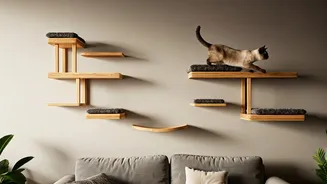
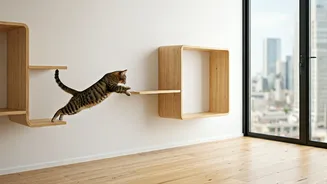
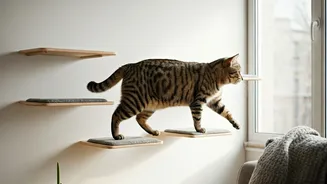
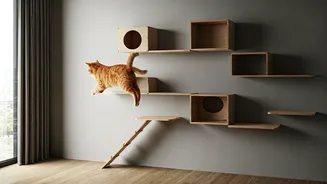
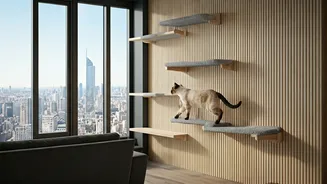
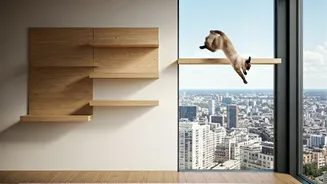
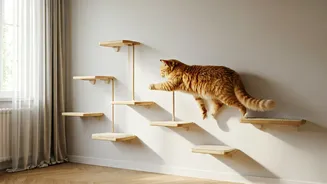
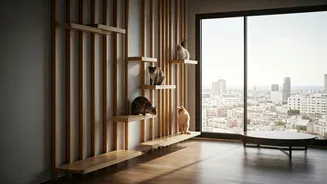
This is where your walls come in. By installing a series of shelves, steps, and perches, you can create what animal behaviourists call a 'cat superhighway.' This network of vertical pathways effectively multiplies the square footage of your cat’s territory. Instead of living in a one-dimensional world, they gain access to a 3D environment they can explore, patrol, and own. This isn’t just about adding a single cat tree in a corner. A true superhighway provides a route for your cat to navigate a room without touching the floor. It allows them to get from the sofa to the top of a bookshelf, then across a series of steps to a sunny perch by the window, empowering them to use the space as their instincts intended.
Planning Your Vertical World
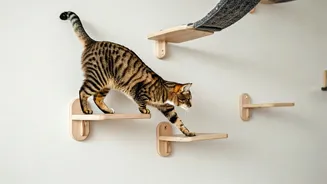
Before you start drilling, grab a pencil and paper. Observe your cat's current habits. Where do they like to nap? Is there a window with a view of birds they're desperate to get closer to? Plan your wall steps to connect these desirable locations. Think about flow. The steps should be spaced appropriately for a comfortable leap—not too close, not too far. A good rule of thumb is a distance of about 30-40 cm horizontally and 15-30 cm vertically, but adjust for your cat's age and agility. Ensure the route has entry and exit points, so your cat doesn't get cornered. A simple layout could be a few steps leading up to a wider, comfortable shelf for lounging. The goal is to create a functional and inviting path, not just a random assortment of shelves.
Choosing Your Gear: Buy vs. DIY
You have two main options: purchasing pre-made cat shelving systems or going the DIY route. Commercial kits are designed for purpose, often come with the necessary hardware, and have been tested for feline use. They can be a great, hassle-free option. For the handy pet owner, DIY offers more customisation. You can use sturdy wooden planks (like pine) and cover them with a non-slip material like carpet remnants, sisal rope (perfect for scratching), or firm yoga mats. Whatever you choose, the surface must provide good grip. Slippery, varnished surfaces are a recipe for a fall. Ensure all materials are non-toxic and durable enough to withstand claws and repeated jumps.
Safety is Non-Negotiable
This is the most critical step. A poorly installed shelf is more dangerous than no shelf at all. The golden rule is to anchor every single bracket into a wall stud. Use a stud finder to locate them. If a stud isn't available in the perfect spot, you must use heavy-duty drywall anchors specifically rated to hold significant weight—far more than the weight of your cat, to account for the force of them landing. Follow the instructions for your hardware to the letter. Once installed, test each step and shelf rigorously. Push down on it with firm, sustained pressure. Wiggle it. Pull on it. If there is any give, any wobble at all, take it down and re-install it. Your cat’s safety depends entirely on the stability of your construction.