




Frozen Libraries of Earth's History
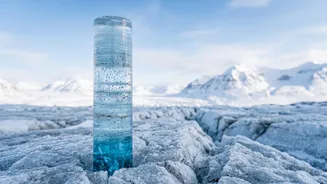
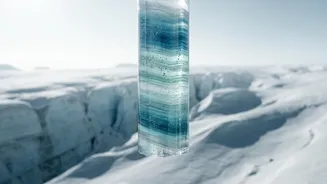
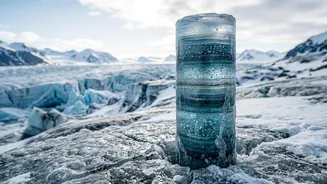
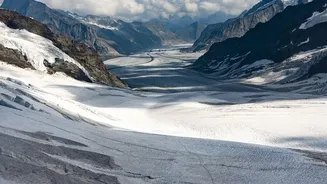
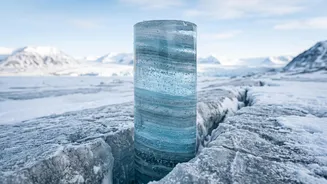
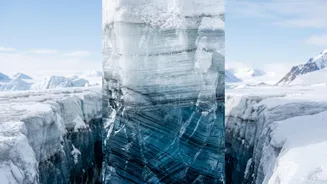
Imagine a library where each book is a year, and its pages contain the story of the atmosphere. That is essentially what a glacier is. As snow falls year after year, it compacts into layers of ice. Each layer traps whatever is in the atmosphere at the time:
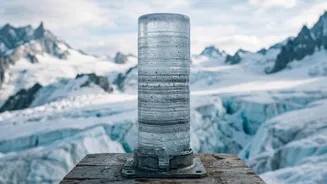
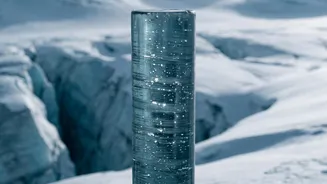
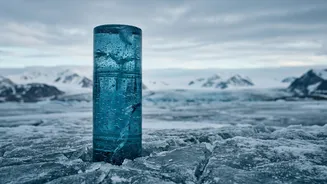
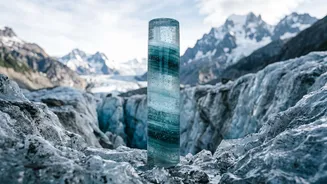
volcanic ash, pollen from distant forests, dust from deserts, and tiny air bubbles. These bubbles are pristine samples of past air, allowing scientists to measure ancient concentrations of greenhouse gases like carbon dioxide and methane. By drilling a long, cylindrical sample—known as an ice core—scientists can read this history layer by layer, like flipping back through the pages of a calendar that stretches back hundreds, or even thousands, of years.
Why the Tropics Are So Important
While polar ice cores from Antarctica and Greenland provide records stretching back hundreds of thousands of years, tropical glaciers offer a different, uniquely valuable perspective. More than half the world's population lives in the tropics, a region dominated by crucial climate systems like the El Niño-Southern Oscillation (ENSO) and monsoons. These systems have a massive impact on global weather, agriculture, and economies. Polar ice records don't capture these equatorial phenomena with the same detail. Tropical glaciers, located at high altitudes in places like the Peruvian Andes and the Himalayas, are perfectly positioned to record the year-to-year variability of these vital climate drivers. Pioneering glaciologist Lonnie Thompson was among the first to recognise this, leading expeditions since the 1970s to retrieve these invaluable records.
The Delicate Art of Drilling Ice
Retrieving an ice core from a mountain over 18,000 feet high is a monumental challenge. Teams must acclimatise to the thin air and contend with extreme weather. The drilling equipment itself has to be specially designed. For his early expeditions to the Quelccaya ice cap in Peru, Lonnie Thompson's team developed a lightweight, solar-powered drill because traditional generators were too difficult to transport to the remote summit. The process involves carefully drilling down in sections, extracting cylinders of ice that can be several meters long, and meticulously cataloguing them. On a 2022 expedition to Quelccaya, engineers used an electrothermal drill that melts its way through the ice, producing about four meters of core per hour, eventually reaching bedrock over 128 meters below the surface.
A Desperate Race Against Time
The primary motivation for this difficult work has become a race against the clock. Tropical glaciers are incredibly sensitive to rising temperatures because they exist close to the melting point. As a result, they are disappearing at an alarming rate. The Quelccaya ice cap in Peru, the world's largest tropical ice cap, lost 46% of its surface area between 1976 and 2020. The glaciers on Kilimanjaro in Africa shrank by 86% between 1912 and 2007. Some 'Eternity Glaciers' in Indonesia are predicted to vanish completely by 2026. This melting doesn't just shrink the glaciers; it allows meltwater to percolate down through the upper layers, blurring and erasing the precious climate data stored within. Scientists are drilling now because soon, there may be nothing left to drill. These glaciers are what Thompson calls 'the canaries in the coal mine'—an early warning system for the entire planet.
What the Ice Tells Us About Our Future
These frozen archives do more than just tell us about the past; they provide crucial context for our present and future. Ice core data clearly shows that the warming of the last 50 years is outside the range of natural climate variability seen for millennia. By comparing the composition of ancient air bubbles to today's atmosphere, scientists can see the dramatic impact of human activity since the Industrial Revolution. Understanding how climate systems like El Niño responded to temperature shifts in the past helps researchers refine their models for future climate change. These ice cores provide a baseline, a record of truth against which we can measure the profound changes happening to our world. But with every drop of meltwater, a piece of that truth is lost forever.