

The Foundational Bodyweight Squat
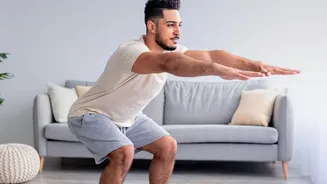
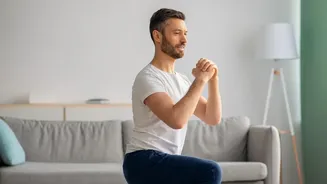
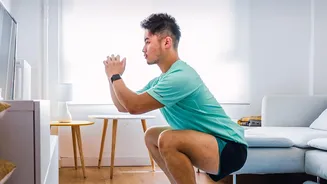
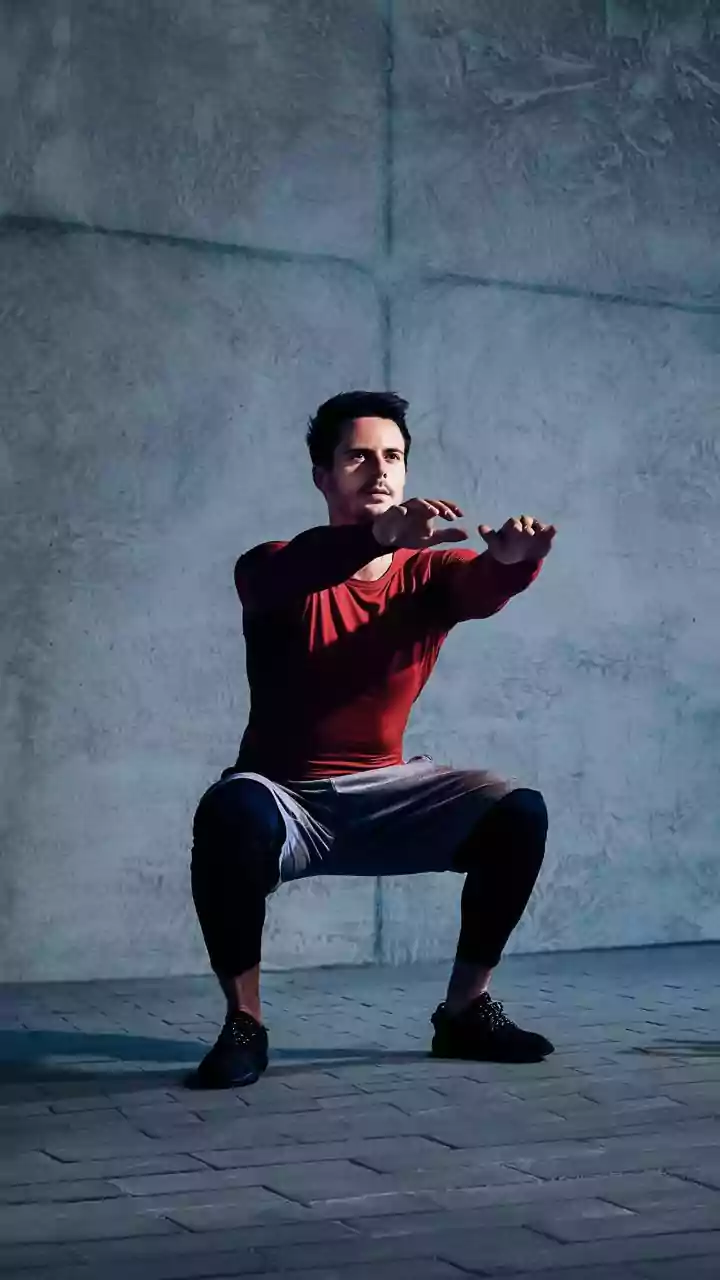
The squat is a powerhouse movement, essential for building lower body strength and mimicking everyday actions like sitting and standing. It targets your quadriceps, hamstrings, and glutes, while also engaging your core for stability. To perform it correctly,
stand with your feet slightly wider than shoulder-width apart, toes pointing slightly outward. Push your hips back as if you're about to sit in a chair, keeping your chest up and back straight until your thighs are parallel to the floor. Then, drive through your heels to return to the starting position. This single exercise builds functional strength that supports you throughout your daily life.
The All-Purpose Push-Up
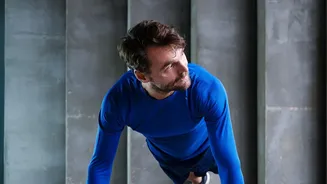
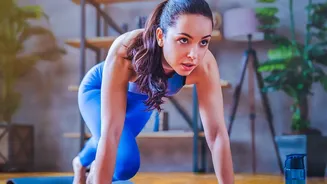
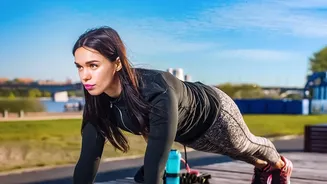
Often called the gold standard of upper-body bodyweight exercises, the push-up strengthens your chest, shoulders, triceps, and core all at once. The key to proper form is to start in a high plank position with your hands slightly wider than your shoulders. Your body should form a straight line from your head to your heels. Lower your body until your chest is near the floor, keeping your elbows at about a 45-degree angle, then press back up. If a full push-up is too challenging, start with incline push-ups against a wall or sturdy table, or perform them on your knees. This modification reduces the weight you're lifting while still building foundational strength.
The Core-Strengthening Plank
For a rock-solid core, nothing beats the plank. This isometric exercise, where you hold a static position, is incredibly effective for developing stability in your abs, lower back, and glutes. To get into position, you can either be on your forearms or in a high plank position, like the top of a push-up. The most important thing is to keep your body in a perfectly straight line, avoiding any sagging in your hips or arching in your back. This engagement of your core muscles is crucial for good posture and preventing back pain.
Lunges for Balance and Stability
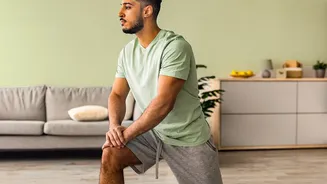
Lunges are excellent for training each leg independently, which helps improve balance, coordination, and correct strength imbalances. You can perform them by stepping forward or backward. Reverse lunges are often recommended for beginners as they can feel more stable. From a standing position, take a step back with one foot, lowering your hips until both knees are bent at a 90-degree angle. Your front knee should stay aligned with your ankle, and your back knee should hover just above the floor. Push off your back foot to return to the start. Since lunges are largely stationary, they are perfect for small spaces.
The Mighty Glute Bridge
This simple-looking exercise is fantastic for activating your glutes and hamstrings, the muscles on the back of your body that often get neglected from too much sitting. Lie on your back with your knees bent, feet flat on the floor hip-width apart, and your arms by your sides. Push through your heels to lift your hips off the floor until your body forms a straight line from your shoulders to your knees. Squeeze your glutes at the top before slowly lowering back down. It's a low-impact move that delivers major benefits for your posterior chain and requires no more space than a yoga mat.
Burpees for a Full-Body Blast
When you want maximum impact in minimum time, turn to the burpee. This high-intensity exercise is a full-body workout in itself, combining a squat, a plank, a push-up, and a jump into one fluid movement. It elevates your heart rate rapidly, making it great for cardiovascular fitness and burning calories. To make it more neighbour-friendly in an apartment, you can perform a 'quiet burpee' by stepping your feet back into the plank one at a time instead of jumping. It still challenges multiple muscle groups without the noisy impact.