





The Foundational Masterpiece: 2001: A Space Odyssey
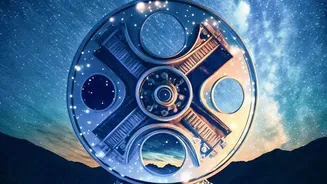
Long before digital effects became standard, Stanley Kubrick’s 1968 epic set the benchmark for cinematic spectacle. Working with writer Arthur C. Clarke, Kubrick aimed for a level of realism and visual integrity previously unseen in the genre. The film’s
pioneering effects were achieved through painstaking practical methods. To simulate gravity on the Discovery One spacecraft, the production team built a massive, costly rotating centrifuge set. The iconic, psychedelic "Star Gate" sequence was created not with computers, but with an innovative photographic technique called slit-scan photography, which special effects supervisor Douglas Trumbull adapted to create the stream of whirling lights. By insisting on capturing effects in-camera and avoiding techniques that would degrade image quality, Kubrick created a vision of space that feels both tangible and profoundly mysterious, influencing every serious sci-fi film that followed.
The Weightless Ballet: Gravity
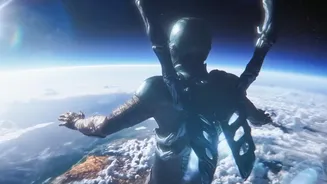
While most space epics journey to distant stars, Alfonso Cuarón’s 2013 thriller finds its immense scale in the terrifying emptiness of Earth's orbit. The film is famous for its groundbreaking visual effects and long, uninterrupted takes that create an unparalleled sense of immersion. The opening shot alone is a technical marvel, a single take lasting nearly 13 minutes that depicts a routine spacewalk descending into chaos. Cuarón and cinematographer Emmanuel Lubezki essentially animated the film first to plan the complex camera movements, then worked backward to integrate the actors. The result is a visceral experience that conveys both the beauty of space and the absolute terror of being stranded within it. Mostly composed of computer-generated imagery, the film’s visual language makes the viewer feel every moment of Dr. Ryan Stone’s struggle for survival.
The Scientific Spectacle: Interstellar
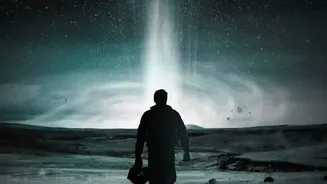
Christopher Nolan’s 2014 epic is a journey not just through space, but through the mind-bending concepts of theoretical physics. To ensure scientific accuracy, Nolan collaborated closely with renowned physicist Kip Thorne. This partnership led to some of the most scientifically rigorous depictions of cosmic phenomena in cinema history. The visual effects team, working with Thorne's equations, developed a new relativistic renderer to create the film's iconic black hole, Gargantua, and its surrounding wormhole. The film boldly visualizes concepts like time dilation and extra-dimensional space, grounding its high-concept ideas in a deeply human story about a father’s promise to his daughter. Shot on a combination of 35mm and IMAX 70mm film, Nolan delivered a tactile and awe-inspiring vision of humanity’s desperate reach for the stars.
The World-Building Wonder: Dune
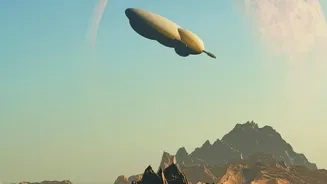
Denis Villeneuve’s 2021 adaptation of Frank Herbert’s seminal novel demonstrates that epic scale isn't just about outer space, but about the creation of entire worlds and cultures. The film’s visual grandeur comes from its masterful world-building, contrasting the lush, green planet of Caladan with the vast, sun-scorched deserts of Arrakis and the dark, industrial world of Giedi Prime. Villeneuve and his team took their time, allowing the audience to feel immersed in each environment. The sheer size of the ships, the monolithic architecture, and the sprawling landscapes give the story a sense of immense history and political weight. The visuals don't just serve as a backdrop; they are integral to the storytelling, conveying the power dynamics, cultural history, and ecological themes at the heart of the saga. It’s a film that uses its scale to build a believable, breathing universe.