






What is the Gaganyaan Mission?
At its core, Gaganyaan, which translates to "celestial vehicle," is India's inaugural human spaceflight program. [11] The mission's primary objective is to demonstrate the nation's capability to send a crew of three astronauts into a Low Earth Orbit of 400
kilometres for a three-day mission and bring them back safely to Earth with a planned splashdown in Indian waters. [7] This ambitious undertaking will make India only the fourth country in the world—after Russia, the United States, and China—to have an independent human spaceflight capability. [10, 11] The project involves a vast ecosystem of in-house expertise from the Indian Space Research Organisation (ISRO), extensive collaboration with Indian industry and academia, and the development of numerous critical technologies. [7, 11]
Meet India's First Astronaut-Designates
Putting a human face to this monumental mission are four distinguished pilots from the Indian Air Force (IAF), who were selected and introduced to the nation in February 2024. [3, 4] Group Captains Prasanth Balakrishnan Nair, Ajit Krishnan, Angad Pratap, and Wing Commander Shubhanshu Shukla are the astronaut-designates for the mission. [4, 6] All four are accomplished test pilots, chosen for their exceptional flying skills and ability to handle high-pressure, unpredictable situations—a crucial trait for pioneering astronauts. [4] They have undergone extensive training, both in Russia and at ISRO's specialized Astronaut Training Facility in Bengaluru, covering everything from spacecraft systems and simulated high-gravity launches to survival training. [6] One of them, Shubhanshu Shukla, also gained valuable experience as part of the Axiom-4 mission to the International Space Station in 2025. [15, 28]
The Technology Powering the Dream
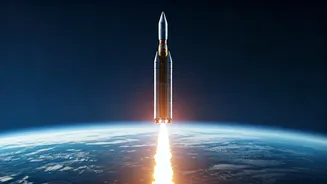
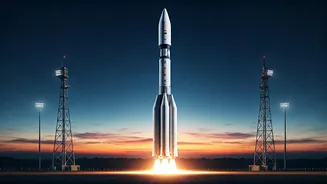
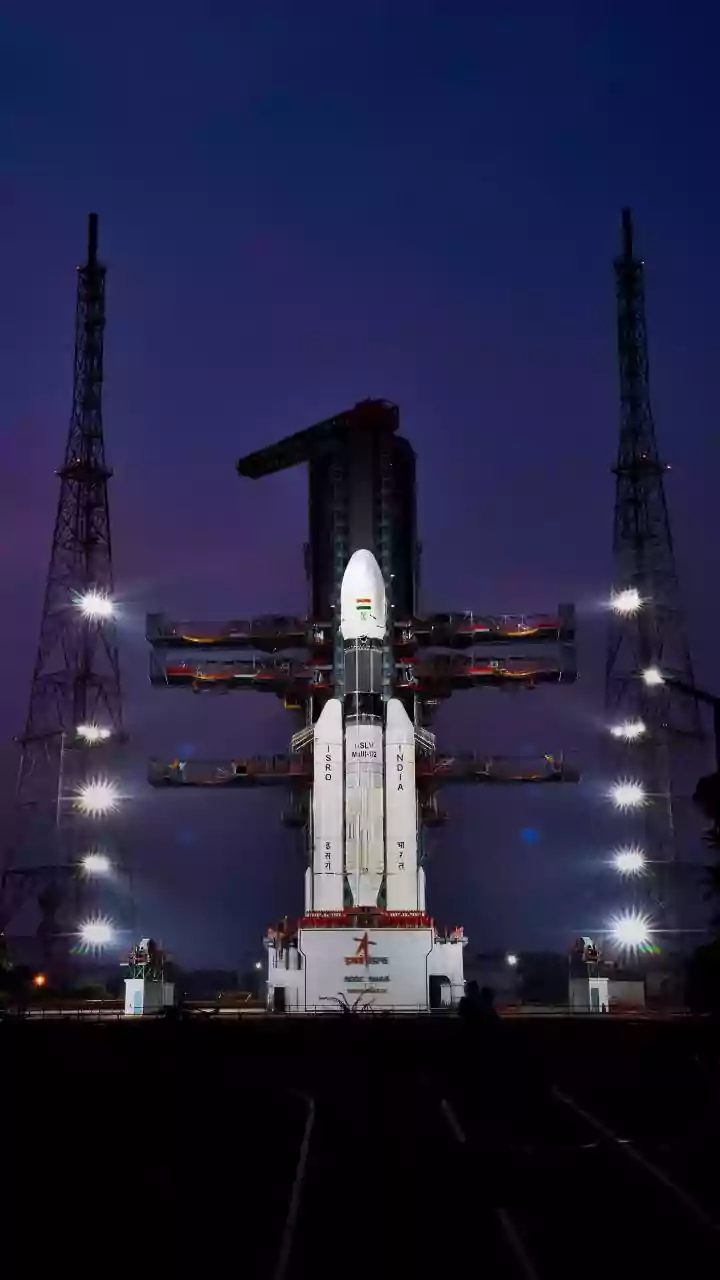
Sending humans to space and returning them safely requires a symphony of cutting-edge technologies, many developed for the first time in India. The mission will be launched aboard the human-rated LVM3 rocket (HLVM3), a modified version of ISRO's most powerful and reliable heavy-lift launcher. [7, 26] Key components include the Orbital Module, which comprises the Crew Module—a habitable, Earth-like environment for the crew—and the Service Module, which provides support in orbit. [7] Paramount importance is given to crew safety, exemplified by the Crew Escape System, designed to jettison the crew module to a safe distance in case of a launch emergency. [7, 26] Before the crewed flight, ISRO has planned a series of uncrewed test missions to validate all systems. [7] The first uncrewed flight, Gaganyaan-1 (G1), is scheduled for the second half of 2026 and will carry a humanoid robot named Vyommitra to simulate crew functions. [2, 8, 22]
More Than Just a Flag in Space
Gaganyaan is far more than a demonstration of prestige. Its success is expected to have a cascading effect across science, technology, industry, and education in India. The mission will serve as a platform for scientific experiments in microgravity, advancing fields like medicine and materials science. [11] The project is also a significant driver of industrial growth, with estimates suggesting it will source nearly 60% of its components from the Indian private sector, creating thousands of high-tech jobs. [11] Furthermore, by achieving such a visible and inspiring milestone, the mission aims to motivate a new generation of students to pursue careers in science, technology, engineering, and mathematics (STEM). [11] This push for self-reliance and innovation is a cornerstone of India's broader ambition to capture a larger share of the global space economy, which is projected to grow to $45 billion for India by 2033. [11, 27]
The Next Frontier: A Space Station and Beyond
Gaganyaan is not an end in itself but a crucial stepping stone. The experience and technologies developed for this mission are foundational for India's even more ambitious future plans. [14] The next logical step is the Bharatiya Antariksh Station (BAS), India's own modular space station. [5, 16] The first module for the station is targeted for launch by 2028, with the goal of having a fully operational station by 2035 to support long-duration human missions. [5, 8] Beyond that, ISRO has set its sights on sending an Indian astronaut to the Moon by 2040. [3, 17] These long-term goals underscore a strategic vision where Gaganyaan marks the beginning of India’s journey as a sustained and significant player in human space exploration.