





What is a Crew Escape System?
Think of it as the ultimate ejection seat, but for an entire space capsule. The Crew Escape System (CES) is a safety mechanism designed for one purpose: to save the lives of astronauts if something goes catastrophically wrong during the launch or ascent
of the rocket. It is a powerful, quick-acting rocket motor system mounted on top of the crew module. In the event of an emergency, the CES is engineered to fire within milliseconds, pulling the capsule and its occupants away from the failing launch vehicle at incredible speed. This system must be robust enough to get the crew to a safe distance before deploying parachutes for a gentle splashdown in the sea. For any nation aspiring to human spaceflight, proving this technology is not just important—it is arguably the most critical step.
The Anatomy of a Flawless Test
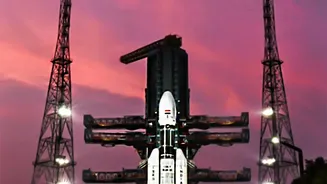
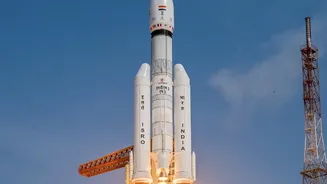
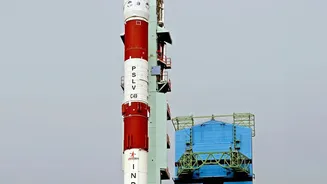
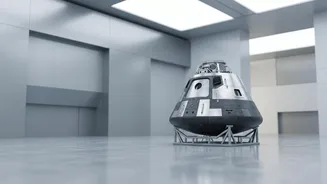
The recent test, officially known as the Test Vehicle Abort Mission-1 (TV-D1), was a meticulously planned simulation of a launch failure. A specially designed test rocket lifted off from the Satish Dhawan Space Centre in Sriharikota, carrying a fully instrumented but uncrewed Gaganyaan crew module. At an altitude of about 17 kilometres and travelling faster than the speed of sound, an abort was deliberately triggered. Instantly, the Crew Escape System fired, separating the crew module from the rocket. The module then performed a series of manoeuvres, deployed its parachutes as planned, and made a soft landing in the Bay of Bengal, roughly 10 kilometres from the coast. Recovery teams from the Indian Navy were on standby to retrieve the module, completing a successful end-to-end demonstration.
Why This Test is a Game-Changer
The success of the TV-D1 mission is a monumental achievement for ISRO because astronaut safety is the absolute highest priority for the Gaganyaan programme. Without a proven and reliable escape system, there can be no human spaceflight. This test validates years of design, engineering, and integration work on one of the most complex subsystems of the entire mission. It demonstrates that in a worst-case scenario, the systems designed to protect the 'Gaganauts' will function exactly as intended. This success builds immense confidence within ISRO and across the global space community, signalling that India’s human-rated launch vehicle is on the right track. It effectively de-risks the most dangerous phase of space travel and clears a major psychological and technical hurdle.
Joining an Elite Global Club
Developing, building, and successfully testing a crew escape system is a feat accomplished by only a handful of space-faring nations. Currently, only the United States, Russia, and China have operational human spaceflight programmes with this proven capability. By acing this test, India has demonstrated a level of technological maturity that places it in this elite group. It's a powerful statement of the country's growing prowess in aerospace engineering and its commitment to a safe, sustainable human spaceflight program. This achievement is not just about a single piece of hardware; it represents an entire ecosystem of advanced technologies, from solid rocket motors and avionics to parachute systems and recovery logistics.
The Road Ahead for Gaganyaan
With the successful validation of the crew escape system, ISRO can now proceed with greater certainty to the next phases of the Gaganyaan mission. The roadmap includes more test flights to validate other critical systems and environmental controls. These will be followed by at least one uncrewed orbital mission, where the entire flight profile—from launch to a multi-day orbit and re-entry—will be tested. This uncrewed flight will also feature 'Vyommitra', a humanoid robot that will simulate human functions and monitor the cabin environment. Following the successful completion of these preparatory missions, India will be ready for its historic first crewed flight, currently anticipated in the coming years.