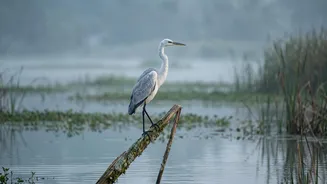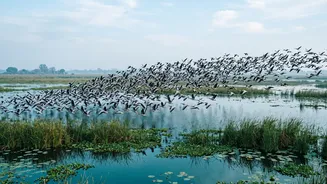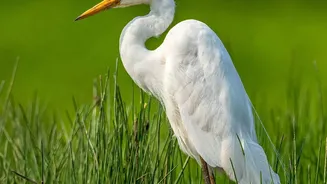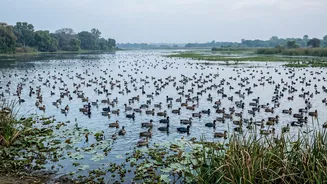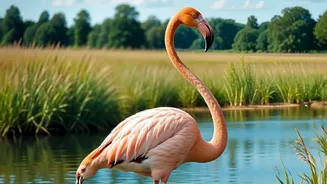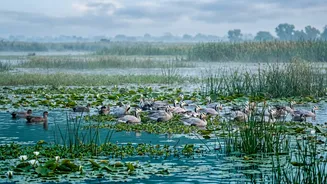







Each winter, India's skies and wetlands come alive with millions of migratory birds. This breathtaking natural spectacle isn't just a happy accident; it’s the result of months of tireless preparation by local sanctuaries across the country.
Preparing the Perfect Habitat
Long before
the first flocks arrive from Siberia, Central Asia, and Europe, the groundwork for their welcome begins. For sanctuaries like Keoladeo National Park in Rajasthan and Chilika Lake in Odisha, habitat management is a science. This often involves artificially regulating water levels in the wetlands through a system of bunds and sluices to create ideal depths for different species. Some birds prefer deep waters for diving, while waders need shallow mudflats for feeding. Invasive species like water hyacinth, which can choke water bodies, are meticulously cleared to ensure there is enough open water and native aquatic vegetation for the birds to feed on. In some areas, specific plants and trees are cultivated to provide not just food, like berries, but also safe roosting and nesting spots. This careful landscaping ensures that when the birds complete their arduous journey, they find a landscape rich in food and shelter.
A Shield Against Threats
A pristine habitat is only half the battle; ensuring the safety of these avian visitors is a top priority. Poaching remains a significant threat to migratory birds, which are often hunted for their meat. To counter this, forest departments and wildlife authorities establish numerous temporary protection camps around key congregation sites. At Chilika Lake, for instance, as many as 21 to 22 camps are set up, complemented by round-the-clock patrolling by mobile squads, both on foot and in motorboats. These teams work to confiscate illegal trapping nets and deter hunters. This proactive enforcement is crucial, as many birds are most vulnerable when they stop over to rest and feed. Beyond poaching, efforts are also made to minimise human disturbance by creating buffer zones and regulating tourist activities, ensuring the birds can rest undisturbed after their long flights.
The Community as Conservation Stewards
Perhaps the most critical element of modern conservation is the involvement of local communities. What was once a story of conflict, with poaching rampant in places like Mangalajodi in Odisha and Pangti village in Nagaland, has transformed into a globally recognised model of community-led conservation. Sanctuaries and conservation organisations now actively involve villagers, transforming former hunters into dedicated protectors. Local youth are engaged as watchers, guides, and patrol members, providing them with sustainable livelihoods linked directly to the birds' survival. Extensive awareness campaigns are conducted in schools and villages, highlighting the importance of migratory birds and the laws protecting them. In places like Khichan in Rajasthan, villagers have a tradition of feeding thousands of Demoiselle Cranes, viewing them as cherished guests. This cultural shift, where communities see the birds as a source of pride and economic benefit through ecotourism, has proven to be the most effective long term protection strategy.
Monitoring, Research, and Adaptation
Protecting migratory birds is a dynamic process that relies on data and science. Sanctuaries regularly conduct bird census exercises to monitor population trends and the health of the ecosystem. The arrival of over 11.27 lakh birds at Chilika, as counted in a recent estimation, is a testament to the success of these conservation measures. This data helps officials understand which species are arriving, in what numbers, and whether conservation strategies need to be adjusted. India has also developed a National Action Plan for the conservation of migratory birds, which aims to coordinate these efforts on a national scale. This includes identifying critical stopover sites, developing species specific action plans, and promoting trans boundary cooperation with other countries along the Central Asian Flyway. By studying migration patterns and the challenges these birds face, from climate change to habitat loss, sanctuaries can better anticipate threats and adapt their management to ensure these vital wintering grounds remain safe for generations to come.