




The Challenge: Constant, Dynamic Instability
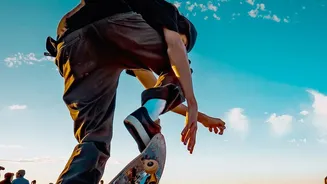
Anyone who has ever strapped on a pair of skates knows the initial terror. Your base of support, once the entire sole of your shoe, is now a tiny sliver of metal or a few wheels in a line. This is the core challenge of skating: dynamic balance. Unlike
standing on solid ground, skating requires you to manage your balance while in constant motion on an unstable surface. Every push, glide, and turn involves your body moving outside its typical base of support, forcing a continuous process of losing and recovering balance. Your muscles, especially your core and lower legs, must make hundreds of micro-adjustments per second to keep your center of gravity successfully aligned over those fast-moving blades or wheels.
The Counterpoint: Grounded Stillness in Motion
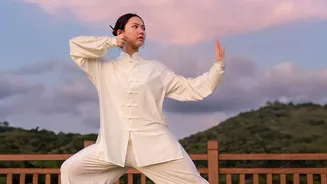
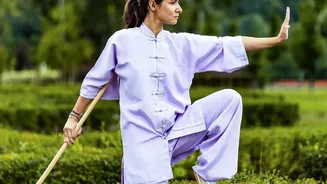
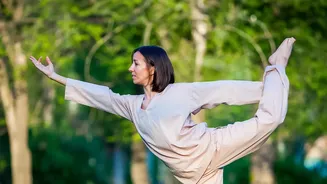
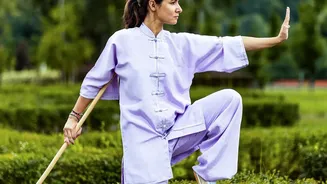
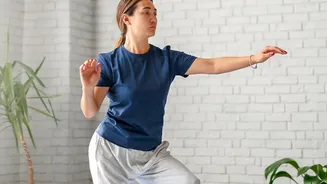
Tai Chi presents a starkly different approach to balance. This ancient Chinese practice is often described as 'meditation in motion'. It emphasizes slow, deliberate, and flowing movements. The core principle is maintaining a stable, rooted connection to the ground. Practitioners learn to sink their weight, lower their center of gravity, and shift it smoothly and consciously from one foot to the other. While skating is about managing high-speed instability, Tai Chi is about cultivating profound stability through slow, controlled weight transfers, strengthening the core, and maintaining precise body alignment. It trains the body to be acutely aware of its position and to maintain postural control even while moving.
A Tale of Two Centers of Gravity
Both activities are a masterclass in managing your center of gravity—the point where your body's mass is concentrated, typically just below the navel. In Tai Chi, the goal is to keep this point low and centered over a wide, stable base. The slow movements are designed to train your ability to feel and control this center. In skating, your center of gravity is in a constant state of flux. To move, you must intentionally let it fall forward, and to turn, you must lean into the curve, precisely counteracting centrifugal forces. A skater must constantly shift their body and posture to keep their center of gravity vertically aligned over a very narrow, moving skate blade to remain balanced.
Training the Sixth Sense: Proprioception
Beyond muscle, balance is a conversation between your body and your brain, a 'sixth sense' known as proprioception. This is your body’s ability to sense its own position in space without looking. Skating puts your proprioceptive system into overdrive, demanding lightning-fast reactions to unexpected wobbles and shifts. Tai Chi, on the other hand, trains proprioception with mindful intention. Its slow, deliberate movements give your brain time to process the feedback from your joints and muscles, refining your internal map of your body. Studies show that regular Tai Chi practice significantly improves this sense, which is a key reason it is so effective at preventing falls.
What the Skater Can Learn from Tai Chi
So, how can the art of slow, graceful movement help with the fast, edgy world of skating? The connection is surprisingly direct. Many Tai Chi principles translate perfectly to the ice or pavement. The Tai Chi practice of 'sinking' and bending the knees helps a skater lower their center of gravity for more stability. The focus on smooth weight transfer is exactly what's needed to move from one skate to the other with power and control. Furthermore, the core strength and enhanced body awareness developed through Tai Chi provide a powerful foundation for managing the dynamic challenges of skating. By thinking like a Tai Chi practitioner—staying relaxed, keeping the core engaged, and being mindful of weight shifts—a skater can trade fear and tension for fluid confidence.