
A Planet Defined by Dust
To understand Mars is to understand its dust. It’s not just the red-ochre soil under a rover's wheels; it’s a constant, pervasive presence in the thin atmosphere. Martian dust particles are tiny, fine, and slightly electrostatic, meaning they cling to surfaces
with stubborn tenacity. While the planet is known for its massive, globe-spanning dust storms, new analysis of orbiter data is shedding light on a more regular and insidious threat: seasonal dust pulses. These are not the planet-blotting tempests of Hollywood films but more localized, intense, and frequent events that can have devastating consequences for solar-powered machinery on the surface.
The Solar Power Problem
For many Mars missions, the sun is the only available power source. Solar panels are a relatively lightweight and reliable way to generate electricity millions of miles from home. But this reliance creates a critical vulnerability. Dust storms affect solar arrays in two ways: first, they kick up so much material that they darken the skies, sometimes blocking over 99% of direct sunlight. Second, the dust that settles on the panels forms a fine layer that dramatically reduces their efficiency, slowly choking the rover's ability to generate power. This slow-motion power drain can be just as fatal as a sudden catastrophe. The average power degradation from dust accumulation is around 0.2% per Martian day, but this can accelerate dramatically during storms.
Lessons from Fallen Explorers
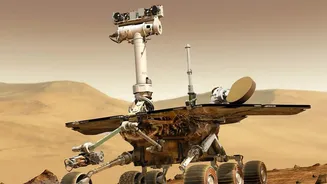
The history of Mars exploration is littered with tales of battles against dust. NASA’s Spirit and Opportunity rovers, designed for 90-day missions, survived for years, partly thanks to fortuitous Martian winds that occasionally blew their panels clean. But Opportunity's legendary 15-year journey ultimately ended in 2018 when a planet-encircling dust storm blotted out the sun for months. Unable to recharge its batteries, the rover couldn't power its internal heaters to survive the frigid Martian cold and fell silent forever. More recently, the InSight lander's mission ended in December 2022 after dust accumulation progressively starved it of power, despite engineers' clever attempts to use the lander's robotic arm to trickle sand nearby, hoping the wind would carry away the finer dust particles.
The Nuclear Alternative
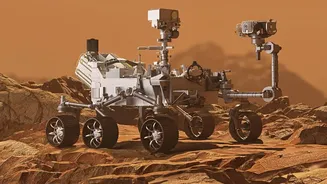
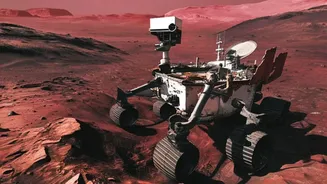
This vulnerability is why NASA's larger rovers, Curiosity and Perseverance, are powered by a different source: nuclear. They use radioisotope thermoelectric generators (RTGs), which convert heat from the natural decay of plutonium into electricity. This provides a constant, reliable power source day and night, regardless of weather or season. When the 2018 storm killed Opportunity, the nuclear-powered Curiosity rover kept operating, its main inconvenience being the need for longer camera exposure times in the darkened conditions. This stark contrast highlights a fundamental strategic decision in mission design: the trade-off between the lighter, simpler solar arrays and the heavier, more complex but storm-proof nuclear power systems.
Designing for a Dusty Future
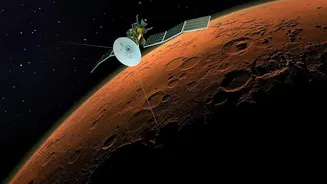
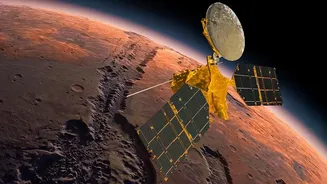
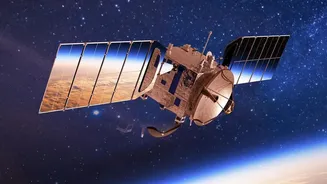
The new orbiter data, likely from assets like the Mars Reconnaissance Orbiter (MRO) which constantly monitors the planet's weather, provides a clearer picture of when and where these seasonal dust pulses occur. This improved forecasting is not just an academic exercise; it is crucial for planning future missions. Knowing the storm tracks and seasonal patterns can help mission planners choose safer landing sites for solar-powered craft, schedule surface operations for clearer seasons, and design more resilient hardware. While ideas like wipers or blowers have been considered, they add weight and potential points of failure. Understanding the enemy—in this case, the seasonal ebb and flow of Martian dust—is the first step toward outsmarting it, ensuring that future explorers don't meet the same dusty fate as their predecessors.