

The Sun's Turbulent Nature
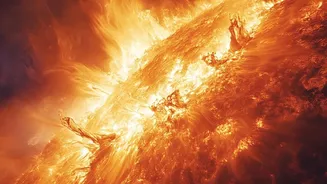
The Sun is not a static ball of fire; it's a dynamic star with an approximately 11-year cycle of activity. We are currently in Solar Cycle 25, which began in December 2019 and has been more active than originally predicted. This cycle is marked by the
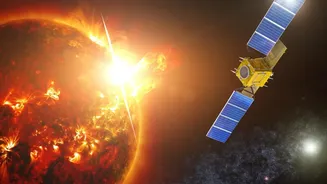
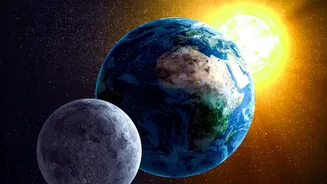
appearance of sunspots, which are areas of intense magnetic activity. Sometimes, the magnetic field lines near these sunspots become tangled and snap, releasing tremendous bursts of energy. These events are known as solar flares, which are powerful explosions of radiation. They are often accompanied by coronal mass ejections (CMEs), which are giant clouds of solar plasma and magnetic fields hurled into space. When these are directed toward Earth, the trouble can begin.
When a Solar Storm Reaches Earth
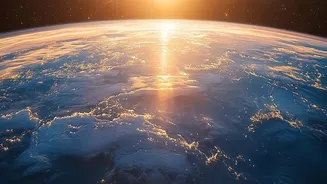
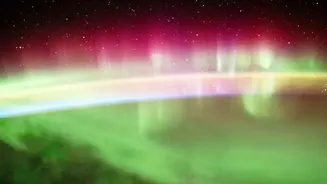
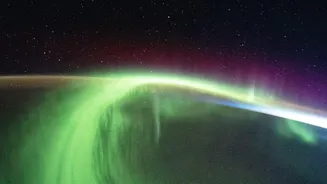
While a solar flare's radiation reaches Earth at the speed of light, a CME is slower, taking one to three days to arrive. When this cloud of charged particles and magnetic fields slams into our planet's protective magnetic field, it triggers a geomagnetic storm. This interaction can induce powerful electrical currents in our upper atmosphere and even on the ground. While these storms are responsible for the beautiful auroras seen near the poles, they are also what makes them a significant threat to our technology-dependent society.
Satellites in the Firing Line
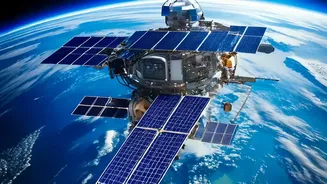
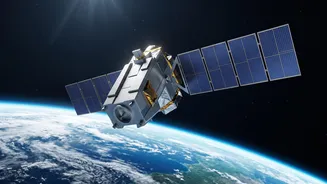
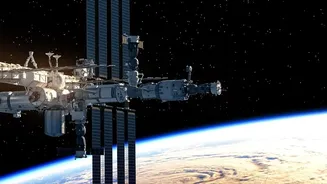
Perhaps most vulnerable are the thousands of satellites orbiting our planet. Geomagnetic storms heat and expand the upper atmosphere, increasing the drag on satellites in low-Earth orbit. This can cause them to lose altitude and potentially fall out of orbit, as was seen with a batch of Starlink satellites in 2022. The high-energy particles from a storm can also damage sensitive electronics, degrade solar panels, and cause phantom commands in satellite systems. Furthermore, the distortion of the ionosphere can disrupt the signals satellites send, leading to inaccurate GPS data, which affects everything from aviation and shipping to precision agriculture.
The Threat of Widespread Blackouts
Geomagnetic storms can induce powerful currents in long conductors on the ground, such as power transmission lines. These geomagnetically induced currents (GICs) can flow into electrical transformers, causing them to overheat and potentially suffer permanent damage. This is not just a theoretical risk. In March 1989, a solar storm caused the entire power grid of Quebec to collapse in 90 seconds, leaving millions in the dark for nine hours. A more extreme event, like the 1859 Carrington Event, could cause far more extensive and longer-lasting blackouts today, with some experts predicting damage that could take months or even years to fully repair.
Communications Breakdown
The impacts extend beyond GPS and power grids. Solar flares can cause immediate radio blackouts on the sunlit side of the Earth by disrupting the ionosphere, the layer of the atmosphere that high-frequency radio waves bounce off. This affects aviation and maritime communications. A major storm could also damage the submarine cables that form the backbone of the global internet by frying the power-feed lines for the signal repeaters. A severe event could lead to a scenario where global communication systems are significantly degraded for days.
Forecasting and Future-Proofing
The good news is that we are not entirely defenseless. Agencies like NOAA's Space Weather Prediction Center constantly monitor the Sun, providing forecasts and alerts that give satellite operators and grid managers time to take protective measures. These can include putting satellites into a safe mode or temporarily disconnecting parts of the power grid. Engineers are also developing and installing new hardware, like neutral blocking devices, to protect transformers from GICs. As we head towards the peak of Solar Cycle 25, which is proving more active than its predecessor, understanding and preparing for space weather is more critical than ever.