



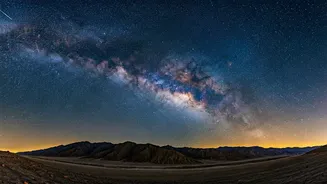


A Celestial Symphony in the Himalayas
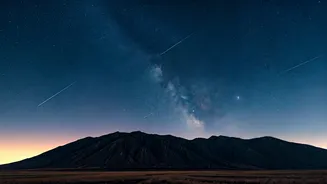
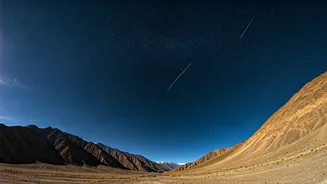
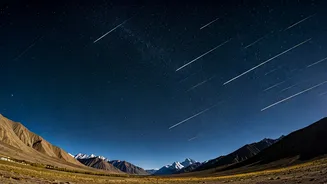
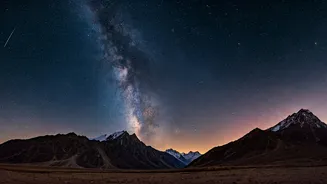
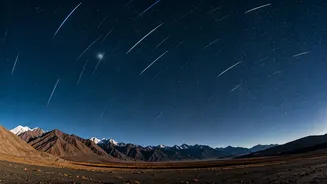
Late July isn't just another summer week in Ladakh; it's a time of cosmic convergence. This period marks the activity of multiple meteor showers, most notably the Southern Delta Aquariids and the beginning of the famous Perseids. While the Delta Aquariids ramble
along steadily, producing faint but consistent streaks of light, the early Perseids join in, offering the promise of brighter, more dramatic fireballs. This overlap means the night sky is alive with activity, with meteors appearing to crisscross the heavens. It’s not about a single, sharp peak but a sustained, week-long celestial show that makes the region a stargazer's paradise.
Ladakh's High-Altitude Advantage
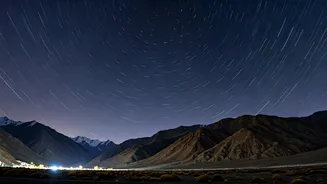
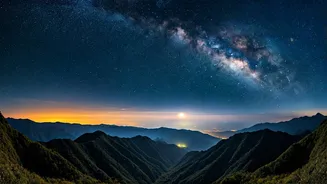
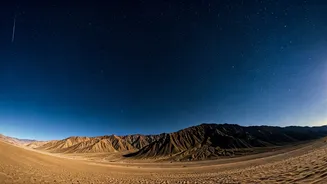
There's a reason astronomers and astrophotographers flock to Ladakh. Its unique geography creates near-perfect conditions for stargazing that few places on Earth can match. Lying at an average altitude of over 10,000 feet, the region has a thin, dry atmosphere with minimal moisture or pollution to blur the view. This high-altitude setting, shielded by the Himalayas, results in exceptionally clear and dark skies. The lack of significant urban development means light pollution is almost non-existent, especially in remote areas. This pristine darkness allows even the faintest stars to shine brightly, turning the sky into a rich tapestry of celestial wonders.
The Dance of Meteors and the Milky Way
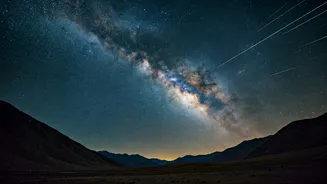
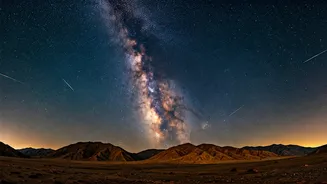
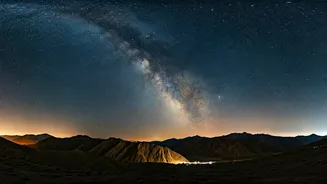
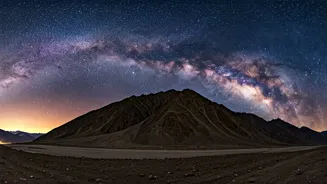
What you're witnessing during a meteor shower is Earth passing through a trail of dusty debris left behind by a comet. As these tiny particles enter our atmosphere at high speeds, they burn up, creating the brilliant streaks of light we call shooting stars. In late July, you’re seeing the remnants of both Comet 96P/Machholz (the likely parent of the Delta Aquariids) and Comet Swift-Tuttle (the source of the Perseids). But the show doesn’t end there. Summer is also the prime season for viewing the Milky Way's galactic core. On a moonless night, this dense band of stars stretches across the sky like a luminous river, a sight made incredibly vivid by Ladakh's clear air. The combination of frequent shooting stars against the backdrop of our galaxy is a truly profound experience.
Planning Your Celestial Pilgrimage
To make the most of this spectacle, planning is key. While Leh is the main hub, the best viewing spots are away from the town's lights. Head to remote locations like the Nubra Valley, the banks of Pangong Tso or Tso Moriri, or the ultimate stargazing haven, Hanle. Hanle is home to India's first Dark Sky Reserve and the Indian Astronomical Observatory, testament to its world-class skies. Remember to acclimatise to the altitude for a couple of days to avoid sickness. Even in July, nights in Ladakh are cold, so pack warm layers. Give your eyes at least 20 minutes to adjust to the darkness; you'll be amazed at how many more stars slowly become visible. While the peak of the Delta Aquariids in 2026 around July 30th will be affected by a bright moon, the weeks leading up to it, and the build-up of the Perseids, still offer fantastic viewing opportunities in the moon-free hours after midnight.