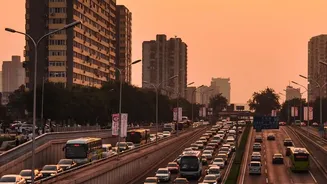








The great Indian housing dilemma: more space or more time? As property prices in city centres soar, many are looking to the suburbs for larger homes. But this often comes with a longer, more draining daily commute. Is the trade-off worth it?
The Undeniable Allure of More Space
The desire
for a bigger home is not just about luxury; it's about quality of life. The rise of hybrid work has transformed our homes into part-time offices, demanding dedicated workspaces. Families need room to grow, children need space to play, and everyone benefits from a home that feels less cluttered and more peaceful. Studies show that larger living areas can reduce stress and improve family harmony. In today's market, moving to peripheral areas can mean gaining 30-50% more carpet area for the same budget compared to central urban locations. These suburban areas are no longer isolated outposts; many are now well-planned townships with their own schools, shops, and parks, offering a self-contained lifestyle.
Calculating the True Financial Cost
On paper, the math seems simple: a lower EMI or rent in the suburbs means significant monthly savings. However, this doesn't account for the hidden costs of a long commute. Increased travel adds up, whether it's through higher fuel consumption, vehicle maintenance, or the cost of public transport passes. One commuter in Gurgaon found that his savings of ₹20,000 on rent were significantly eroded by an increase in daily fuel expenses from ₹200 to ₹600 after moving farther from his office. It's crucial to create a detailed budget that compares your potential rent or EMI savings with the full spectrum of transport expenses. Don't just estimate; calculate your daily, weekly, and monthly travel costs to see if the financial benefit remains attractive.
The Irretrievable Cost of Time
Money spent can be earned back, but time lost is gone forever. This is the most critical factor many people underestimate. A daily commute of three hours, five days a week, adds up to a staggering 780 hours a year—or 32 full days spent just travelling. This is time that could be spent with family, exercising, pursuing a hobby, resting, or even working on a side project for extra income. Before committing to a long commute, quantify the time you will lose. Ask yourself what you would do with an extra two or three hours each day. The answer might reveal that the 'cheaper' suburban home comes at a very high personal price.
The Toll on Your Health and Wellbeing
Long commutes are not just tiring; they are a significant source of chronic stress and have documented negative health impacts. Daily exposure to traffic, noise, and pollution increases the risk of high blood pressure, respiratory issues, and cardiovascular disease. The stress of an unpredictable journey can leave you drained before your workday even begins and affects your mood and energy levels long after you get home. While a larger home offers psychological benefits like reduced clutter and personal space, these can be negated if your daily routine is dominated by fatigue and frustration from travelling.
The Hybrid Work Wildcard
The rise of hybrid work has completely changed this calculation for many. If you only need to go to the office two or three days a week, a long commute becomes far more manageable. The friction of a long journey is effectively halved, making suburban locations more compelling. This model allows professionals to enjoy the best of both worlds: a spacious home with better amenities for the days they work remotely, and a tolerable commute on office days. Research shows that home office requirements and the frequency of hybrid work are now major drivers of property purchasing decisions, sometimes even more so than the distance from the workplace.