

2001: A Space Odyssey (1968)
Long before CGI became a standard tool, Stanley Kubrick crafted a vision of space that remains breathtakingly realistic and influential. Working with science fiction author Arthur C. Clarke, Kubrick aimed for scientific accuracy, and the result is a film
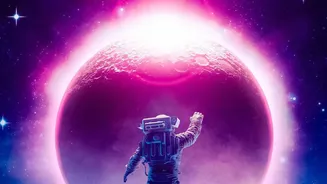
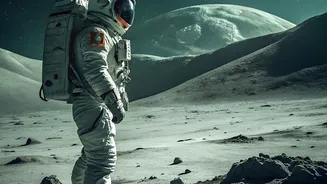
that feels less like fiction and more like a documentary of the future. The genius of 2001 lies in its revolutionary practical effects. The famous zero-gravity scenes were achieved with massive, rotating sets that cost a significant portion of the film's budget, and intricate wire work. The iconic and psychedelic "Star Gate" sequence was created using an experimental technique called slit-scan photography, which manipulated light and motion to produce its otherworldly patterns without a single computer. Every shot was meticulously planned to be captured 'in camera', giving the visuals a tangible quality that has aged remarkably well. It’s a slow, majestic journey that uses its scale and visual precision to explore humanity's place in the universe, making it a foundational text for big-screen sci-fi.
Gravity (2013)
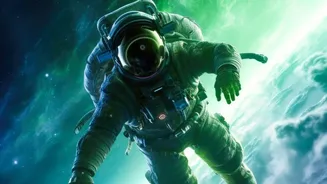
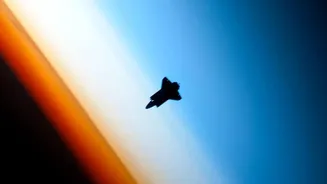
Alfonso Cuarón’s survival thriller is a masterclass in immersive filmmaking, designed to induce a sense of both awe and vertigo. The film is famous for its long, seamless takes, including a jaw-dropping opening sequence that runs for roughly 17 minutes without an apparent cut. This technique, flawlessly executed by cinematographer Emmanuel Lubezki, pulls the viewer directly into the terrifying plight of two astronauts stranded in orbit after their shuttle is destroyed. The filmmakers went to extraordinary lengths to simulate the physics of zero gravity, blending live-action performance with groundbreaking digital effects to create a photorealistic, yet intensely claustrophobic, environment. The sound design is equally brilliant, using silence to underscore the vacuum of space, making the moments of impact and crisis all the more jarring. Gravity is a visceral experience that leverages the big screen to convey the terrifying beauty and unforgiving nature of space, making the audience feel every breathless moment.
Interstellar (2014)
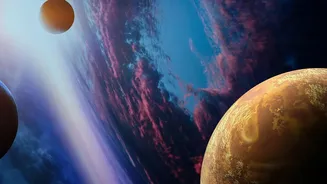
Christopher Nolan’s epic is as much about theoretical physics as it is about human emotion, and its visuals are central to its storytelling. To create the film's stunning cosmic phenomena, Nolan collaborated with theoretical physicist Kip Thorne to ensure scientific plausibility. This partnership led to one of the most scientifically accurate and visually stunning depictions of a black hole, Gargantua, ever put to film. The visual effects team developed new software specifically to render how light would bend around such a massive object, a process so rigorous it resulted in the publication of two scientific papers. The rendering process was immense, with single frames of the black hole taking up to 100 hours to complete. Beyond the black hole, the film transports audiences across galaxies through a wormhole and to alien worlds of giant waves and frozen clouds. It’s a film of immense scale that uses its visuals not just for spectacle, but to make mind-bending concepts tangible, rewarding viewers who see it in a premium large format.
Blade Runner 2049 (2017)
While not strictly a space exploration film, Denis Villeneuve’s sequel to the 1982 classic expands on its predecessor’s world with a vision so grand and atmospheric it demands theatrical viewing. Cinematographer Roger Deakins, who won an Oscar for his work, paints a dystopian future with a palette that is both beautiful and bleak. The film swaps the perpetual rain and darkness of the original for a variety of stark, haunting environments. Vast, orange-hued deserts blanket the ruins of Las Vegas, while the cities remain drenched in holographic neon and oppressive grey smog. Villeneuve and Deakins use monumental architecture and sweeping, patient shots to create a sense of scale and isolation, making the world feel both immense and empty. The use of colour is deliberate and symbolic, with different hues representing key themes and emotional shifts in the narrative. It’s a triumph of world-building and atmosphere, a sci-fi art film that uses its every frame to build a tangible, unforgettable future.
Dune (2021)
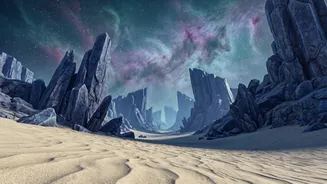
Denis Villeneuve’s adaptation of Frank Herbert’s sprawling novel is a testament to the power of cinematic scale. To bring the desert planet of Arrakis to life, cinematographer Greig Fraser shot on location in Jordan and Abu Dhabi, capturing a sense of tangible heat and overwhelming vastness. The film’s aesthetic is a unique blend of sci-fi and medievalism, with colossal spaceships and brutalist architecture that dwarf the human characters. Villeneuve uses this scale to convey power, history, and the unforgiving nature of the planet at the center of the conflict. The visuals are deliberately crafted to feel immense and real; everything from the shimmering 'spice' in the air to the cataclysmic arrival of a giant sandworm is designed to be awe-inspiring on the biggest screen possible. The film's muted, sand-bleached colour palette is a deliberate choice to convey the harshness of the environment, a look that is both beautiful and oppressive. Dune is pure sensory immersion, a film whose epic scope and detailed world-building are best appreciated in a theatrical setting.