
India's Next Interplanetary Frontier
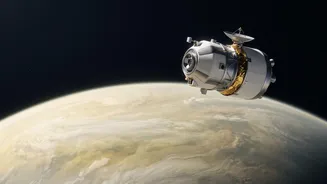
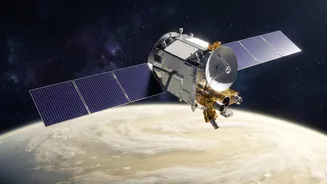
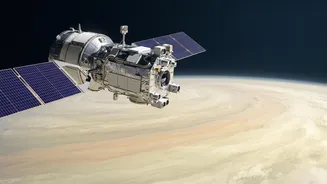
Building on the historic successes of the Chandrayaan and Mangalyaan missions, the Indian Space Research Organisation (ISRO) is setting its sights on the second planet from the Sun. The Venus Orbiter Mission, unofficially named Shukrayaan-1, represents
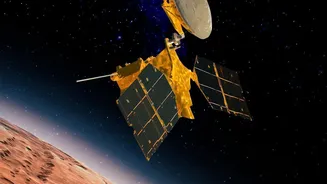
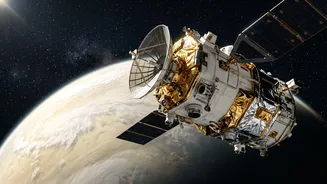
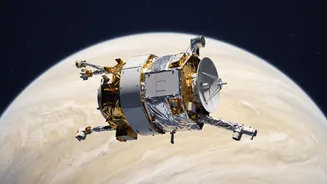
India's next great leap in planetary exploration. The mission involves sending a sophisticated orbiter, equipped with a suite of scientific instruments, to circle Venus for several years. Following its formal government approval in September 2024, the mission is now in an advanced stage of preparation, with a planned launch window in 2028. This endeavor places India in a select group of nations capable of undertaking complex missions to unravel the secrets of the inner solar system.
Why Study Earth's 'Evil Twin'?
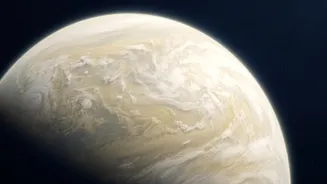
Venus is often called Earth's twin because of its similar size, mass, and density, but the comparison ends there. It is the hottest planet in our solar system, with a surface temperature exceeding 460 degrees Celsius—hot enough to melt lead. Its atmosphere is a crushing blanket of carbon dioxide, 90 times thicker than Earth's, with clouds made of corrosive sulfuric acid. Scientists believe Venus may have once been more like Earth, possibly with liquid water oceans, but suffered a runaway greenhouse effect. Understanding how and why Venus turned into this inferno is crucial; it provides a stark cautionary tale and a natural laboratory for studying extreme climate change, offering invaluable insights into the future of our own planet.
A Bespoke Toolkit for a Toxic World
The core of the Shukrayaan mission is its scientific payload, a set of instruments designed to withstand the harsh Venusian environment and perform detailed analysis. A key instrument is a high-resolution Synthetic Aperture Radar (SAR), which can pierce through the thick cloud cover to map the planet's surface in unprecedented detail, searching for signs of active volcanoes and other geological features. Other instruments are specifically designed to analyze the atmosphere's chemistry. These tools will examine the composition of the clouds, measure the distribution of various gases, and study how the planet's atmosphere interacts with the constant stream of particles from the Sun, known as the solar wind. International partners, including Sweden and Russia, are contributing instruments, making it a collaborative global effort.
The Intriguing Search for Life's Clues
One of the most tantalizing aspects of recent Venus research was the debated detection of phosphine gas in its clouds. On Earth, phosphine is predominantly produced by microbial life that doesn't require oxygen. While the initial findings are still debated, the possibility, however remote, has reignited interest in a specific region of Venus's atmosphere. About 50-60 km above the surface, temperatures and pressures are surprisingly Earth-like. Shukrayaan's instruments, including the Russian-French VIRAL payload, are equipped to study atmospheric gases and could provide crucial data to confirm or refute the presence of such biosignatures. The mission isn't designed to find life directly, but to analyse the chemistry that could point towards habitable conditions, a foundational step in one of science’s biggest questions.
A New Chapter in the Global Space Race
India is not alone in its renewed interest in Venus. NASA is planning its DAVINCI and VERITAS missions, while the European Space Agency (ESA) is preparing its Envision orbiter, all scheduled for the late 2020s and early 2030s. This convergence of missions creates a new golden age of Venus exploration. Shukrayaan, with its unique ground-penetrating radar—a first for any Venus mission—is poised to make a significant contribution. By studying the planet's sub-surface, a feat no previous mission has attempted, ISRO can fill a critical gap in our understanding. The simultaneous efforts by multiple agencies will allow for unprecedented collaboration, with data from different missions complementing each other to build the most comprehensive picture of Venus ever assembled.