





The Challenge of Martian Air
Sending astronauts to Mars presents countless hurdles, but the most basic is the air itself. The Martian atmosphere is incredibly thin—about 100 times less dense than Earth's—and is composed of 95% carbon dioxide, a gas that is toxic to humans in high
concentrations. For explorers to survive, they need a constant supply of oxygen, not just for breathing, but for creating a pressurized habitat. The traditional solution of packing all the necessary oxygen on a rocket from Earth is incredibly expensive and complex. Every kilogram launched into space costs a fortune, and a long-term human mission would require many tons of oxygen, making the prospect of shipping it all from home a logistical nightmare.
A Revolutionary Solution: Making Oxygen On-Site
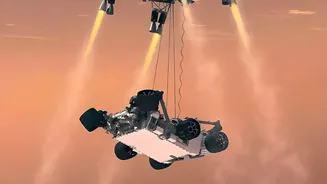
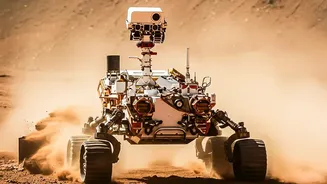
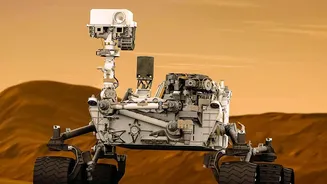
Instead of bringing it with them, what if astronauts could make their own oxygen on Mars? This concept, known as In-Situ Resource Utilization (ISRU), is a cornerstone of modern space exploration. It’s the idea of using local planetary materials to create essentials like water, fuel, and breathable air. For Mars, the key technology to achieve this is a device that can extract oxygen directly from the carbon-dioxide atmosphere. The pioneering experiment to prove this was possible is called MOXIE, the Mars Oxygen In-Situ Resource Utilization Experiment, which was developed by MIT and sent to Mars aboard NASA's Perseverance rover.
How Solid Oxide Electrolysis Works
At the heart of this technology is a process called solid oxide electrolysis. It’s a bit like a fuel cell running in reverse. First, the MOXIE instrument draws in Martian air through a filter to remove dust. This air is then compressed and heated to an extremely high temperature, around 800 degrees Celsius. At this temperature, the CO2 is fed into the Solid Oxide Electrolyzer (SOXE), which uses special ceramic materials and electricity to split the carbon dioxide molecules (CO2) into oxygen ions (O-) and carbon monoxide (CO). The oxygen ions are then separated by a membrane and recombine to form pure, breathable oxygen (O2). This pure oxygen is measured for quality before being vented back out, along with the carbon monoxide.
MOXIE: A Toaster-Sized Proof of Concept
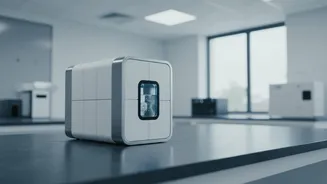
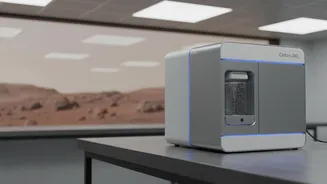
The MOXIE experiment, roughly the size of a toaster or a car battery, successfully began producing oxygen on Mars in April 2021. Over its mission, it ran 16 times in various atmospheric conditions, proving the technology works reliably in the harsh Martian environment, day or night, and across different seasons. In total, MOXIE produced 122 grams of oxygen, about enough to keep a small dog alive for 10 hours. At its peak, it was producing 12 grams per hour—twice its original design goal—at a purity of 98% or better. While a small amount, this was a monumental achievement: the first time a natural resource on another planet had been harvested and turned into a useful substance for human missions.
Scaling Up for a Human Mission
The headline's term 'scaled electrolysis reactors' refers to the next critical step. MOXIE was a small-scale demonstration. For a human mission, a much larger system is needed. Researchers envision sending a full-scale oxygen factory to Mars ahead of the astronauts. This scaled-up system would need to be about 200 times larger than MOXIE, weighing around a ton and producing oxygen continuously for months. Such a plant would aim to produce between 2 and 3 kilograms of oxygen per hour. The goal is to generate about 25 to 30 metric tons of liquid oxygen over the course of a year or more, filling a tank on a Mars Ascent Vehicle before the crew even arrives.
More Than Just Breathing Air
While breathable air is crucial for life support, the vast majority of the oxygen produced on Mars would be for a different purpose: rocket propellant. Most rocket engines require an oxidizer to burn fuel, and liquid oxygen is a powerful one. To launch a rocket off the surface of Mars for the return trip to Earth, astronauts would need about 25 tons of oxygen for every 7 tons of fuel. Producing this massive amount of oxidizer on-site would dramatically reduce the mass that needs to be launched from Earth, making a return journey more feasible and affordable. It's the key to making a human presence on Mars sustainable, rather than a one-way trip.