







A Short Flight with Big Implications
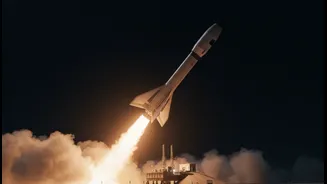
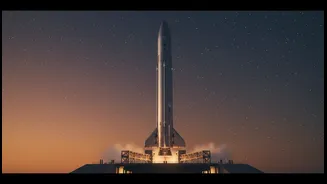
On Saturday, at the Noshiro Rocket Testing Center in Akita Prefecture, the Japan Aerospace Exploration Agency (JAXA) held its breath. Their prototype, the Reusable Vehicle eXperiment (RV-X), roared to life. The 7.3-metre-tall vehicle ascended to an altitude
of approximately 11 metres, moved sideways for about 16 metres, and then gently descended, landing upright on its four legs. The entire sequence was over in less than a minute. While the height might not seem impressive, the manoeuvre itself is incredibly complex. This was not about reaching for the stars, but about proving a concept: that a Japanese-built rocket could perform a controlled, powered vertical takeoff and landing, the foundational technology for rocket reusability.
The Billion-Dollar Problem of Disposable Rockets
For decades, space launch has operated on a simple, incredibly expensive model. Multi-million dollar rockets, precision-engineered marvels of science, are used once and then discarded, burning up in the atmosphere or crashing into the ocean. Japan's current workhorse, the H3 rocket, is an expendable vehicle. This model has been completely upended by companies like SpaceX, which pioneered landing and reusing the first stages of its Falcon 9 rockets. By recovering and relaunching the most expensive part of the vehicle, they dramatically slashed the cost of getting to orbit. This cost advantage allowed SpaceX to dominate the global commercial launch market. For nations like Japan, developing reusable technology is no longer an option; it's a necessity for remaining competitive in the commercial and strategic landscape of space exploration.
Japan Enters a Crowded Field
JAXA is not starting in a vacuum. The successful RV-X test places Japan in a rapidly accelerating race. The United States leads the field, but others are closing in fast. In a striking coincidence, China announced its own first successful recovery of a rocket's first stage just one day before Japan's test, highlighting the growing competition in Asia. Japan's own private sector is also making moves. In 2025, Honda's R&D division became the first private Japanese company to successfully test its own small reusable rocket. The RV-X test, a collaboration between the public agency JAXA and industrial giant Mitsubishi Heavy Industries, signals a determined national effort to catch up and build a sovereign reusable launch capability.
From a 'Hop' to Orbit
This short flight was the culmination of years of work. Development on the RV-X began in 2016, and its durable engine has already undergone more than 160 ground-based combustion tests, designed to be capable of around 100 launches. This test is just the beginning of the flight program. JAXA officials have stated the next goal is to fly the same vehicle to a higher altitude of around 100 metres. The data gathered from these initial hops is vital. It will directly feed into a more ambitious international project called CALLISTO, a joint effort between Japan, Germany, and France. CALLISTO will use the same engine technology as the RV-X but is designed for much higher and faster flights, bringing Japan one step closer to an operational, reusable successor to its H3 rocket. A test flight for the CALLISTO vehicle is anticipated within the next year.