



Peace Lily: The Elegant Moisture Manager
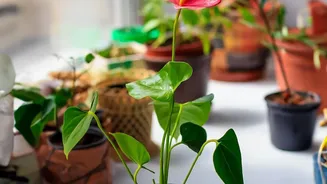
The Peace Lily, with its glossy dark leaves and elegant white flowers, is more than just a pretty plant. It is a powerhouse when it comes to improving indoor air quality. It thrives in high humidity, making it a perfect companion for the monsoon season.
Through its leaves, it can absorb excess moisture from the air, helping to reduce the damp feeling in a room. What’s more, it’s renowned for its ability to filter airborne mould spores, which can become a major issue in persistently damp environments. Studies have also shown that Peace Lilies are effective at removing common indoor toxins like formaldehyde and benzene. For best results, place it in a spot with bright, indirect light and keep the soil consistently moist but not waterlogged. A word of caution: this plant is toxic if ingested, so keep it away from children and pets.
English Ivy: The Prolific Mould Fighter
English Ivy is a fast-growing vine that is particularly effective at combating airborne mould. Research has shown that this plant can significantly reduce the amount of mould particles in the air, making it a fantastic natural ally for allergy sufferers during the damp monsoon months. Its dense foliage is not just for show; it actively works to purify the air by absorbing toxins. English Ivy is quite adaptable, thriving in a range of light conditions from low to bright and indirect. It’s an excellent choice for hanging baskets or for placing on a high shelf where its trailing vines can be appreciated. Regular watering to keep the soil moist, but not soggy, is all it needs to get to work protecting your indoor air. Its ability to thrive in humid conditions makes it a low-effort, high-reward plant for Indian homes.
Snake Plant: The Hardy Air Purifier
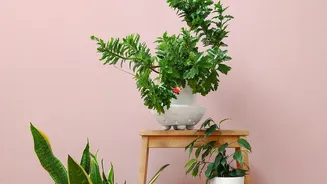
Practically indestructible, the Snake Plant, or Mother-in-Law’s Tongue, is a must-have for any home. While it's more famous for its air-purifying capabilities than its dehumidifying prowess, it excels at what it does. It is one of the few plants that continues to convert carbon dioxide into oxygen even at night, making it an ideal choice for bedrooms. Snake plants are succulents, so they are incredibly low-maintenance and resistant to neglect. They tolerate the high humidity of the monsoons well and are excellent at filtering common household toxins like formaldehyde from the air. Their ability to regulate indoor humidity by absorbing some moisture also helps reduce the risk of mould growth. For those seeking a plant that cleans the air without demanding much attention, the snake plant is a clear winner.
Spider Plant: The Easy-Care Champion
The Spider Plant is another champion of air purification that is incredibly easy to care for, making it perfect for beginners. It’s known for its ability to combat pollutants like carbon monoxide and xylene, which can be found in paints and car exhaust fumes. This plant is highly adaptable and resilient, and it produces charming little offshoots or “spiderettes” that can be easily repotted to create new plants. While not a primary dehumidifier, it helps improve overall air circulation and quality, which is crucial in stuffy, damp rooms. Spider Plants prefer bright, indirect light but can tolerate lower light conditions. Keeping their soil slightly moist will ensure they stay healthy and continue to work their air-cleansing magic throughout the monsoon and beyond.
Clay Dehumidifiers: The Natural Solution for Small Spaces
Beyond plants, another eco-friendly solution to excess moisture is the humble clay dehumidifier. Often made from natural materials like montmorillonite clay or terracotta, these devices work through adsorption—the process of attracting and trapping water molecules from the air within their porous structure. They are completely passive, requiring no electricity to function. While a small clay pot won't dehumidify an entire living room, they are highly effective in enclosed spaces like wardrobes, cabinets, and small bathrooms where mustiness and mould can easily take hold. A significant advantage is that they are reusable; once saturated, you can simply dry them out in the sun or a low oven to “recharge” them. They are a safe, silent, and sustainable way to target specific problem areas.