



In our search for a single routine that boosts physical fitness and mental clarity, the ancient practice of Surya Namaskar, or Sun Salutation, stands out. This sequence offers a complete wellness solution in just 10-15 minutes a day.
More Than Just a Workout
Surya Namaskar is
a dynamic sequence of 12 yoga postures performed in a continuous flow. The name comes from Sanskrit, where 'Surya' means 'Sun' and 'Namaskar' means 'to bow' or 'salute'. Traditionally practised in the morning to greet the rising sun, it is a form of expressing gratitude for the energy that sustains life on Earth. But beyond its spiritual roots, it is a potent physical exercise that integrates movement, breath, and mindfulness. The practice is designed to awaken the body, increase energy, and prepare you for the day ahead by warming up muscles, improving circulation, and focusing the mind.
The Foundation: Breath and Flow
The key to unlocking the full benefits of Surya Namaskar is synchronising your breath with each movement. The pattern is simple: inhale as you expand the chest and bend backwards, and exhale as you contract the body and fold forwards. This rhythmic breathing helps calm the nervous system, increases lung capacity, and turns the physical practice into a form of moving meditation. For beginners, it's important to move slowly and deliberately, focusing on correct form before trying to increase speed. Don't worry about perfection; consistency is more important.
Step 1: Pranamasana (Prayer Pose)
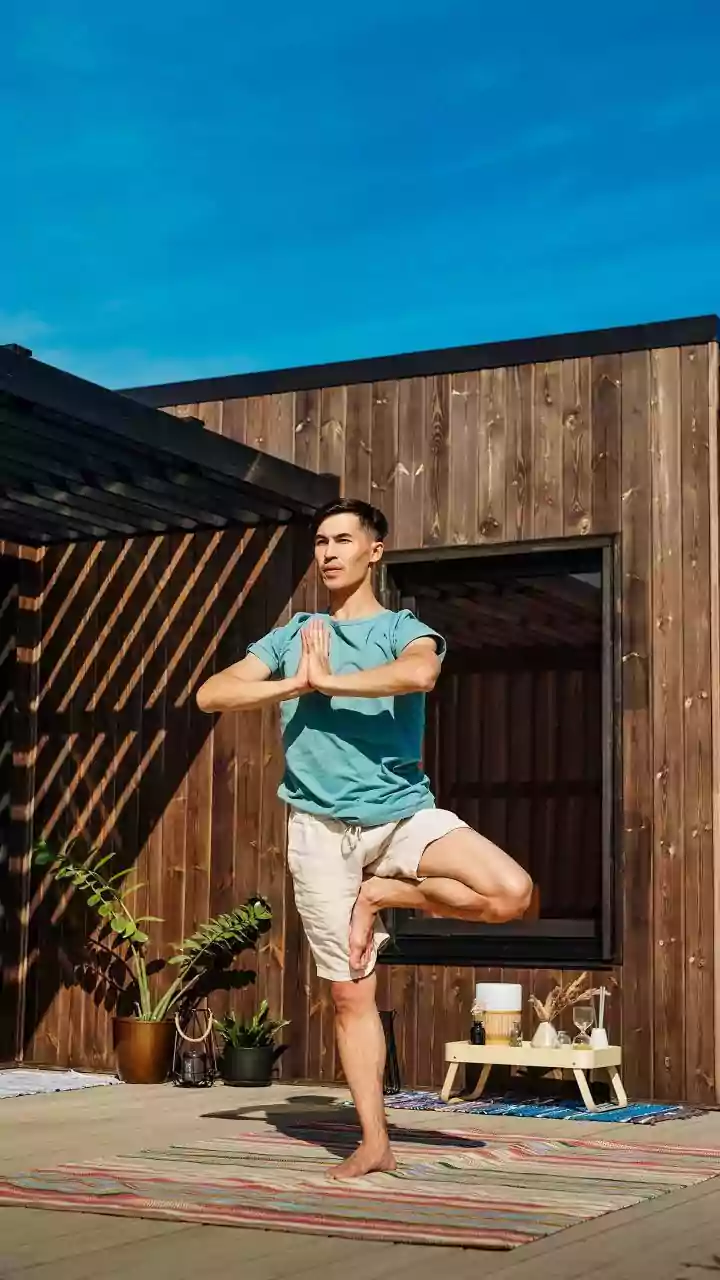
Begin by standing at the front of your mat with your feet together. Balance your weight evenly. Bring your palms together in front of your chest in a prayer position. Relax your shoulders and breathe normally, centering your energy.
Step 2: Hasta Uttanasana (Raised Arms Pose)
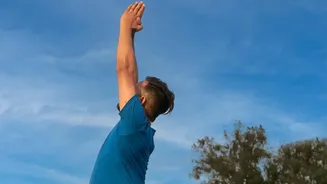
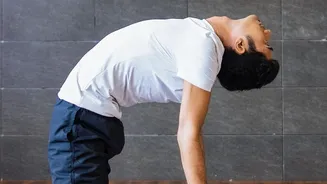
Inhale deeply as you raise your arms up and back, keeping your biceps close to your ears. Stretch your entire body up from the heels to the tips of your fingers, gently arching your back.
Step 3: Padahastasana (Standing Forward Bend)
Exhale as you bend forward from the hips, keeping your spine straight. Bring your hands down to the floor beside your feet. If you can't reach the floor with straight legs, bend your knees enough to rest your belly on your thighs.
Step 4: Ashwa Sanchalanasana (Equestrian Pose)
Inhale and step your right leg back as far as possible. Lower your right knee to the floor and look up, lifting your chest. Ensure your left knee is directly above your left ankle, forming a 90-degree angle.
Step 5: Dandasana (Plank Pose)
Inhale or briefly hold your breath as you step your left leg back to join the right. Your body should form a straight line from your head to your heels, like a plank. Keep your arms perpendicular to the floor.
Step 6: Ashtanga Namaskara (Eight-Limbed Salute)
Gently bring your knees down to the floor. Exhale and lower your chest and chin to the floor while keeping your hips slightly raised. Your two hands, two feet, two knees, chest, and chin should all be touching the ground.
Step 7: Bhujangasana (Cobra Pose)
Inhale as you slide forward and raise your chest into Cobra Pose. Keep your shoulders away from your ears and your elbows slightly bent. The effort should come from your back muscles, not from pushing with your hands.
Step 8: Adho Mukha Svanasana (Downward-Facing Dog)
Exhale and lift your hips and tailbone up towards the ceiling, forming an inverted 'V' shape. Try to press your heels towards the floor, lengthening your spine and stretching your hamstrings.
Step 9: Ashwa Sanchalanasana (Equestrian Pose)
Inhale and bring your right foot forward between your hands. Your left knee comes down to the floor. This mirrors Step 4. Lift your chest and look forward.
Step 10: Padahastasana (Standing Forward Bend)
Exhale and bring your left foot forward to join the right. Fold forward from your hips, mirroring Step 3.
Step 11: Hasta Uttanasana (Raised Arms Pose)
Inhale as you roll your spine up. Raise your arms overhead and bend backward slightly, just as in Step 2.
Step 12: Pranamasana (Prayer Pose)
Exhale and return to the starting position, bringing your palms together in front of your chest. This completes one half-round. Repeat the entire sequence, this time leading with the left leg in Step 4 and Step 9 to complete one full round.
The Physical and Mental Payoff
Regular practice of Surya Namaskar provides a wealth of benefits. As a full-body workout, it strengthens muscles and joints, improves flexibility, and can aid in weight management. Studies have shown it improves cardiovascular health by enhancing blood circulation and reducing resting heart rate. It also stimulates the digestive system and helps tone the endocrine glands, which can regulate hormones and metabolism. On a mental level, the synchronised breathing and focused movement reduce stress and anxiety, improve concentration, and cultivate a sense of balance and calm.