





What Just Happened?
Adobe and Google have expanded their partnership, a move that will embed Google's AI capabilities, including the Gemini family of models, directly into Adobe's creative applications. This integration, announced at Google I/O, introduces an 'Adobe for
creativity connector' within Gemini. This allows users to describe a creative project using natural language prompts inside the Gemini chat interface, and then have Adobe's powerful backend tools orchestrate the creation of images, videos, and designs without ever needing to open a separate app. This initiative is part of Adobe's push towards 'agentic AI,' where the user states their desired outcome, and the AI figures out the technical steps to achieve it.
Firefly and Gemini: A Powerful Combination
This isn't a case of replacement, but enhancement. Adobe has its own generative AI, Firefly, which is known for producing commercially safe content. The new strategy gives users a choice, combining Adobe's creative expertise with Google's advanced AI models like Gemini, Veo, and Imagen. The goal is to give creators, from individual artists to large enterprises, the flexibility to use the best model for the job, all within Adobe's trusted ecosystem. For example, users can now leverage Gemini 2.5 Flash Image within Adobe Firefly and Adobe Express for faster text-to-image generation and improved contextual understanding.
Which Apps Get the AI Upgrade?
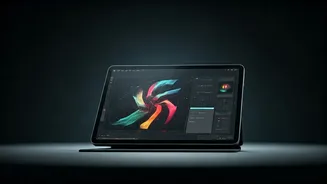
The integration is set to span across Adobe's flagship products. Users will see Google's AI models available in Creative Cloud apps like Photoshop, Illustrator, Premiere Pro, and Adobe Express. For enterprise customers, the models will also be accessible through Adobe GenStudio. The workflow is designed to be seamless; you can start an idea in Gemini, continue brainstorming in Firefly Boards, and then send the project to a specialized app like Photoshop or Premiere Pro for final, detailed edits. This allows for a fluid transition from broad concept to polished final asset.
A Game Changer for Creative Workflows
The practical implications for creative professionals are enormous. The new system aims to eliminate the fragmented experience of jumping between different specialized apps. A marketing manager could sketch out an entire campaign concept within Gemini, which then automatically generates the required social media assets, product mockups, and even video variations, all resized and formatted correctly. This dramatically speeds up content production, turning a process that could take hours or days into one that takes minutes. It empowers users to focus on the creative vision while the AI handles much of the repetitive technical execution.
The Bigger Picture: The AI Arms Race
Adobe's move is a clear response to the rapidly evolving AI landscape. By integrating third-party models, Adobe is positioning itself as an indispensable creative hub, rather than a closed ecosystem. This partnership strategy is not unique to Google; Adobe has also announced a similar connector for Anthropic's AI, Claude. This 'multi-model' approach is designed to ensure Adobe's suite of tools remains central to creative work, even as AI assistants become more capable. By meeting creators where they are—increasingly, in conversational AI interfaces—Adobe is future-proofing its dominance in the creative software market.