



Seeing the Invisible
Imagine trying to take a picture of a candle inside a dusty room. The dust would obscure the flame, scattering the light. This is the challenge astronomers face when trying to observe newborn stars, which are born inside dense clouds of gas and dust.
The James Webb Space Telescope (JWST), a collaboration between NASA, the European Space Agency, and the Canadian Space Agency, solves this problem with its incredible sensitivity to infrared light. This type of light, which is invisible to the human eye, can pass through the thick dust clouds, much like X-rays pass through soft tissue. This capability allows the telescope to capture what was previously unseeable: the earliest, most chaotic stages of star and planet formation.
A Gallery of Cosmic Nurseries
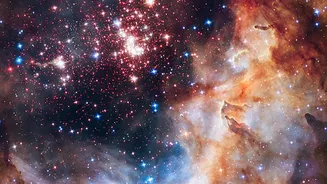
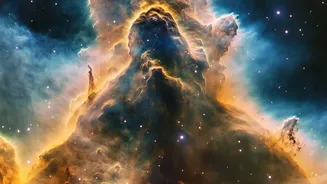
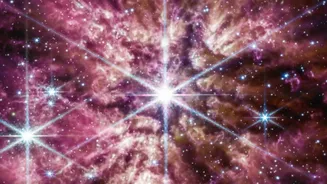
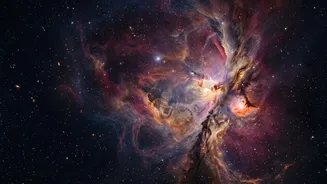
Recent images from the JWST have showcased several of these stellar nurseries in breathtaking detail. One stunning example comes from the Carina Nebula, a vast star-forming region 7,500 light-years away. A feature nicknamed the "Treasure Chest" reveals a cluster of about 70 young stars, some still wrapped in the dusty disks where planets may one day form. Another remarkable subject is Herbig-Haro 46/47, a pair of actively growing baby stars. The telescope captured these stars, which are only a few thousand years old, as they feed from a surrounding disk of gas and dust. In images of other protostars, like L1527, Webb has revealed a fiery hourglass shape created by material being ejected from the forming star, colliding with the matter around it. These images are not just beautiful; they are data-rich portraits of a process our own Sun went through billions of years ago.
The Building Blocks of New Worlds
When we look at these young stars, we are also looking at the birth of future solar systems. The dark, dense disks of material seen circling many of these protostars are known as protoplanetary disks. These are the spinning reservoirs of gas and dust from which planets, moons, asteroids, and comets are built. The JWST's instruments are powerful enough to not only see these disks but also to begin analyzing their chemical composition. By studying the material in these disks, scientists can understand the raw ingredients available for planet formation. It offers a direct look at the conditions that might lead to rocky worlds like Earth or gas giants like Jupiter, providing crucial clues in the search for habitable worlds elsewhere in the galaxy.
A Technological Triumph
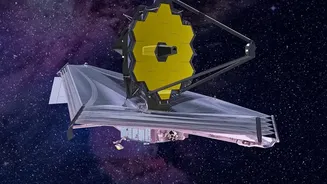
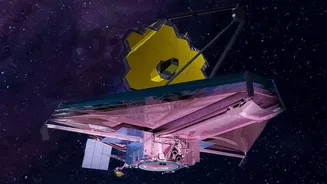
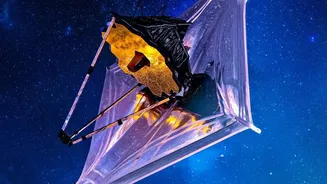
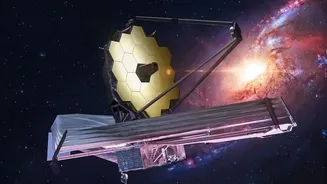
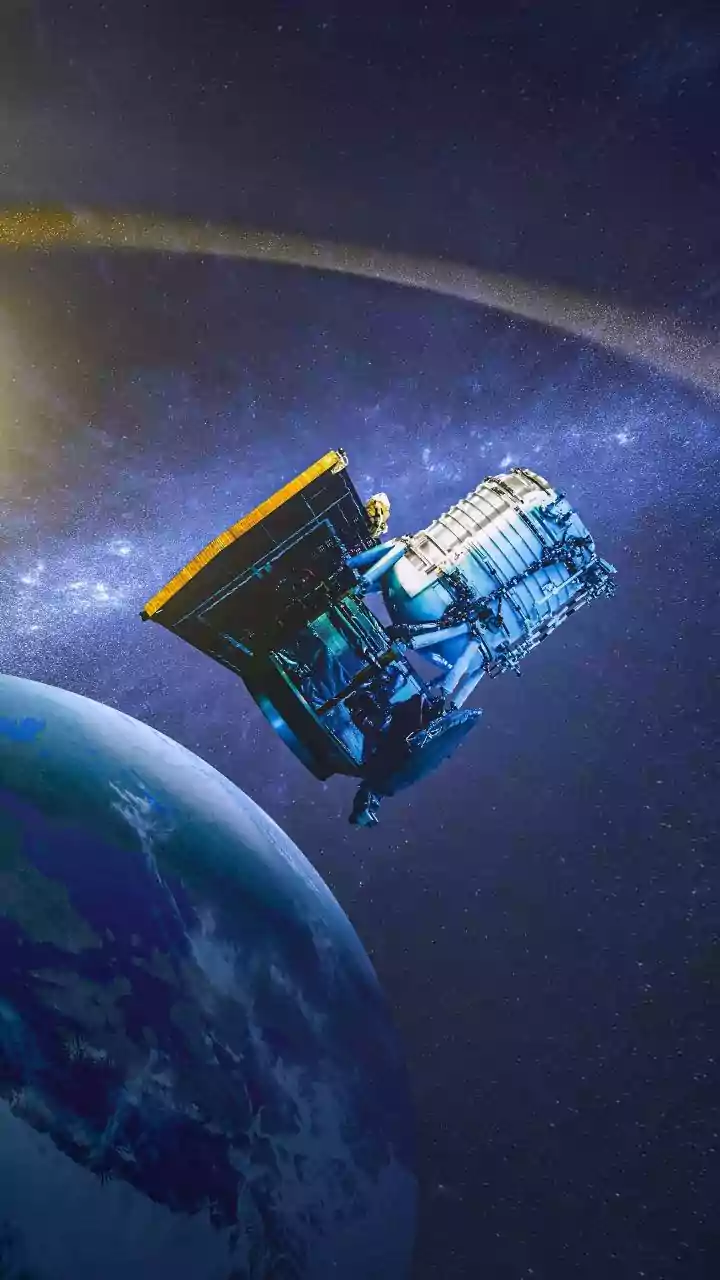
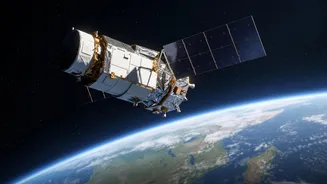
These discoveries are a testament to the engineering marvel that is the James Webb Space Telescope. Orbiting the Sun about 1.5 million kilometers from Earth, its massive, gold-coated mirror and highly sensitive instruments were designed for this exact purpose. Its Near-Infrared Camera (NIRCam) and Mid-Infrared Instrument (MIRI) work together to capture a comprehensive view. NIRCam reveals the stars themselves in crisp detail, while MIRI excels at highlighting the glowing dust and the structures embedded within it. This technological leap provides a view a thousand times more powerful than its predecessor, the Hubble Space Telescope, allowing scientists to piece together the story of star formation with unprecedented clarity.
Why These Stellar Nurseries Matter
Studying these newborn stars does more than satisfy our cosmic curiosity; it helps answer fundamental questions about our own origins. How do stars gather their mass? What determines whether a star will have planets? How do the powerful jets and winds from a young star shape its environment and influence the next generation of star formation? By observing different systems at various early stages, astronomers can build a timeline of stellar evolution. Each new image from regions like the Taurus star-forming region or the Carina Nebula provides another piece of the puzzle, refining our models of how galaxies, stars, and planets come to be.