

The Martian Landing Dilemma
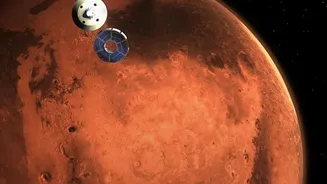
Landing on Mars is notoriously difficult. The planet's atmosphere is a paradox for engineers: it's more than 100 times thinner than Earth's, meaning it provides very little aerodynamic drag to slow a spacecraft down. Yet, it's just thick enough to generate
catastrophic heat during entry, requiring a robust heat shield. This unforgiving environment means that any landing, whether robotic or human, is a high-stakes, automated sequence known as Entry, Descent, and Landing (EDL). With a success rate of just over 50% for all attempted robotic landings, it's clear that getting to the surface safely is far from guaranteed.
The Robotic Advantage: Small, Smart, and Sacrificial
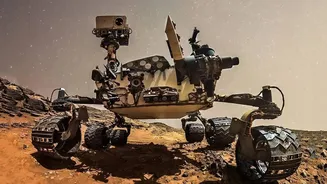
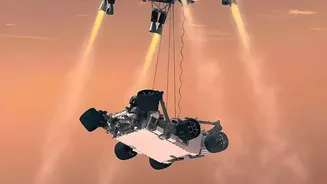
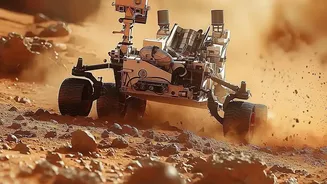
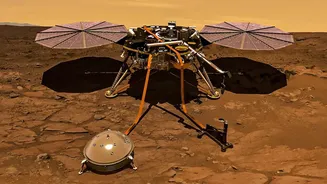
Our current Martian explorers, like the Perseverance rover, represent the pinnacle of robotic landing technology. These missions have succeeded by being relatively lightweight. Perseverance, the heaviest rover to date, has a mass of about one metric ton. This allows for a multi-stage landing system involving a heat shield, a massive parachute, and finally, the famous 'sky crane' maneuver, which uses retrorockets to lower the rover to the surface on tethers before flying away. While complex, this system works for payloads of this scale. The other advantage is that robotic missions, while expensive, are ultimately expendable. A failure provides invaluable data without the tragic loss of human life, allowing for a 'fail-fast, fix-fast' approach to developing new technologies.
The Human Scale: A Problem of Mass
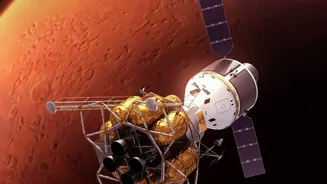
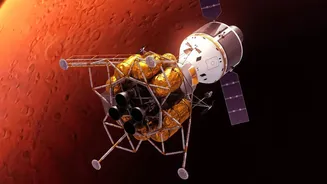
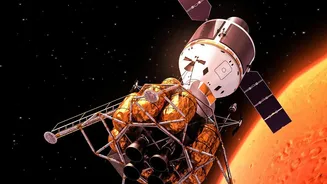
Sending humans to Mars changes the game entirely, primarily due to mass. A crewed mission requires not just astronauts, but also their habitat, life support systems, supplies, and a vehicle powerful enough for the return journey. This skyrockets the required landed mass from one metric ton to an estimated 20 to 80 metric tons. At that scale, the landing systems that worked for rovers become completely inadequate. A parachute large enough would be impossibly huge and likely shred itself in the thin Martian air, and the sky crane concept doesn't scale to the required size. Simply put, you cannot just build a bigger version of the Perseverance lander to safely deliver a human habitat.
Supersonic Retropropulsion: The Great Hope
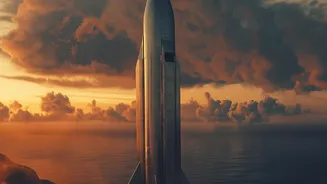
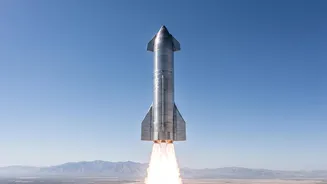
To solve the mass problem, space agencies and private companies are betting on a technology called supersonic retropropulsion. This involves firing powerful rocket engines against the direction of travel while the spacecraft is still moving at supersonic speeds through the atmosphere. It's a hugely complex aerodynamic challenge, as the shockwaves from the engines can destabilize the vehicle. NASA has been researching this technology for years, while SpaceX's Starship is being designed from the ground up to perform this maneuver, using its own engines and aerodynamic surfaces to 'belly flop' and then flip for a propulsive landing. This all-propulsive approach is seen as the only credible way to land the immense payloads required for a human presence.
Robots as Pathfinders for Human Arrival
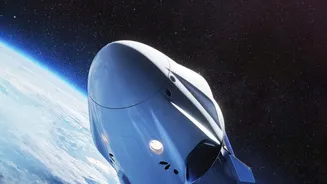
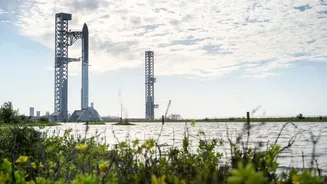
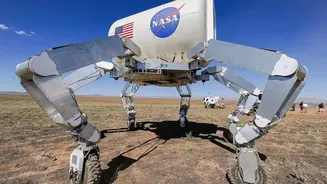
The debate isn't truly about robots versus humans, but rather how robots will pave the way for human explorers. Future plans for human missions rely heavily on precursor robotic missions to do the dangerous and tedious work first. This includes deploying power systems, mining for ice to produce water and oxygen, and even manufacturing rocket propellant for the return trip. Companies like SpaceX plan to send multiple uncrewed Starships to Mars to test landing capabilities and deliver cargo long before any astronaut takes the journey. This makes robots not just explorers in their own right, but essential setup crew for the eventual arrival of humanity.