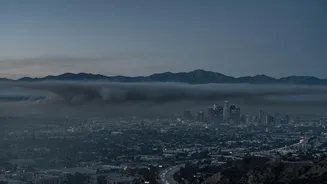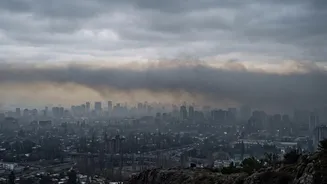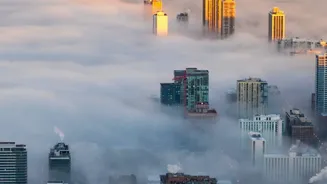





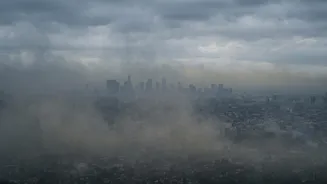

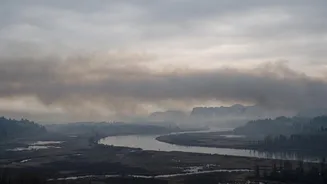
Ever notice how the air in the city feels thick and hazy on a calm, cold evening? It’s not your imagination. A meteorological phenomenon called a thermal inversion is often the culprit, putting a temporary lid on the city and stopping air from cleaning
itself.
How the Atmosphere Usually Works
Under normal conditions, the atmosphere has a built-in cleaning service. During the day, the sun warms the Earth's surface. This heat radiates upwards, warming the air closest to the ground. This warm air is less dense than the cooler air above it, so it rises, much like a hot air balloon. As it ascends, it carries pollutants from cars, factories, and construction sites upwards and away, where they can disperse into the wider atmosphere. This continuous cycle of rising warm air and sinking cool air is called convection, and it's essential for mixing the atmosphere and clearing out airborne grime.
Putting a Lid on the City
A thermal inversion flips this entire process on its head. The 'inversion' refers to the temperature profile being inverted from its usual state. Instead of the air getting progressively cooler with altitude, a layer of warm air forms above a layer of cooler, denser air near the ground. This warm air acts like an atmospheric lid or a blanket, trapping the cold air beneath it. Because the cool air is denser, it cannot rise through the warmer, less-dense layer above. This effectively shuts down the vertical mixing of air, leading to a stagnant, trapped pocket of air at ground level.
The Recipe for a Nightly Inversion
These inversions are particularly common on clear, calm winter nights. After the sun sets, the ground rapidly loses heat, cooling the layer of air directly above it. However, the air higher up remains warmer, as air is a poor conductor of heat. This creates the classic inversion setup: cold air at the surface with a warmer layer sitting on top. Long nights provide more time for the ground to cool, and calm winds prevent the different air layers from mixing, strengthening the inversion. In regions like India's Indo-Gangetic plains, this effect is amplified by the bowl-like topography created by surrounding mountain ranges, which helps to contain the trapped air.
Trapping the Day's Pollutants
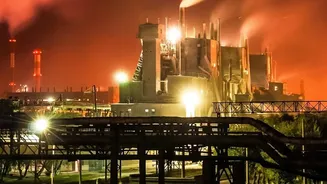
When this atmospheric lid is in place, all the pollutants emitted throughout the day have nowhere to go. Vehicle exhaust, industrial emissions, construction dust, and smoke from heating or agricultural burning get trapped in this shallow layer of cold air near the surface. Instead of dispersing, these pollutants become more and more concentrated. The longer the inversion lasts—sometimes for days in periods of stagnant weather—the worse the air quality becomes. The visible result is the thick, persistent smog or haze that often blankets cities like Delhi during the winter months.
Breathing in the Consequences
This concentration of pollutants has serious health implications. The trapped particles, especially fine particulate matter known as PM2.5, can be inhaled deep into the lungs and even enter the bloodstream. This can trigger or worsen a range of health problems, including asthma, bronchitis, and other respiratory tract infections. Hospitals in affected cities often report a surge in patients with breathing difficulties during major inversion events. Prolonged exposure to such poor air quality is also linked to more severe conditions like heart disease, strokes, and lung cancer. For residents of polluted cities, a thermal inversion turns the air they breathe into a direct threat to their health.