


The Invisible Threat From the Sun
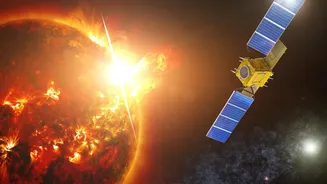
Our sun, the life-giving star at the centre of our solar system, has a violent side. It regularly releases massive bursts of energy and matter, known as solar storms. These events, which include solar flares and coronal mass ejections (CMEs), send streams
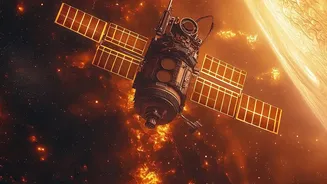
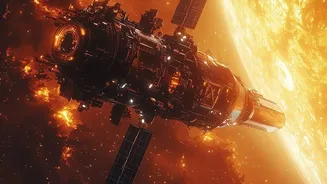
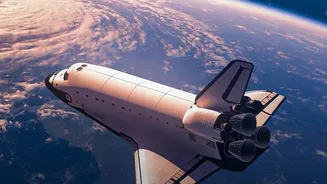
of highly charged particles hurtling through space. When these particles are accelerated to near light speed, they become what are known as solar energetic particle (SEP) events or, more simply, radiation storms. While Earth's magnetic field and atmosphere protect life on the ground, this cosmic radiation is a major hazard for anything beyond this protective shield. For astronauts, exposure can lead to significant health risks, while for satellites, it can be catastrophic.
High Stakes in Low-Earth Orbit
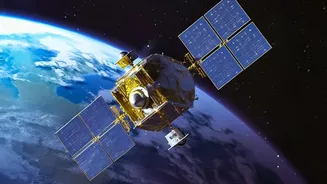
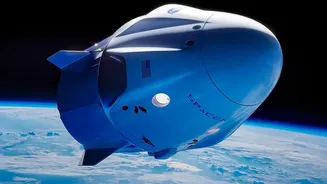
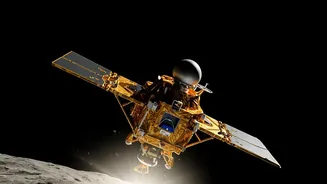
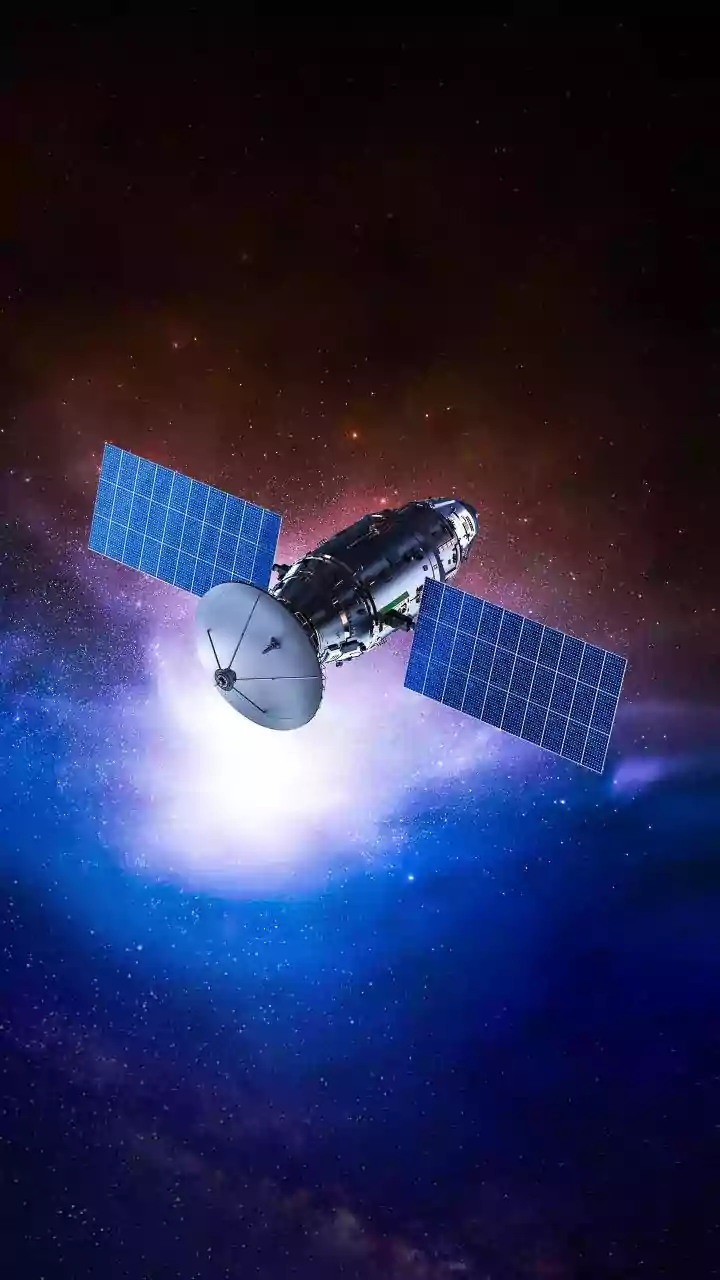
Low-Earth orbit (LEO) is a busy neighbourhood, crowded with the satellites that underpin our global communication, navigation (like GPS), weather forecasting, and financial systems. During a solar storm, this critical infrastructure is highly vulnerable. High-energy particles can damage sensitive electronics, degrade solar panels, and cause phantom commands that send a satellite tumbling. Furthermore, these storms heat and expand Earth's upper atmosphere, increasing atmospheric drag on LEO satellites. This can cause their orbits to decay faster than expected, potentially leading to premature re-entry or even collisions. In February 2022, a moderate geomagnetic storm was blamed for the loss of up to 40 newly launched Starlink satellites, which were unable to overcome the increased drag.
Our Sentinels on the Ground
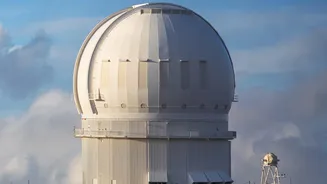
While satellites like NOAA's GOES and DSCOVR provide an invaluable first line of defense by directly observing the sun and solar wind, a global network of ground stations forms the backbone of our space weather monitoring system. These terrestrial observatories are crucial because they can detect the secondary effects of space radiation as it interacts with Earth's atmosphere and magnetic field. Key instruments in this network include magnetometers, neutron monitors, and GNSS receivers.
Reading the Cosmic Clues
Each type of ground station listens for a different clue. Magnetometers are hyper-sensitive compasses that measure tiny fluctuations in Earth's magnetic field caused by incoming solar storms. Neutron monitors, often located at high altitudes, detect secondary particles (neutrons) created when high-energy cosmic rays slam into our atmosphere; a sudden spike, known as a Ground-Level Enhancement (GLE), is a clear sign that a powerful solar particle event is underway. Meanwhile, specialized GPS and other global navigation satellite system (GNSS) receivers track disturbances in the ionosphere—an upper layer of the atmosphere. As satellite signals pass through this layer, radiation storms can cause them to fluctuate wildly, a phenomenon called scintillation, which these receivers are designed to measure.
From Data to Warning
Data from this diverse, globe-spanning network of ground stations is fed in real-time to space weather prediction centres. Agencies like the US-based Space Weather Prediction Center (SWPC) and organisations in India like the Indian Space Research Organisation (ISRO) collate this information. By combining ground-based observations with data from space-based assets, forecasters can build a comprehensive picture of a storm's intensity and potential impact. This allows them to issue timely warnings and alerts, giving satellite operators time to put their spacecraft into a protective safe mode, power companies a chance to brace their grids for induced currents, and airlines an opportunity to reroute polar flights to avoid the highest radiation levels.