






The Sun's Turbulent Outbursts
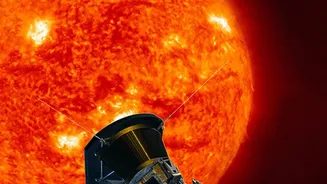
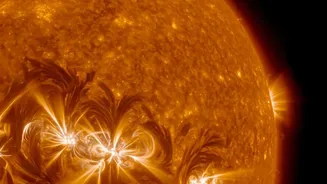
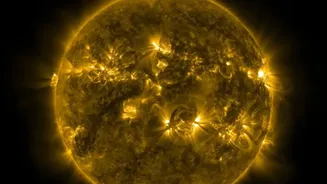
Our Sun is not always the calm star it appears to be. It periodically releases massive bursts of energy and matter, known as solar flares and coronal mass ejections (CMEs). A CME is a gigantic cloud of magnetised plasma that hurtles through space at incredible
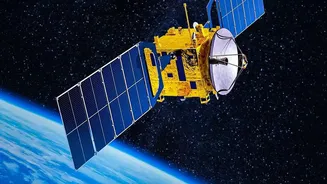
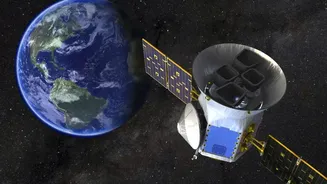
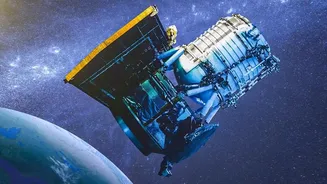
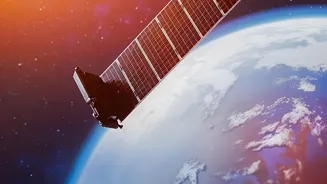
speeds, sometimes reaching Earth in as little as 15 to 18 hours. While Earth's atmosphere and magnetic field protect life on the surface, the charged particles and magnetic forces carried by a CME can wreak havoc on technology, particularly the sensitive electronics of satellites orbiting the planet. These solar storms can increase atmospheric drag on low-orbit spacecraft, interfere with communications, and even cause permanent damage to components.
Earth's Silent Alarm System
Before a CME strikes Earth, it first collides with our planet's protective magnetic field, the magnetosphere. This impact causes significant disturbances, essentially making the magnetic field ripple and shake. Here on the ground, a global network of scientific monitoring stations acts as a planetary alarm system. These ground observatories are equipped with highly sensitive instruments called magnetometers, which continuously measure the strength and direction of the local magnetic field. When a solar storm hits the magnetosphere, these instruments detect the resulting fluctuations, providing a clear signal that a geomagnetic event is underway.
From Data Wiggles to Actionable Warnings
A single magnetometer reading is useful, but the real power comes from a coordinated global network. Organizations like INTERMAGNET connect hundreds of observatories worldwide, from remote islands to the Arctic Circle. This network allows scientists to see a comprehensive, planet-wide picture of the geomagnetic disturbance in near real-time. The data from these ground stations is sent to space weather prediction centers, such as those run by NOAA in the United States. Forecasters analyze these magnetic field variations, often combining them with data from space-based sentinels like the DSCOVR satellite, which can offer a 15 to 60-minute heads-up before a CME's arrival. This combined data is translated into standardized alerts that quantify the storm's intensity, telling operators if conditions are safe or dangerous.
A Race Against Time for Satellite Operators
For a satellite operator, an early warning is everything. With a forecast in hand, they can take crucial protective measures to safeguard their multi-million-dollar assets. Upon receiving an alert about an impending geomagnetic storm, operators can put their satellites into a protective 'safe mode'. This might involve temporarily shutting down non-essential and sensitive electronic systems to prevent electrical overloads. They can also reorient the spacecraft to minimize its exposure to damaging radiation or adjust its orbit to counteract the effects of increased atmospheric drag, which can shorten a satellite's operational lifespan. These actions are vital for preventing service disruptions and ensuring the longevity of the critical infrastructure that powers our connected world.