




A Pillar of the National Economy
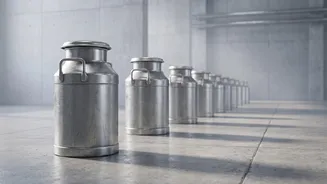
The scale of India's dairy industry is immense. Accounting for nearly a quarter of the world's total milk production, it is a cornerstone of the agricultural economy, contributing around 5% to the national GDP. This is not an industry of large corporate
farms but a grassroots network of an estimated 80 million smallholder farmers, many of whom own just a few animals. For these households, dairy is not just a profession but a lifeline, providing a steady income and crucial nutritional security. The success of this sector, largely driven by cooperative movements, has made India self-sufficient in milk, a remarkable journey from being a milk-deficient nation just a few decades ago.
The Biological Toll of Rising Heat
Cattle and buffaloes, like humans, have a thermal comfort zone. When the Temperature-Humidity Index (THI), a measure combining heat and humidity, rises above a certain threshold, animals begin to experience heat stress. Their bodies divert energy away from production to focus on thermoregulation—cooling down. This manifests in several ways: animals eat less, drink more water, pant heavily, and become more susceptible to disease. The impact on milk production is direct and significant. Studies show that milk yield can drop by 10% to 30% during periods of heat stress. High-yielding crossbred cows, which generate more metabolic heat, are particularly vulnerable. Beyond just quantity, the quality of milk also suffers, with a decrease in fat and protein content, which can affect market prices.
Economic Fallout for Farmers and Consumers
For the smallholder farmer, a drop in milk yield translates directly to a loss of income. With summers becoming longer and more intense, this seasonal dip is turning into a protracted financial strain. One recent study estimated that heat-related stress already causes an annual national loss of 3.2 million tonnes of milk, valued at over ₹2,600 crore. Projections are even more alarming, with some studies warning that India could lose up to 25% of its milk production by 2085 if effective adaptation measures are not taken. This not only threatens the livelihoods of millions of farmers but also poses a risk to consumers through potential price volatility and could jeopardise the nation's hard-won food security.
The Path to a More Resilient Future
The good news is that adaptation is possible. A range of strategies, from simple to sophisticated, can help mitigate the effects of heat stress. At the farm level, this includes ensuring adequate shade, improving ventilation in sheds with fans, and using sprinklers or misters for evaporative cooling. Nutritional management is also key. Adjusting feeding schedules to cooler parts of the day and providing balanced, energy-dense rations can help maintain an animal's appetite and health. Looking at the bigger picture, there is a growing focus on reviving and promoting indigenous cattle breeds, which are naturally more resilient to heat than many crossbred varieties. Government bodies and research institutes are actively promoting climate-resilient agricultural practices and investing in research to develop thermo-tolerant breeds and better management techniques.